
How Server Support Services Can Optimize Your Business’s IT Infrastructure
In today’s digital-first business environment, your IT infrastructure is the backbone of virtually every operation. From customer transactions to employee productivity, internal communications to data storage, everything relies on robust, reliable server systems. Yet many businesses struggle with server management, experiencing costly downtime, security vulnerabilities, and performance issues that directly impact their bottom line.
This is where professional server support services become not just beneficial, but essential. These specialized services offer comprehensive solutions that can transform your IT infrastructure from a potential liability into a strategic asset. Let’s explore how the right server support can optimize your business operations and position you for sustainable growth.
Understanding Server Support Services
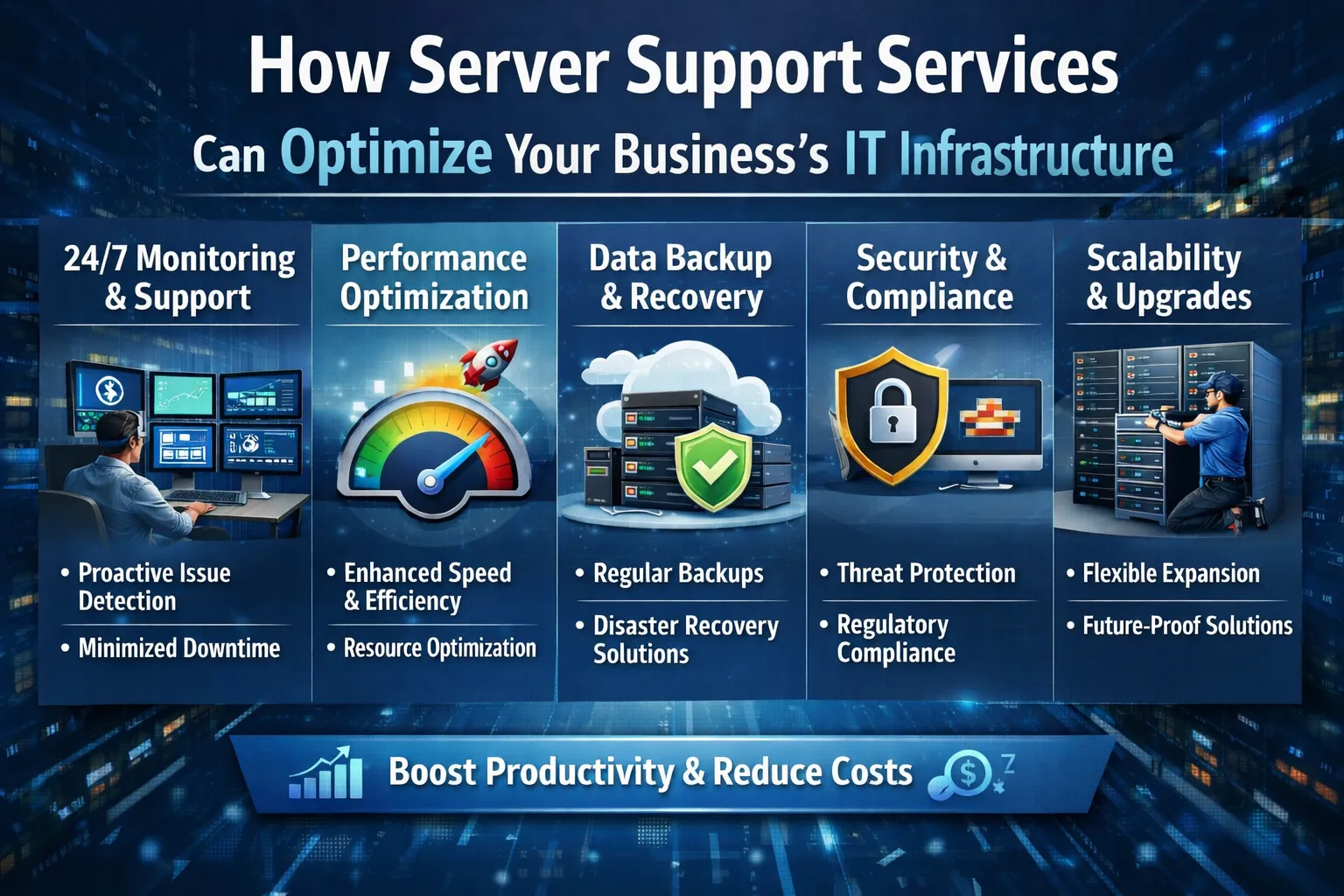
Server support services encompass a wide range of activities designed to keep your server infrastructure running smoothly, securely, and efficiently. These services typically include 24/7 monitoring, proactive maintenance, security management, performance optimization, backup and disaster recovery, and rapid troubleshooting when issues arise.
Unlike reactive IT approaches where problems are addressed only after they occur, professional server support takes a proactive stance. Support teams continuously monitor your servers, identifying and resolving potential issues before they escalate into business-disrupting problems. This fundamental shift from reactive to proactive management is one of the key ways server support services optimize your infrastructure.
Minimizing Downtime and Maximizing Availability
Perhaps the most immediate and tangible benefit of professional server support is the dramatic reduction in downtime. Every minute your servers are offline translates to lost revenue, decreased productivity, and potential damage to your reputation. Studies show that the average cost of IT downtime can range from $5,600 per minute for small businesses to over $300,000 per hour for large enterprises.
Server support services minimize downtime through several mechanisms. First, continuous monitoring detects anomalies and performance degradation before they cause failures. Second, regular maintenance prevents issues from developing in the first place. Third, when problems do occur, having expert support available immediately means resolution times are measured in minutes rather than hours or days.
Many server support providers offer Service Level Agreements (SLAs) guaranteeing specific uptime percentages, often 99.9% or higher. This level of reliability ensures your business operations continue uninterrupted, maintaining customer satisfaction and protecting your revenue streams.
Enhancing Security and Compliance
Cybersecurity threats are evolving constantly, and servers are prime targets for malicious actors. A single breach can result in devastating financial losses, legal liabilities, and reputational damage. Professional server support services provide multi-layered security measures that protect your infrastructure far more effectively than in-house teams can typically manage alone.
These security measures include regular security patches and updates, intrusion detection and prevention systems, firewall management, anti-malware protection, and vulnerability assessments. Support teams stay current with the latest threat intelligence and security best practices, ensuring your defenses evolve as quickly as the threats.
For businesses in regulated industries, server support services also help maintain compliance with standards like HIPAA, PCI-DSS, GDPR, and SOC 2. Support providers understand these requirements and implement the necessary controls, documentation, and monitoring to help you avoid costly compliance violations.
Optimizing Performance and Resource Utilization
Slow server performance frustrates employees, hampers productivity, and can drive customers away. Server support services optimize performance by continuously tuning server configurations, balancing workloads, managing resources efficiently, and identifying bottlenecks before they impact users.
Performance optimization extends beyond simply keeping servers running fast. Support teams analyze usage patterns to right-size your infrastructure, ensuring you have the capacity you need without overpaying for unused resources. They can recommend when to upgrade hardware, when to migrate to different platforms, and how to architect your infrastructure for maximum efficiency.
This optimization is particularly valuable as your business grows. Server support services can scale your infrastructure seamlessly to accommodate increased demand, whether that’s gradual growth or sudden spikes during peak periods. This scalability ensures consistent performance regardless of load while controlling costs.
Enabling Proactive Maintenance and Updates
Servers require regular maintenance to function optimally—updates, patches, hardware checks, and configuration adjustments. However, many businesses delay or neglect these tasks due to resource constraints or fear of disruption. This creates technical debt that eventually manifests as major problems.
Professional server support services implement scheduled maintenance windows that minimize business impact while keeping your infrastructure current. They test updates in staging environments before deploying to production, reducing the risk of update-related issues. They also maintain detailed documentation of your infrastructure, making future maintenance and troubleshooting more efficient.
This proactive approach extends the lifespan of your hardware, prevents performance degradation, and ensures you benefit from the latest features and security enhancements. The result is a more stable, secure, and capable infrastructure that requires fewer emergency interventions.
Providing Expert Knowledge and Strategic Guidance
Server support isn’t just about fixing problems—it’s about leveraging expertise to make better decisions. Professional support teams bring deep technical knowledge and experience across diverse environments and technologies. This expertise is invaluable when planning infrastructure changes, evaluating new technologies, or troubleshooting complex issues.
Beyond technical support, many providers offer strategic IT consulting that aligns your infrastructure with your business goals. They can help you develop IT roadmaps, plan for future growth, evaluate cloud migration options, and make informed technology investments. This strategic partnership transforms your IT infrastructure from a cost center into a competitive advantage.
Reducing Total Cost of Ownership
While server support services require investment, they typically reduce your total IT costs significantly. The savings come from multiple sources: reduced downtime costs, fewer emergency repairs, extended hardware lifespan, optimized resource utilization, and decreased need for specialized in-house staff.
Many businesses find that outsourcing server support is more cost-effective than maintaining a full in-house team with the necessary expertise across all required specialties. Server support services provide access to a team of specialists for a predictable monthly cost, allowing you to budget more accurately and avoid the expenses associated with hiring, training, and retaining IT staff.
Additionally, preventing major incidents through proactive management saves far more than the cost of the support services themselves. A single major server failure that results in extended downtime can cost more than years of professional support services.
Facilitating Business Continuity and Disaster Recovery
When disaster strikes—whether from hardware failure, cyberattacks, natural disasters, or human error—your ability to recover quickly determines your business’s survival. Server support services implement comprehensive backup and disaster recovery strategies that protect your data and enable rapid restoration of operations.
These strategies include automated backups, off-site data storage, tested recovery procedures, and redundant systems that can take over if primary servers fail. Regular testing ensures these systems work when needed, not just in theory. Many providers also offer disaster recovery as a service (DRaaS), maintaining ready-to-activate infrastructure that can keep your business running during primary system failures.
This level of preparedness provides peace of mind and protects your business from catastrophic losses. You can operate confidently knowing that regardless of what happens, your critical systems and data can be restored quickly.
Supporting Digital Transformation Initiatives
As businesses undergo digital transformation, their infrastructure needs become more complex and demanding. Server support services enable these initiatives by providing the stable, scalable, and secure foundation required for new digital capabilities.
Whether you’re implementing cloud solutions, adopting new software platforms, integrating IoT devices, or developing customer-facing applications, professional server support ensures your infrastructure can support these innovations. Support teams can architect hybrid cloud environments, manage application servers, optimize databases, and ensure seamless integration across diverse systems.
This support is crucial for maintaining business operations during transformation periods when systems are being upgraded or replaced. It also accelerates transformation projects by providing expertise and resources that might not exist in-house.
Conclusion
Professional server support services represent a strategic investment that can transform your IT infrastructure from a source of concern into a competitive advantage. By minimizing downtime, enhancing security, optimizing performance, and providing expert guidance, these services enable your business to operate more efficiently, serve customers more effectively, and grow more confidently.
As technology continues to evolve and business demands on IT infrastructure intensify, the value of professional server support will only increase. Businesses that embrace these services position themselves to adapt quickly to changing conditions, capitalize on new opportunities, and maintain the reliable, secure infrastructure that modern operations require.
The question isn’t whether your business can afford professional server support services—it’s whether you can afford to operate without them. The costs of downtime, security breaches, and suboptimal performance far exceed the investment in quality support services. By partnering with the right provider, you gain not just technical support, but a strategic ally committed to your business success.
Frequently Asked Questions (FAQ)
What exactly do server support services include?
Server support services typically include 24/7 monitoring and alerting, proactive maintenance and updates, security management and patch deployment, performance optimization, backup and disaster recovery management, hardware and software troubleshooting, technical support and consultation, and often strategic IT planning. The specific services vary by provider and service level, but comprehensive packages address all aspects of server management.
How much do server support services cost?
Costs vary widely based on your infrastructure size, complexity, required service levels, and whether you choose managed services or on-demand support. Small businesses might pay $500-$2,000 monthly for basic support, while enterprises with complex infrastructure could invest $10,000-$50,000+ monthly. Many providers offer tiered pricing based on the number of servers, level of support required, and response time guarantees. Most businesses find these costs significantly lower than maintaining equivalent in-house expertise.
Can server support services help with cloud infrastructure?
Yes, most modern server support providers specialize in cloud infrastructure in addition to traditional on-premises servers. They can manage cloud servers across platforms like AWS, Azure, and Google Cloud, handle hybrid cloud environments combining on-premises and cloud resources, optimize cloud resource usage and costs, and manage migrations between different environments. Cloud expertise has become essential for comprehensive server support.
How quickly can server support services respond to issues?
Response times depend on your service level agreement (SLA). Critical issues typically receive immediate attention (within 15-30 minutes) for premium support packages, high-priority issues might get 1-4 hour response times, and lower-priority issues could have 8-24 hour response times. Many providers offer different support tiers with varying response times and costs. For mission-critical systems, look for providers offering immediate 24/7 response with dedicated support teams.
Do I still need an in-house IT team if I have server support services?
This depends on your business size and needs. Many businesses maintain a small in-house team for day-to-day user support and business-specific needs while outsourcing specialized server management. Server support services complement in-house teams by providing depth of expertise, 24/7 coverage, and specialized knowledge that would be impractical to maintain internally. Even with comprehensive server support, having someone who understands your business processes and can coordinate between users and support providers is often valuable.
How do server support services prevent security breaches?
Server support services implement multiple security layers including regular security patch deployment, firewall configuration and monitoring, intrusion detection and prevention systems, malware and antivirus protection, vulnerability scanning and remediation, security audit and compliance monitoring, and incident response planning. They also stay current with emerging threats and best practices, ensuring your defenses evolve continuously. This proactive, comprehensive approach significantly reduces breach risk compared to ad-hoc security measures.
What should I look for when choosing a server support provider?
Key factors include relevant technical expertise and certifications, proven track record with businesses similar to yours, clear SLAs with uptime and response time guarantees, comprehensive service offerings matching your needs, 24/7 availability and support, transparent pricing without hidden fees, good communication and customer service reputation, and security and compliance capabilities appropriate for your industry. Request references and case studies to verify their capabilities before committing.
Can server support services help with disaster recovery?
Absolutely. Disaster recovery is a core component of comprehensive server support services. Providers implement automated backup systems, maintain off-site or cloud-based backup storage, develop and document recovery procedures, conduct regular recovery testing, and often provide disaster recovery as a service (DRaaS) with standby infrastructure ready to activate during disasters. This ensures your business can recover quickly from hardware failures, cyberattacks, natural disasters, or other catastrophic events.





No comment