
VoIP Security Challenges and How Support Teams Solve Them
 Introduction
Modern businesses rely heavily on Voice over Internet Protocol technology for their daily communications. This internet-based phone system delivers remarkable cost savings and flexibility compared to traditional landlines. However, VoIP security remains a critical concern for organizations worldwide.
When phone calls travel over the internet instead of dedicated phone lines, they become vulnerable to various cyber threats. Understanding these risks and implementing proper safeguards has become essential for business continuity. This comprehensive guide explores common VoIP security challenges and practical solutions that support teams use to protect business communications.
What Makes VoIP Vulnerable to Security Threats?
Traditional phone systems operated on isolated networks, making them relatively secure from external attacks. VoIP systems connect directly to the internet, exposing them to the same cyber threats that affect websites, email servers, and other online services.
This internet connectivity creates opportunities for hackers and cybercriminals to exploit weaknesses in VoIP infrastructure. The financial impact of these attacks can be devastating, with businesses losing billions annually to VoIP fraud and security breaches.
The Real Cost of VoIP Security Breaches
Security incidents affect businesses in multiple ways:
- Unauthorized international calls costing thousands of dollars
- Confidential conversations intercepted by competitors
- Complete service disruptions during critical business hours
- Damaged reputation and lost customer trust
- Regulatory fines for failing to protect sensitive data
Major VoIP Security Challenges
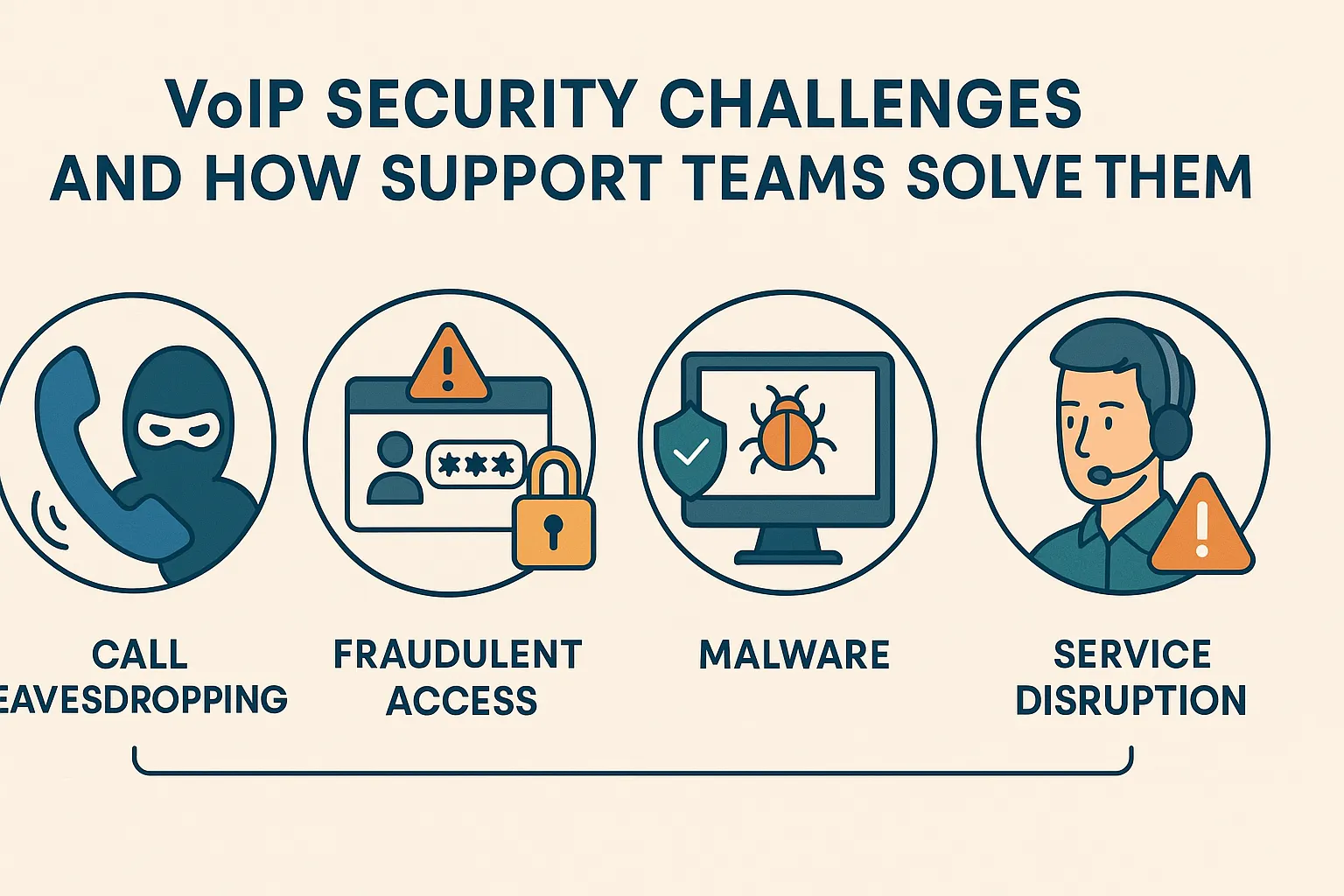
1. Call Interception and Eavesdropping
Unauthorized listening represents one of the most serious VoIP security risks. Voice data travels as packets across internet networks, and attackers can capture these packets using specialized software tools.
Without proper encryption, anyone intercepting these data packets can listen to private business conversations. Corporate secrets, customer information, and sensitive negotiations become vulnerable to espionage.
How Support Teams Protect Against Eavesdropping:
Technical teams implement Secure Real-time Transport Protocol (SRTP) to encrypt voice data during transmission. This encryption ensures that intercepted packets remain unreadable without proper decryption keys.
Transport Layer Security (TLS) adds another protection layer by securing the signaling channels that establish and manage calls. Support specialists also configure Virtual Private Networks for remote employees, creating secure tunnels that protect VoIP traffic from interception.
2. Toll Fraud and Unauthorized Call Charges
Toll fraud occurs when attackers gain unauthorized access to phone systems and make expensive international calls. Victims often discover the breach only after receiving massive phone bills.
Cybercriminals exploit weak passwords, default credentials, and exposed administrative interfaces to access VoIP systems. Small businesses have reported unexpected charges exceeding $50,000 from weekend toll fraud attacks.
Support Team Solutions for Preventing Toll Fraud:
IT professionals implement multi-factor authentication for all system access points. This security measure requires users to verify their identity through multiple methods, making unauthorized access significantly harder.
Strong password policies mandate complex credentials that change regularly. Support teams configure call restrictions that block international and premium-rate numbers unless specifically authorized for business use.
Real-time monitoring systems track calling patterns and alert administrators to suspicious activity. Unusual international calls during off-hours trigger immediate notifications, enabling rapid response to potential fraud.
Regular access audits ensure that only current employees maintain system privileges. Promptly disabling accounts for departed staff members eliminates potential security vulnerabilities.
3. Denial of Service Attacks
Denial of Service (DoS) attacks overwhelm VoIP systems with malicious traffic, making phone services completely unavailable. These attacks prevent customers from reaching support lines and block employees from making critical business calls.
Distributed Denial of Service (DDoS) attacks amplify this threat by using multiple compromised computers to flood systems simultaneously. The resulting service disruption can cost businesses thousands of dollars per hour in lost productivity and revenue.
How Teams Defend Against Service Disruptions:
Session Border Controllers function as protective barriers between VoIP networks and external threats. These devices filter malicious traffic while allowing legitimate calls to pass through normally.
Rate limiting features restrict connection attempts from individual sources, preventing attackers from overwhelming the system with fraudulent requests. Redundant systems and automatic failover configurations maintain service continuity even when primary systems face attack.
Many organizations partner with specialized DDoS mitigation services that absorb massive traffic volumes during large-scale attacks. These services detect attack patterns and route malicious traffic away from vulnerable infrastructure.
4. Spam over Internet Telephony (SPIT)
SPIT describes unwanted automated calls that waste time and consume network bandwidth. These unsolicited calls function like email spam but target phone systems instead of inboxes.
Robocalls and automated marketing messages frustrate users while potentially exposing them to fraud schemes. Attackers also use SPIT campaigns to identify valid phone numbers for targeted attacks.
Anti-SPIT Measures Implemented by Support Teams:
Caller ID verification systems authenticate incoming calls and flag suspicious sources before they reach end users. Automatically block known spam sources, while ensure important callers always get through.
Machine learning algorithms analyze calling patterns to identify robocalls automatically. These intelligent systems adapt to new SPIT tactics by learning from blocked calls and user feedback.
Integration with reputation databases helps identify known spam sources across multiple organizations. This collaborative approach improves protection by sharing threat intelligence throughout the business community.
5. Malware and Software Vulnerabilities
VoIP systems run on software platforms that can contain security vulnerabilities. Malware designed specifically for VoIP infrastructure can steal credentials, record conversations, or provide backdoor access to broader network resources.
Outdated firmware and unpatched systems create opportunities for attackers to exploit known security flaws. Each unpatched vulnerability represents a potential entry point for cybercriminals.
How Support Teams Maintain System Security:
Rigorous patch management programs ensure security updates are applied promptly as vendors release them. Support specialists schedule regular maintenance windows to implement critical patches without disrupting business operations.
Comprehensive vulnerability scans identify potential weaknesses before attackers can exploit them. These assessments test systems against known attack methods and emerging threats.
Network segmentation isolates VoIP infrastructure from other business systems. This isolation limits potential damage if one network area becomes compromised, preventing attackers from moving laterally to access other resources.
Endpoint protection software on devices running VoIP clients prevents malware infections. These security tools monitor for suspicious behavior and block malicious software before it compromises communications.
6. Identity Spoofing and Vishing Attacks
Caller ID spoofing allows attackers to display false caller information, making malicious calls appear legitimate. This technique enables vishing (voice phishing) attacks where criminals pose as trusted individuals to extract sensitive information.
Employees may unknowingly provide passwords, financial data, or confidential business information to attackers impersonating IT support, executives, or business partners. These social engineering attacks exploit the trust people place in caller identification systems.
Support Team Countermeasures for Identity Verification:
STIR/SHAKEN protocols authenticate caller IDs by verifying that displayed numbers match actual originating sources. These industry standards make spoofing significantly more difficult for attackers to accomplish successfully.
Comprehensive user education programs train employees to recognize social engineering tactics. Staff members learn to verify caller identities through independent channels before sharing sensitive information.
Call screening features allow users to challenge unfamiliar callers before accepting calls. Organizations implement verification procedures requiring additional authentication for sensitive requests, regardless of apparent caller identity.
Comprehensive Security Strategies
Effective VoIP security requires more than addressing individual threats. Support teams implement layered defense strategies that create multiple protective barriers against attacks.
Regular Security Audits
Scheduled security assessments evaluate system configurations and identify potential vulnerabilities. These audits ensure compliance with industry standards and regulatory requirements while uncovering weaknesses before attackers discover them.
Continuous Monitoring Systems
Security Information and Event Management (SIEM) platforms provide real-time visibility into network activity. These systems correlate data from multiple sources to detect suspicious patterns and potential security incidents.
Automated alerts notify support teams immediately when anomalies occur, enabling rapid response to emerging threats. Historical data analysis helps identify trends and predict future security challenges.
Documentation and Incident Response
Detailed security policies provide clear guidance for handling various scenarios. Well-documented procedures ensure consistent responses across the organization during security incidents.
Disaster recovery plans prepare organizations for worst-case scenarios, enabling rapid service restoration after major security breaches. Regular testing of these plans ensures they work effectively when needed.
Vendor Relationships and Threat Intelligence
Support teams maintain close relationships with VoIP vendors and security researchers. These connections provide early warnings about emerging threats and access to the latest security best practices.
Participation in industry security forums facilitates information sharing about new attack methods and effective countermeasures. Collaborative defense strengthens security across the entire VoIP ecosystem.
The Critical Role of User Education
Technology alone cannot guarantee VoIP security. Human awareness and behavior play essential roles in maintaining secure communications.
Security Awareness Training
Regular training sessions educate employees about common attack vectors and proper security practices. Staff members learn to recognize phishing attempts, suspicious calls, and other social engineering tactics.
Interactive training modules make security concepts engaging and memorable. Real-world examples help employees understand how security breaches occur and their role in prevention.
Creating Security-Conscious Culture
Organizations benefit when everyone takes responsibility for protecting communications. Support teams foster cultures where security awareness becomes part of daily operations rather than an afterthought.
Clear reporting channels ensure potential incidents receive prompt attention. Employees feel empowered to report suspicious activity without fear of criticism or bureaucratic obstacles.
Regular communication about security topics keeps protection measures top-of-mind. Newsletters, posters, and brief reminders help maintain awareness without creating alarm or complacency.
Incident Reporting Procedures
Simple, accessible reporting procedures encourage employees to flag security concerns immediately. Quick reporting enables support teams to investigate and respond before minor issues escalate into major breaches.
Feedback loops inform reporters about investigation outcomes, reinforcing the importance of their vigilance. This recognition encourages continued participation in security efforts.
Best Practices for VoIP Security
Organizations can strengthen their VoIP security posture by following these proven recommendations:
Implement Strong Authentication Require complex passwords and multi-factor authentication for all system access. Change default credentials immediately upon system deployment.
Encrypt All Communications Enable SRTP and TLS to protect voice data and signaling traffic. Use VPNs for remote workers accessing VoIP systems.
Maintain Current Software Apply security patches promptly and keep firmware updated. Subscribe to vendor security bulletins to stay informed about vulnerabilities.
Monitor Continuously Deploy monitoring systems that track calling patterns and network activity. Investigate anomalies immediately rather than waiting for obvious problems.
Segment Networks Isolate VoIP infrastructure from other business systems. This separation contains potential breaches and simplifies security management.
Restrict Access Implement least-privilege principles, granting users only the permissions they need. Review access rights regularly and remove unnecessary privileges.
Plan for Incidents Develop comprehensive incident response procedures before problems occur. Test these plans regularly to ensure effectiveness during actual emergencies.
Emerging VoIP Security Trends
The VoIP security landscape continues evolving as new technologies and threats emerge. Support teams must stay informed about developing challenges and solutions.
Artificial Intelligence in Security
Machine learning algorithms increasingly power security systems that detect sophisticated attacks. These AI-driven tools identify subtle patterns that human analysts might miss.
Zero Trust Architecture
Modern security models assume no user or device is inherently trustworthy. Zero trust frameworks require continuous verification regardless of network location or previous authentication.
Cloud-Based Security Services
Security-as-a-Service offerings provide advanced protection without requiring extensive on-premises infrastructure. These cloud solutions scale automatically to handle attacks of any size.
Conclusion
VoIP security challenges require comprehensive solutions and constant vigilance from dedicated support teams. From encryption and authentication to monitoring and user education, multiple layers of defense work together to protect business communications.
Organizations that prioritize security measures, invest in skilled support staff, and maintain ongoing security initiatives can confidently leverage VoIP benefits while minimizing risks. Success comes not from any single solution but from combining technological defenses, proactive monitoring, and security-conscious organizational culture.
As VoIP technology advances and cyber threats become more sophisticated, support teams play increasingly critical roles in maintaining secure communications. With proper preparation, appropriate tools, and committed personnel, businesses can communicate confidently knowing their VoIP infrastructure stands protected against current and emerging security threats.
The investment in robust VoIP security pays dividends through uninterrupted service, protected confidential communications, and peace of mind for organizations and their customers. Taking security seriously today prevents costly incidents tomorrow.
Frequently Asked Questions About VoIP Security
What is the biggest security risk with VoIP?
The biggest security risk with VoIP is call interception and eavesdropping. Since voice data travels over the internet as data packets, attackers can intercept unencrypted conversations using packet sniffing tools. This vulnerability exposes confidential business communications, customer data, and sensitive negotiations to unauthorized listeners. Implementing end-to-end encryption using SRTP and TLS protocols effectively mitigates this risk.
How can I tell if my VoIP system has been hacked?
Several warning signs indicate potential VoIP system compromise. Watch for unexpectedly high phone bills with numerous international or premium-rate calls, especially during off-hours. Poor call quality, dropped connections, or strange noises during calls may signal interference. Unfamiliar devices or users appearing in system logs, configuration changes you didn’t authorize, and reports of spoofed calls originating from your numbers all suggest security breaches requiring immediate investigation.
Is VoIP more secure than traditional phone systems?
VoIP can be equally secure or even more secure than traditional phone systems when properly configured. Traditional landlines operated on isolated networks, providing inherent security through physical separation. However, they lacked encryption and advanced monitoring capabilities. Modern VoIP systems offer robust encryption, multi-factor authentication, real-time threat detection, and detailed activity logging. The key difference is that VoIP security requires active management and proper configuration, whereas traditional systems relied primarily on network isolation.
What encryption should I use for VoIP calls?
For maximum VoIP security, implement Secure Real-time Transport Protocol (SRTP) for encrypting voice data and Transport Layer Security (TLS) for protecting signaling information. SRTP encrypts the actual audio content of calls, making intercepted data unreadable without decryption keys. TLS secures the control signals that establish, manage, and terminate calls. Together, these protocols provide comprehensive protection for all aspects of VoIP communications.
How much does VoIP fraud typically cost businesses?
VoIP fraud costs vary significantly depending on attack duration and detection speed. Small businesses have reported weekend toll fraud incidents resulting in charges between $10,000 and $50,000. Globally, VoIP fraud costs businesses billions of dollars annually. The average fraud incident costs companies approximately $12,000, though sophisticated attacks on larger organizations can result in losses exceeding $100,000. Early detection through monitoring systems significantly reduces potential losses.
Can VoIP calls be traced?
Yes, VoIP calls can be traced, though the process differs from traditional phone tracing. VoIP calls leave digital footprints including IP addresses, Session Initiation Protocol (SIP) headers, and call detail records. However, attackers using proxy servers, VPNs, or compromised systems can obscure their true location. Law enforcement agencies and cybersecurity professionals have tools and techniques for tracing VoIP calls, but caller ID spoofing and anonymization technologies make this more challenging than tracing traditional landline calls.
What is STIR/SHAKEN and why does it matter?
STIR/SHAKEN represents industry standards that authenticate caller ID information and combat spoofing. STIR (Secure Telephony Identity Revisited) provides the framework for digitally signing calls with certificates, while SHAKEN (Signature-based Handling of Asserted information using toKENs) defines how phone networks implement this authentication. These protocols verify that displayed caller ID numbers match actual originating sources, making it significantly harder for scammers to impersonate legitimate callers. Major carriers now implement STIR/SHAKEN to protect customers from vishing attacks.
Do I need a firewall specifically for VoIP?
While standard network firewalls provide basic protection, VoIP-specific security devices offer enhanced capabilities. Session Border Controllers (SBCs) function as specialized firewalls designed specifically for VoIP traffic. They understand SIP protocols, can inspect voice packet contents, prevent toll fraud, and protect against DoS attacks targeting VoIP infrastructure. Organizations with significant VoIP deployments benefit substantially from dedicated SBC protection rather than relying solely on general-purpose firewalls.
How often should I update VoIP system passwords?
Change VoIP system passwords every 60-90 days for administrative accounts and every 90-120 days for regular user accounts. However, password strength matters more than change frequency. Implement complex passwords with minimum 12 characters including uppercase, lowercase, numbers, and special characters. Enable multi-factor authentication to add security layers beyond passwords alone. Immediately change all passwords if you suspect any security compromise or when employees with system access leave the organization.
What should I do if I suspect a VoIP security breach?
Act immediately when suspecting a VoIP security breach. First, document all unusual activity including strange calls, configuration changes, or system alerts. Contact your IT support team or VoIP service provider immediately to report concerns. Change all administrative passwords and review recent system access logs. Consider temporarily restricting international calling if you suspect toll fraud. Preserve evidence for investigation but prioritize stopping ongoing attacks. After containment, conduct thorough security audits to identify how the breach occurred and implement additional protections to prevent recurrence.






No comment