
SQL Server Transformation Market 2025–2033: Trends, Dynamics & Growth Opportunities
Introduction
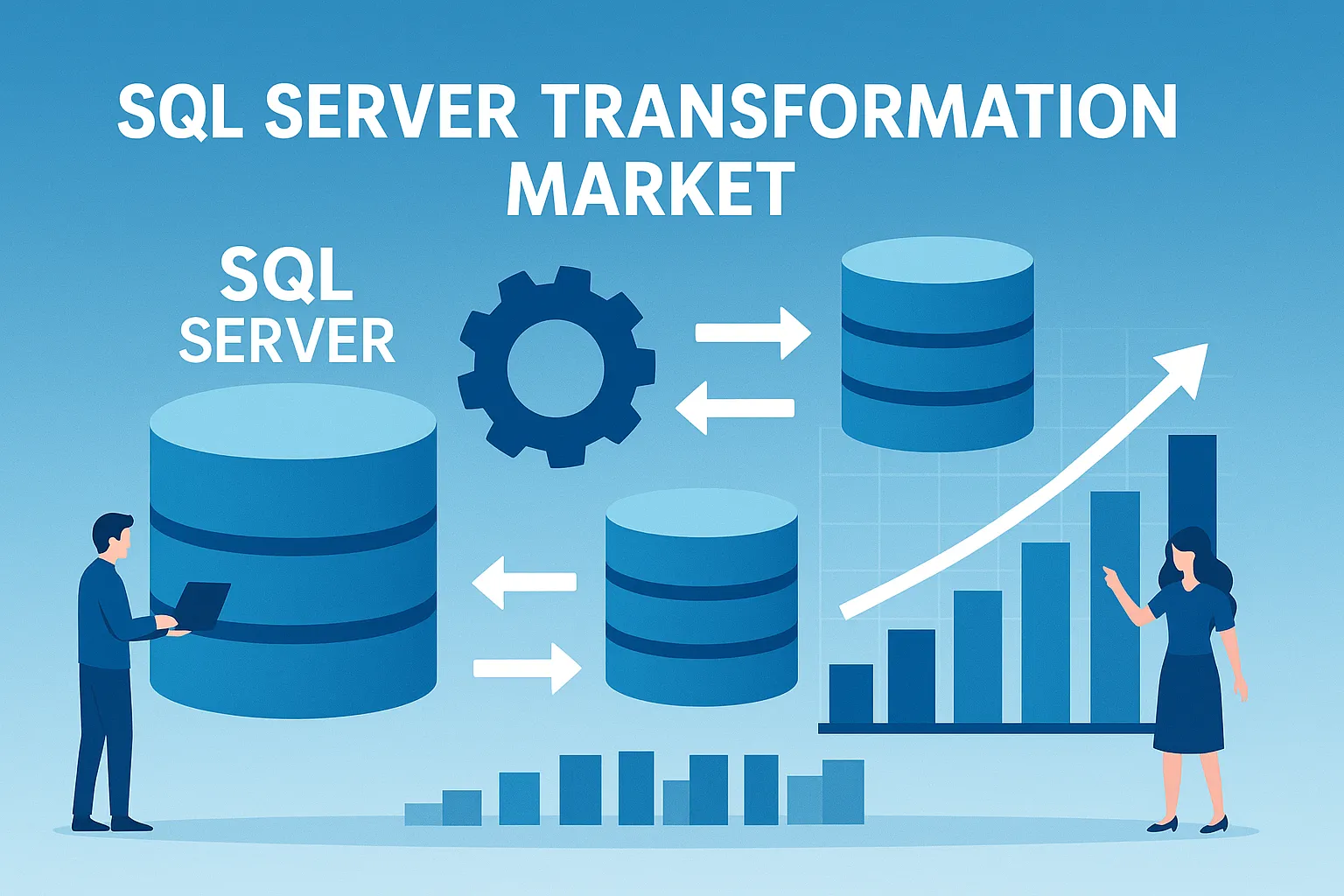
The SQL Server transformation market is experiencing unprecedented growth as organizations worldwide recognize the critical need to modernize their database infrastructure. As we move through 2025 and look toward 2033, businesses are increasingly shifting from legacy SQL Server systems to cloud-native, scalable, and agile database solutions. This transformation is driven by the demand for enhanced performance, cost efficiency, and the ability to leverage advanced analytics and artificial intelligence capabilities.
The global SQL Server transformation market represents a significant opportunity for enterprises seeking to optimize their data management strategies. With digital transformation accelerating across industries, organizations are investing heavily in upgrading, migrating, and transforming their SQL Server environments to meet modern business requirements. This comprehensive analysis explores the key trends, market dynamics, and growth opportunities shaping the SQL Server transformation landscape through 2033.
Understanding SQL Server Transformation
SQL Server transformation encompasses the comprehensive process of modernizing, migrating, and optimizing Microsoft SQL Server databases and associated applications. This transformation can involve several strategic initiatives including upgrading to newer SQL Server versions, migrating to Azure SQL Database or Azure SQL Managed Instance, refactoring applications for cloud compatibility, and implementing modern data architectures.
Organizations undertake SQL Server transformation for multiple reasons. Legacy systems often struggle with scalability limitations, increased maintenance costs, and security vulnerabilities. Modern SQL Server environments offer improved performance, enhanced security features, integrated artificial intelligence capabilities, and seamless integration with cloud services. The transformation process enables businesses to reduce infrastructure costs, improve operational efficiency, and unlock new capabilities for data analytics and business intelligence.
The scope of SQL Server transformation extends beyond simple migration projects. It involves strategic planning, assessment of existing infrastructure, application compatibility testing, data migration, performance optimization, and ongoing management. Successful transformation initiatives require careful consideration of business requirements, technical constraints, and organizational readiness for change.
Market Size and Growth Projections
The SQL Server transformation market is poised for substantial growth over the forecast period from 2025 to 2033. Industry analysts project the market will experience a compound annual growth rate exceeding fifteen percent as enterprises accelerate their digital transformation initiatives. The increasing adoption of cloud computing, the proliferation of data-intensive applications, and the growing emphasis on data-driven decision making are primary catalysts driving market expansion.
Market valuation estimates indicate the SQL Server transformation sector will reach multi-billion dollar levels by 2033. North America currently leads the market due to high technology adoption rates and the presence of numerous enterprises running legacy SQL Server infrastructure. However, the Asia-Pacific region is expected to witness the fastest growth rate as organizations in emerging economies invest in modernizing their IT infrastructure to remain competitive in the global marketplace.
The healthcare, financial services, retail, and manufacturing sectors represent the largest contributors to market growth. These industries manage massive volumes of data and require robust, secure, and scalable database solutions to support their operations. The increasing regulatory requirements around data privacy and security further compel organizations to transform their SQL Server environments to ensure compliance.
Key Market Trends Shaping the Future
Several transformative trends are reshaping the SQL Server transformation market landscape. Cloud migration stands at the forefront of these trends, with organizations increasingly moving their SQL Server workloads to Microsoft Azure and other cloud platforms. The shift to cloud infrastructure offers compelling benefits including elastic scalability, reduced capital expenditure, improved disaster recovery capabilities, and access to advanced cloud-native services.
Hybrid and multi-cloud strategies are gaining traction as enterprises seek to optimize their database deployments across on-premises and cloud environments. Organizations are adopting flexible architectures that allow them to maintain certain workloads on-premises while leveraging cloud capabilities for others. This approach provides the balance between control, compliance, and innovation that many enterprises require.
Automation and artificial intelligence are revolutionizing SQL Server transformation processes. Modern tools leverage machine learning algorithms to automate assessment, migration planning, code conversion, and performance optimization. These intelligent automation capabilities significantly reduce transformation timelines, minimize risks, and lower overall project costs. Database administrators and developers can focus on strategic initiatives rather than manual, repetitive tasks.
The containerization of SQL Server workloads represents another significant trend. Containers enable consistent deployment across development, testing, and production environments while improving resource utilization. Organizations are increasingly deploying SQL Server in Kubernetes environments to achieve greater agility and operational efficiency.
Market Dynamics and Driving Forces
Multiple dynamics influence the SQL Server transformation market trajectory. The primary driver remains the need for business agility and competitive advantage. Organizations recognize that modern database infrastructure is foundational to digital transformation initiatives. Legacy SQL Server systems constrain innovation, limit scalability, and increase technical debt. Transformation initiatives enable businesses to respond rapidly to market changes and customer demands.
Cost optimization serves as another powerful motivator. While transformation projects require upfront investment, the long-term savings from reduced infrastructure costs, lower licensing fees, and decreased maintenance overhead provide compelling return on investment. Cloud-based SQL Server solutions operate on consumption-based pricing models that align costs with actual usage, eliminating the need for over-provisioning.
Security and compliance requirements drive transformation initiatives across regulated industries. Modern SQL Server versions and Azure SQL services incorporate advanced security features including encryption at rest and in transit, advanced threat protection, and comprehensive auditing capabilities. Organizations must transform their database environments to meet evolving regulatory standards and protect sensitive data from increasingly sophisticated cyber threats.
The shortage of skilled database administrators familiar with legacy SQL Server versions creates operational risks and drives transformation. Modern SQL Server environments offer improved manageability, automated tuning, and intuitive interfaces that reduce the specialized expertise required for day-to-day operations. This democratization of database management helps organizations address skills gaps while improving operational efficiency.
Growth Opportunities and Market Potential
The SQL Server transformation market presents abundant growth opportunities for technology vendors, consulting firms, and managed service providers. Assessment and planning services represent a significant opportunity as organizations seek expert guidance to evaluate their current environments and develop comprehensive transformation roadmaps. These services help enterprises understand the complexity, risks, and investment requirements associated with their transformation initiatives.
Migration and modernization services constitute the largest market segment. Organizations require specialized expertise to execute complex migrations, refactor applications, optimize performance, and ensure minimal disruption to business operations. Service providers offering proven methodologies, automated tools, and industry-specific expertise are well-positioned to capture market share.
The growing demand for managed services creates recurring revenue opportunities. Many organizations prefer to outsource ongoing database management, optimization, and support to specialized providers. Managed service offerings that combine proactive monitoring, performance tuning, security management, and cost optimization deliver continuous value to customers while generating predictable revenue streams for providers.
Training and change management services represent an often-overlooked but critical opportunity. Successful SQL Server transformation requires more than technical migration; it demands organizational readiness and user adoption. Providers offering comprehensive training programs, change management consulting, and knowledge transfer services help ensure transformation investments deliver expected benefits.
The development of specialized tools and platforms for SQL Server transformation creates opportunities for software vendors. Solutions that automate assessment, accelerate migration, optimize performance, and manage hybrid environments address critical customer needs. Platforms incorporating artificial intelligence, predictive analytics, and intelligent automation capabilities command premium positioning in the market.
Challenges and Market Restraints
Despite robust growth prospects, the SQL Server transformation market faces several challenges. The complexity of transformation projects remains a significant barrier. Enterprises often operate heterogeneous environments with numerous interdependencies, custom applications, and unique configurations. Accurately assessing these environments, planning migrations, and executing transformations without disrupting business operations requires sophisticated expertise and tooling.
Data security and privacy concerns present another challenge. Organizations must ensure data remains protected throughout the transformation process and that new environments maintain or exceed existing security postures. The risk of data breaches, compliance violations, or data loss during migration creates hesitation and extends decision-making timelines.
Budget constraints and competing priorities impact market growth. While organizations recognize the importance of SQL Server transformation, they must balance these initiatives against other technology investments and business priorities. Economic uncertainty or budget pressures can delay or scale back transformation projects.
Organizational resistance to change slows transformation adoption. Technology teams comfortable with existing systems may resist new approaches, tools, and processes. Business stakeholders may question the disruption and investment required for transformation. Overcoming this resistance requires strong leadership, clear communication of benefits, and demonstrated quick wins.
Regional Market Analysis
North America maintains market leadership in SQL Server transformation due to mature technology markets, high cloud adoption rates, and significant installed base of SQL Server infrastructure. United States enterprises across all sectors are actively pursuing transformation initiatives to modernize legacy systems and leverage cloud capabilities. The region benefits from abundant expertise, established vendor ecosystems, and customer willingness to invest in innovation.
Europe represents the second-largest market with strong growth driven by data protection regulations, digital transformation initiatives, and cloud adoption. Organizations in United Kingdom, Germany, and France are particularly active in SQL Server transformation as they seek to comply with stringent data governance requirements while improving operational efficiency.
The Asia-Pacific region is experiencing the fastest growth rate as emerging economies invest heavily in digital infrastructure. Countries including China, India, Japan, and Australia are witnessing rapid enterprise technology adoption. Organizations in these markets are often leapfrogging legacy systems and moving directly to modern cloud-based SQL Server solutions, accelerating market growth.
Competitive Landscape
The SQL Server transformation market features diverse participants including global system integrators, specialized database consulting firms, cloud service providers, and independent software vendors. Microsoft Azure leads the cloud platform category, offering comprehensive SQL Server transformation services, tools, and incentives. Competing cloud providers including Amazon Web Services and Google Cloud Platform also offer SQL Server hosting and migration services.
Major consulting and system integration firms including Accenture, Deloitte, IBM, and Cognizant provide end-to-end transformation services leveraging their industry expertise, global delivery capabilities, and strategic partnerships. These firms compete on the basis of methodology maturity, industry specialization, and track record of successful transformations.
Specialized database solution providers and boutique consulting firms serve niche segments with deep technical expertise and personalized service models. These players often focus on specific industries, technologies, or transformation scenarios where they have developed distinctive capabilities.
Future Outlook and Strategic Recommendations
The SQL Server transformation market outlook through 2033 remains exceptionally positive. As organizations continue their digital transformation journeys, database modernization will remain a strategic priority. The convergence of cloud computing, artificial intelligence, edge computing, and real-time analytics will create new use cases and transformation requirements.
Organizations should approach SQL Server transformation strategically rather than tactically. Successful initiatives begin with comprehensive assessment of current state, clear definition of business objectives, and development of detailed transformation roadmaps. Phased approaches that deliver incremental value while managing risk typically outperform aggressive big-bang migrations.
Investing in change management and skills development is equally important as technical execution. Organizations should ensure their teams have the knowledge, tools, and support needed to operate transformed environments effectively. Continuous learning and adaptation will be essential as database technologies continue to evolve.
The integration of artificial intelligence and machine learning into database management will accelerate. Organizations should evaluate how intelligent automation can optimize their SQL Server environments, improve performance, predict issues before they impact operations, and reduce manual intervention requirements.
Frequently Asked Questions
What is SQL Server transformation?
SQL Server transformation refers to the process of modernizing, migrating, and optimizing Microsoft SQL Server database environments. This can include upgrading to newer versions, migrating to cloud platforms like Azure SQL Database, refactoring applications for improved performance, and implementing modern data architectures. The goal is to improve scalability, reduce costs, enhance security, and enable advanced analytics capabilities.
Why are organizations investing in SQL Server transformation?
Organizations invest in SQL Server transformation to achieve multiple objectives including reduced infrastructure and operational costs, improved performance and scalability, enhanced security and compliance, better disaster recovery capabilities, and access to modern features like artificial intelligence and advanced analytics. Legacy SQL Server systems often cannot meet the demands of modern digital business requirements.
How long does a typical SQL Server transformation project take?
The duration of SQL Server transformation projects varies significantly based on environment complexity, data volume, number of applications, and chosen transformation approach. Simple migrations might complete in weeks, while complex enterprise transformations involving multiple databases, custom applications, and extensive refactoring can take several months to over a year. Phased approaches allow organizations to realize value incrementally throughout the transformation journey.
What are the main challenges in SQL Server transformation?
Key challenges include accurately assessing environment complexity and dependencies, ensuring data security and integrity during migration, minimizing disruption to business operations, managing application compatibility issues, addressing skills gaps in the organization, controlling costs and timelines, and achieving user adoption of transformed systems. Proper planning, expert guidance, and proven methodologies help mitigate these challenges.
How much does SQL Server transformation cost?
Transformation costs vary widely based on factors including environment size and complexity, chosen migration approach, extent of application refactoring required, need for custom development, and whether organizations use internal resources or external service providers. While significant upfront investment may be required, organizations typically realize substantial long-term savings through reduced infrastructure costs, lower licensing fees, and improved operational efficiency.
What is the difference between SQL Server migration and transformation?
Migration typically refers to moving SQL Server databases and applications from one environment to another with minimal changes, such as upgrading versions or moving to cloud infrastructure. Transformation encompasses a broader scope including migration but also involves modernizing architectures, refactoring applications, implementing new capabilities, and optimizing for cloud-native operations. Transformation delivers greater long-term value but requires more extensive planning and execution.
Is cloud migration mandatory for SQL Server transformation?
Cloud migration is not mandatory but represents the most common transformation path due to compelling benefits. Organizations can also transform their SQL Server environments by upgrading on-premises infrastructure, implementing hybrid architectures, or adopting containerized deployments. The optimal approach depends on specific business requirements, regulatory constraints, existing infrastructure investments, and strategic technology direction.
How can organizations ensure successful SQL Server transformation?
Success factors include securing executive sponsorship and adequate funding, conducting thorough assessment and planning, selecting experienced partners or building internal expertise, adopting proven methodologies and tools, implementing phased approaches that manage risk, investing in change management and training, maintaining focus on business outcomes rather than just technical migration, and establishing clear success metrics and governance processes.
Conclusion
The SQL Server transformation market presents exceptional growth opportunities through 2033 as organizations worldwide modernize their database infrastructure to support digital business initiatives. The convergence of cloud computing, artificial intelligence, and advanced analytics creates compelling reasons for enterprises to transform legacy SQL Server environments. While challenges exist, the benefits of improved agility, reduced costs, enhanced security, and access to modern capabilities make transformation a strategic imperative.
Organizations that approach SQL Server transformation strategically, with proper planning, expert guidance, and focus on business outcomes, will position themselves for competitive advantage in an increasingly data-driven economy. The market will continue evolving with new technologies, methodologies, and service models emerging to address customer needs. Both enterprises undertaking transformation and vendors serving this market have significant opportunities to create and capture value over the coming years.

No comment