
Server Support’s Role in Ransomware Prevention and Recovery
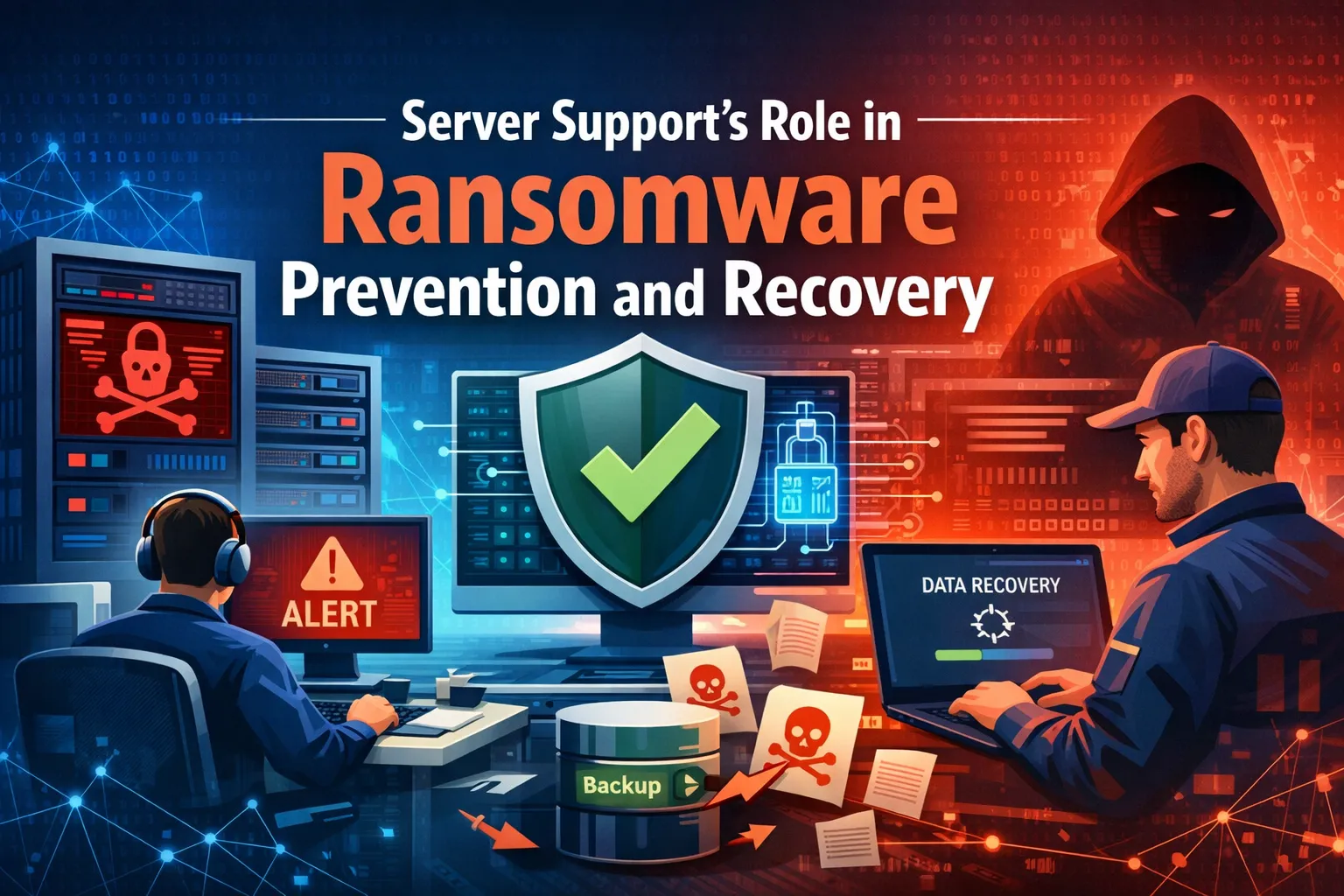
Ransomware attacks have become one of the most devastating cyber threats facing businesses today. According to recent cybersecurity reports, ransomware incidents continue to surge, with attackers demanding increasingly larger ransoms while causing significant operational disruptions. For businesses relying on digital infrastructure, understanding how proper server support can prevent these attacks and facilitate recovery is no longer optional—it’s essential for survival.
Your servers represent the heart of your business operations, storing critical data, hosting applications, and enabling communication across your organization. When ransomware strikes, these systems become the primary target, and without robust server support strategies in place, the consequences can be catastrophic. Professional server management combines proactive security measures with rapid response capabilities to create a comprehensive defense against ransomware threats.
Understanding the Ransomware Threat to Server Infrastructure
Ransomware operates by encrypting files and systems, rendering them inaccessible until a ransom is paid—often with no guarantee of data recovery even after payment. Attackers specifically target servers because compromising these systems maximizes their impact and leverage. A single infected server can spread malware throughout an entire network, encrypting databases, shared files, and backup systems simultaneously.
Modern ransomware variants have evolved beyond simple encryption schemes. Today’s attacks often include data exfiltration, where criminals steal sensitive information before encryption, threatening to publish confidential data if ransoms aren’t paid. This double extortion tactic has made ransomware even more dangerous, particularly for businesses handling customer information, financial records, or proprietary data.
The financial impact extends far beyond ransom payments. Businesses face downtime costs, lost productivity, regulatory fines, customer notification expenses, reputation damage, and increased insurance premiums. Studies show that the average cost of ransomware recovery exceeds hundreds of thousands of dollars, with some incidents costing millions when all factors are considered.
Server support plays a critical role in addressing these threats through multiple layers of protection, continuous monitoring, and strategic backup implementations that can mean the difference between a minor incident and a business-ending disaster.
Proactive Prevention Through Professional Server Management
Prevention remains the most effective approach to ransomware defense. Professional server support establishes multiple security layers that significantly reduce attack surfaces and prevent unauthorized access to critical systems.
Patch Management and Vulnerability Remediation
Cybercriminals frequently exploit known vulnerabilities in server operating systems and applications to gain initial access. Professional server support includes systematic patch management that identifies, tests, and deploys security updates across your infrastructure. This proactive approach closes security gaps before attackers can exploit them, addressing vulnerabilities in Windows Server, Linux distributions, database platforms, and enterprise applications.
Regular vulnerability scanning identifies potential weaknesses in server configurations, outdated software versions, and insecure settings. Server support teams prioritize critical patches and implement them during planned maintenance windows, minimizing disruption while maintaining security posture.
Access Control and Privileged Account Management
Ransomware often spreads through compromised credentials, particularly privileged accounts with administrative access to servers. Implementing strict access controls limits who can access server resources and what actions they can perform.
Professional server support establishes role-based access control (RBAC) policies that grant users only the permissions necessary for their job functions. Multi-factor authentication (MFA) adds an additional verification layer, preventing unauthorized access even when passwords are compromised. Privileged account management solutions monitor administrative activities, detect suspicious behavior, and restrict lateral movement across your network.
Network Segmentation and Server Isolation
Strategic network segmentation limits ransomware’s ability to spread throughout your infrastructure. Server support specialists design network architectures that isolate critical systems, creating barriers between different security zones. Production servers, development environments, and backup infrastructure operate in separate network segments with controlled communication paths.
This segmentation strategy contains potential infections, preventing ransomware from moving laterally from infected workstations to critical server infrastructure. Firewalls, virtual LANs (VLANs), and micro-segmentation technologies create these protective boundaries while maintaining necessary business functionality.
Real-Time Monitoring and Threat Detection
Continuous server monitoring enables early detection of ransomware indicators before significant damage occurs. Advanced monitoring solutions track file system changes, unusual encryption activities, abnormal network traffic patterns, and suspicious process executions.
Professional server support teams implement Security Information and Event Management (SIEM) systems that aggregate logs from servers, applications, and security devices. Machine learning algorithms analyze this data to identify anomalies indicative of ransomware activity, triggering automated responses and alerting support teams to investigate potential threats immediately.
Strategic Backup Implementation for Ransomware Recovery
While prevention is crucial, no security strategy provides absolute protection. Comprehensive backup strategies serve as your last line of defense, enabling recovery without paying ransoms or suffering permanent data loss.
The 3-2-1-1-0 Backup Rule for Ransomware Protection
Modern backup strategies have evolved to specifically address ransomware threats. Professional server support implements the 3-2-1-1-0 rule: maintain three copies of data, on two different media types, with one copy off-site, one copy offline or immutable, and zero errors in backup verification.
This approach ensures that even if ransomware encrypts production servers and reaches network-connected backup storage, offline or immutable copies remain unaffected and available for recovery. Immutable backups use write-once-read-many (WORM) technology that prevents modification or deletion for specified retention periods, making them ransomware-proof.
Automated Backup Testing and Verification
Backups are only valuable if they can be successfully restored when needed. Many businesses discover too late that their backups are corrupted, incomplete, or incompatible with recovery requirements. Professional server support includes regular backup testing that validates data integrity and verifies restoration procedures.
Automated testing routines restore backup copies to isolated environments, confirming that files are accessible, databases are consistent, and applications function correctly. This proactive testing identifies issues before emergencies occur, ensuring recovery capabilities when you need them most.
Rapid Recovery Technologies
Recovery time objectives (RTOs) determine how quickly your business can resume operations after a ransomware incident. Traditional backup restoration methods can require hours or days to recover large server environments, resulting in extensive downtime and revenue loss.
Advanced server support leverages technologies like instant recovery, where virtual machines boot directly from backup storage while data migrates to production infrastructure in the background. Continuous data protection (CDP) captures changes in real-time, minimizing data loss and enabling recovery to points immediately before ransomware encryption began.
Incident Response and Recovery Coordination
When ransomware strikes despite preventive measures, professional server support provides structured incident response that minimizes damage and accelerates recovery.
Immediate Containment and Impact Assessment
The first hours following ransomware detection are critical. Server support teams immediately isolate affected systems, disconnecting them from the network to prevent further spread. Forensic analysis identifies the ransomware variant, infection vectors, and extent of compromise across your infrastructure.
This rapid assessment determines which servers and data have been affected, whether backups remain uncompromised, and what recovery options are available. Clear documentation during this phase proves invaluable for insurance claims, regulatory reporting, and post-incident analysis.
Coordinated Recovery Execution
Professional server support orchestrates recovery activities across multiple systems simultaneously, prioritizing critical business functions and minimizing downtime. Recovery plans identify dependencies between systems, ensuring applications restore in the correct sequence with all required data and configurations.
Communication protocols keep stakeholders informed throughout the recovery process, managing expectations regarding timelines and functionality restoration. This coordinated approach prevents chaos during crisis situations, maintaining focus on systematic recovery rather than reactive troubleshooting.
Post-Incident Security Hardening
Recovery extends beyond restoring functionality. Professional server support conducts post-incident analysis to identify how ransomware infiltrated your environment, what vulnerabilities enabled its spread, and what improvements can prevent recurrence.
Security hardening implements lessons learned from the incident, closing identified gaps, strengthening authentication requirements, updating incident response procedures, and enhancing monitoring capabilities. This continuous improvement cycle makes your infrastructure more resilient with each challenge overcome.
Building a Comprehensive Server Security Strategy
Effective ransomware protection requires more than individual security measures—it demands a holistic approach integrating prevention, detection, and recovery capabilities.
Employee Training and Security Awareness
Human error remains a leading cause of ransomware infections. Phishing emails containing malicious attachments or links frequently serve as initial infection vectors. Server support teams work alongside security awareness programs to educate employees about ransomware threats, phishing recognition, safe browsing practices, and proper incident reporting procedures.
Regular security training reduces the likelihood of user actions that compromise server security, creating a human firewall that complements technical protections.
Endpoint Protection Integration
While server support focuses on infrastructure security, comprehensive ransomware defense requires coordination with endpoint protection systems. Modern endpoint detection and response (EDR) solutions identify suspicious activities on workstations before they spread to servers.
Integration between endpoint and server security tools creates unified visibility across your entire environment, enabling coordinated responses that address threats at multiple points simultaneously.
Compliance and Regulatory Considerations
Many industries face regulatory requirements regarding data protection, breach notification, and security controls. Professional server support ensures ransomware prevention and recovery strategies align with compliance obligations under frameworks like HIPAA, PCI DSS, GDPR, and industry-specific regulations.
Documentation of security measures, backup procedures, and incident response capabilities demonstrates due diligence during audits and provides necessary evidence for cyber insurance claims following ransomware incidents.
The Cost-Benefit Analysis of Professional Server Support
Investing in professional server support delivers significant returns through risk reduction, operational efficiency, and business continuity assurance.
Preventing Downtime Costs
The average cost of IT downtime varies by industry but consistently ranges from thousands to hundreds of thousands of dollars per hour. For businesses dependent on server infrastructure for customer service, e-commerce, or operational systems, extended outages can be catastrophic.
Professional server support prevents most ransomware incidents through proactive security measures while enabling rapid recovery when incidents occur. The cost of comprehensive server management represents a fraction of potential losses from successful ransomware attacks.
Insurance and Liability Considerations
Cyber insurance has become essential for modern businesses, but insurers increasingly require demonstrated security measures as conditions for coverage. Professional server support provides documentation of security controls, backup procedures, and incident response capabilities that satisfy insurance requirements.
Additionally, proper security measures reduce liability exposure when customer data is involved. Demonstrating reasonable security precautions can limit legal and regulatory consequences following data breaches.
Competitive Advantage Through Reliability
Customers increasingly evaluate vendors based on security posture and reliability. Businesses that can demonstrate robust ransomware protection and proven recovery capabilities gain competitive advantages, particularly in industries handling sensitive information or providing critical services.
Professional server support enables businesses to market their security commitment, building customer confidence and differentiating from competitors with weaker infrastructure protection.
Frequently Asked Questions
How often should server backups run to protect against ransomware?
Most businesses should implement daily backups at minimum, with hourly backups for critical servers and continuous data protection for mission-critical databases. Backup frequency depends on how much data loss your business can tolerate—if losing four hours of work would be catastrophic, you need backups every four hours or less.
Can ransomware encrypt backup files stored on network-attached storage?
Yes, ransomware can encrypt network-accessible backups. That’s why offline or immutable backups are essential. Immutable backups use technology that prevents modification or deletion for set periods, while offline backups are disconnected from your network entirely, keeping them safe from ransomware encryption.
Should businesses pay ransoms to recover encrypted servers?
No. Law enforcement and cybersecurity experts strongly discourage paying ransoms. Payment doesn’t guarantee data recovery, funds criminal operations, and marks your business as a willing target for future attacks. Professional server support with proper backups eliminates the need to consider ransom payments.
How long does server recovery typically take after a ransomware attack?
Recovery time varies widely based on your infrastructure and backup technology. Traditional restoration can take hours to days for large environments. Advanced instant recovery technologies can restore virtual servers within minutes while data migrates in the background. Recovery time objectives should be established based on your business needs.
What’s the difference between server support and regular IT support for ransomware protection?
Server support specializes in infrastructure security, implementing enterprise-grade monitoring, backup strategies, and security controls specifically designed for server environments. Regular IT support typically handles workstation issues and general technology problems. Server support requires expertise in server operating systems, enterprise applications, and advanced security implementations.
How can businesses test their ransomware recovery capabilities without risking production systems?
Recovery testing uses isolated environments that mirror production infrastructure. Backups are restored to separate networks or virtual environments to validate data integrity and procedures without affecting operational systems. Regular testing identifies problems before real incidents occur, ensuring your recovery plan actually works.
What are the most common vulnerabilities that ransomware exploits in server environments?
The most common vulnerabilities include unpatched software, weak passwords, unsecured Remote Desktop Protocol (RDP) connections, misconfigured access controls, and poor network segmentation. Professional server support addresses these through systematic patching, strong authentication, access restrictions, and network architecture that limits attack surfaces.
Do small businesses need the same level of server support as large enterprises?
Small businesses face identical ransomware threats and often make easier targets due to weaker security. While the scale differs, essential protections like backups, patch management, and monitoring apply to all business sizes. Professional server support scales appropriately to provide critical protections within smaller budgets and simpler infrastructure environments.




No comment