
How Server Support Services are Evolving in 2026: What You Need to Know
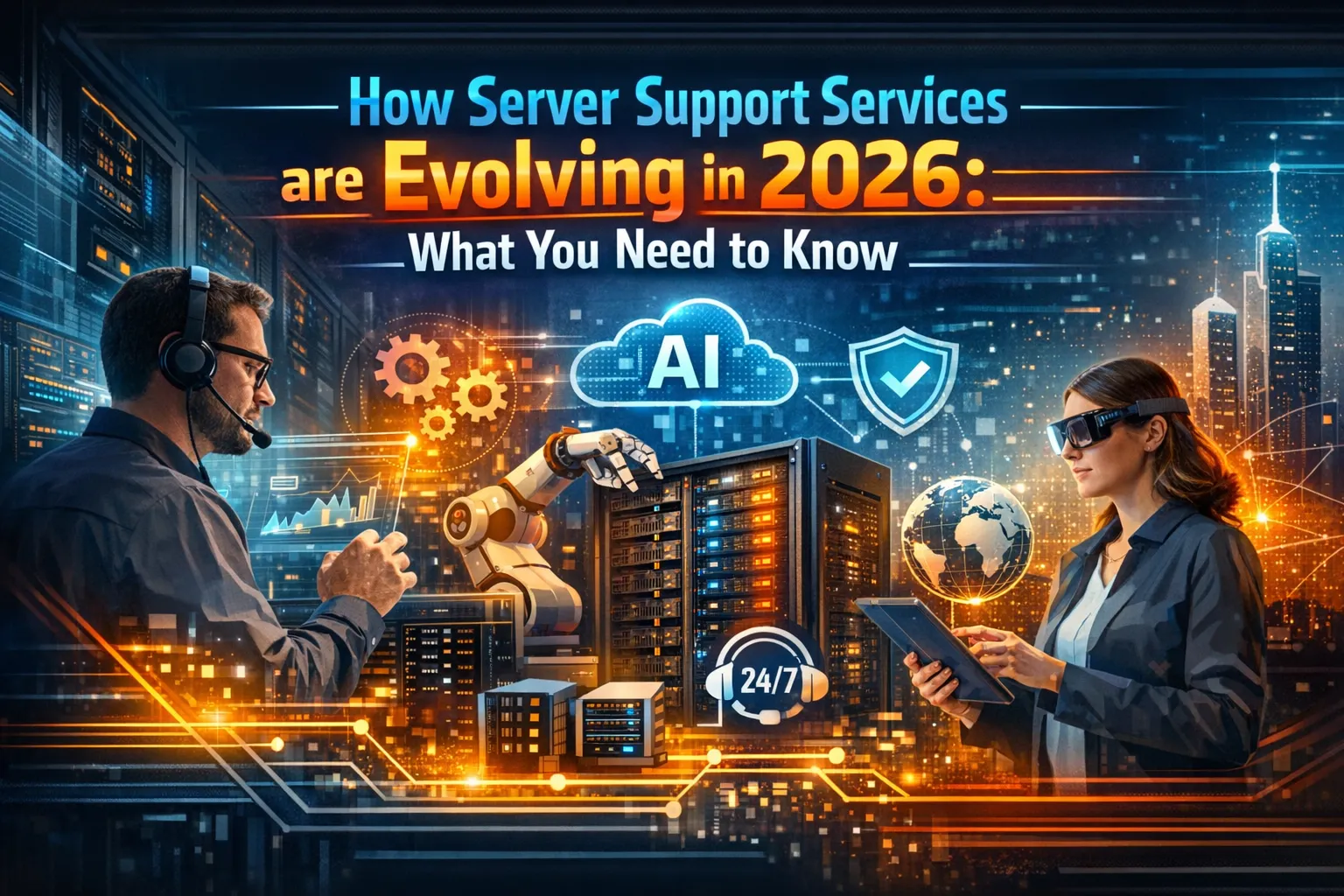
The landscape of server support services is undergoing a dramatic transformation in 2026, driven by artificial intelligence, hybrid infrastructure demands, and increasingly sophisticated cyber threats. Organizations that rely on outdated support models are finding themselves struggling with downtime, security vulnerabilities, and scalability challenges that modern business simply cannot afford.
Understanding how server support has evolved isn’t just about keeping up with technology trends—it’s about ensuring your business infrastructure can support growth, protect critical data, and deliver the reliability your customers expect. Let’s explore the key developments reshaping server support services and what they mean for your organization.
The Rise of AI-Powered Predictive Maintenance
Traditional server support operated on a reactive model: something breaks, you call support, and they fix it. This approach meant costly downtime, urgent after-hours calls, and business disruptions that could have been prevented.
In 2026, artificial intelligence has fundamentally changed this paradigm. Modern server support services now employ machine learning algorithms that continuously monitor server health metrics, analyzing patterns that human technicians might miss. These systems can predict hardware failures weeks before they occur, identifying subtle performance degradation that signals an impending disk failure or memory module issue.
The practical impact is significant. Instead of experiencing unexpected server crashes during business hours, organizations receive proactive alerts about components that need replacement. Support teams can schedule maintenance during planned windows, order replacement parts in advance, and ensure zero-impact transitions. This shift from reactive to predictive support has reduced unplanned downtime by up to 70% for organizations that have adopted these advanced monitoring systems.
AI-powered support also extends to performance optimization. Machine learning models analyze application workloads, user access patterns, and resource utilization to recommend configuration changes that improve performance. These intelligent systems can automatically adjust resource allocation, optimize database queries, and rebalance workloads across server clusters without human intervention.
Hybrid Infrastructure Support Becomes the Standard
The days of purely on-premises or entirely cloud-based server environments are largely behind us. In 2026, the overwhelming majority of organizations operate hybrid infrastructures that combine on-premises servers, private cloud resources, and public cloud services across multiple providers.
This complexity has forced server support services to evolve dramatically. Support teams can no longer specialize exclusively in physical hardware or cloud platforms—they need comprehensive expertise across the entire infrastructure spectrum. The best support providers now offer unified management platforms that provide single-pane-of-glass visibility across on-premises servers, AWS environments, Azure deployments, and private cloud resources.
Hybrid infrastructure support requires new skill sets and tools. Support technicians must understand how to troubleshoot connectivity issues between on-premises servers and cloud resources, optimize data transfer costs between environments, and ensure consistent security policies across disparate platforms. They need expertise in containerization technologies like Kubernetes that often span multiple environments, and they must navigate the complexities of hybrid backup and disaster recovery strategies.
The integration challenges are substantial. Modern server support services provide the orchestration layer that makes hybrid environments function cohesively. This includes automated failover between on-premises and cloud resources, intelligent workload placement based on cost and performance requirements, and unified monitoring that correlates events across all infrastructure components.
Zero-Trust Security Architecture Integration
Server security has moved far beyond firewalls and antivirus software. The zero-trust security model has become the dominant framework in 2026, fundamentally changing how server support services approach security.
Under zero-trust principles, no user or device is automatically trusted, even if they’re inside the corporate network. Every access request must be authenticated, authorized, and encrypted, regardless of where it originates. This philosophy requires server support teams to implement and maintain sophisticated identity and access management systems, micro-segmentation that isolates server workloads, and continuous verification of security postures.
Modern server support services now include security operations center (SOC) capabilities as a standard component. Support teams actively monitor for indicators of compromise, respond to security alerts in real-time, and conduct regular vulnerability assessments. They implement automated patch management systems that deploy critical security updates within hours of release while maintaining application compatibility.
The integration of security into server support has also expanded to include compliance management. Support teams help organizations navigate complex regulatory requirements like HIPAA, GDPR, and industry-specific standards. They maintain audit trails, implement encryption for data at rest and in transit, and ensure server configurations meet compliance mandates.
Serverless and Container-Focused Support Models
The rise of serverless computing and containerized applications has created entirely new categories of support requirements. Traditional server support focused on maintaining physical or virtual machines. In 2026, an increasing portion of server support involves managing container orchestration platforms, serverless function deployments, and event-driven architectures.
Support teams must now understand concepts like container image management, service mesh configurations, and serverless function optimization. They troubleshoot issues that span traditional servers and modern cloud-native architectures, often dealing with ephemeral infrastructure that exists for minutes rather than months.
This evolution requires support providers to offer expertise in technologies like Docker, Kubernetes, AWS Lambda, Azure Functions, and Google Cloud Run. They need tools to monitor containerized applications, trace requests across microservices architectures, and optimize resource allocation for serverless workloads that scale dynamically based on demand.
The shift toward containers and serverless has also changed cost models. Support services now include FinOps capabilities—helping organizations understand and optimize their cloud spending, identify underutilized resources, and implement policies that prevent cost overruns while maintaining performance.
Automated Remediation and Self-Healing Systems
Perhaps the most significant evolution in server support for 2026 is the emergence of automated remediation capabilities. Modern server support platforms can now detect common issues and resolve them automatically without human intervention.
These self-healing systems go beyond simple alerts. When a web server becomes unresponsive, the system can automatically restart services, reroute traffic to healthy instances, and notify support staff of the action taken. When disk space reaches critical levels, automated processes can archive old logs, compress files, and expand storage volumes without requiring manual intervention.
The implementation of automated remediation playbooks allows organizations to codify their tribal knowledge. Support teams develop standardized response procedures for common issues, which the system then executes automatically when those conditions are detected. This approach ensures consistent, rapid responses to problems while freeing support staff to focus on complex issues that require human expertise and strategic thinking.
Machine learning enhances these capabilities by learning from historical incidents. The system recognizes patterns in how issues are resolved and suggests new automation opportunities. Over time, the platform becomes increasingly capable of handling a wider range of problems independently.
Enhanced Remote Management Capabilities
The distributed workforce reality of 2026 has accelerated the development of remote server management capabilities. Modern server support services provide technicians with comprehensive remote access tools that enable them to manage infrastructure from anywhere, while maintaining strict security controls.
These remote management platforms include out-of-band management capabilities that allow support teams to access servers even when the operating system is unresponsive. They can perform firmware updates, configure BIOS settings, and troubleshoot boot failures remotely—tasks that previously required physical data center access.
Remote support has also evolved to include augmented reality assistance. When on-site intervention is necessary, remote experts can guide local staff through complex procedures using AR glasses that overlay instructions and diagrams onto physical equipment. This capability has dramatically reduced the need for expensive technician site visits while improving first-time fix rates.
Business Continuity and Disaster Recovery as Core Components
Server support services in 2026 have fully integrated business continuity and disaster recovery capabilities as fundamental components rather than add-on services. Support providers recognize that keeping servers running is only part of the equation—ensuring business operations can continue during any disruption has become equally critical.
Modern support packages include regular disaster recovery testing, automated failover configurations, and recovery time objectives measured in minutes rather than hours. Support teams maintain documented recovery procedures, conduct quarterly DR drills, and continuously validate backup integrity through automated restoration testing.
The sophistication of disaster recovery has increased substantially. Organizations now implement multi-site replication, geographically distributed backup storage, and failover mechanisms that activate automatically when primary systems fail. Server support teams manage these complex environments, ensuring data consistency across sites and maintaining the orchestration required for seamless failover.
Sustainability and Energy Efficiency Focus
An emerging dimension of server support in 2026 is the focus on environmental sustainability. Organizations face increasing pressure to reduce their carbon footprint, and data center energy consumption represents a significant opportunity for improvement.
Progressive server support services now include energy efficiency assessments, recommendations for hardware consolidation, and optimization strategies that reduce power consumption without sacrificing performance. Support teams monitor power usage effectiveness (PUE), implement intelligent cooling strategies, and help organizations transition to energy-efficient hardware during refresh cycles.
This sustainability focus extends to lifecycle management. Support providers help organizations properly decommission old equipment, ensure secure data destruction, and facilitate recycling of electronic components. They advise on extending hardware lifecycles through strategic upgrades rather than complete replacements, reducing both costs and environmental impact.
The Path Forward: Choosing Modern Server Support
The evolution of server support services in 2026 reflects the broader transformation of IT infrastructure. Organizations can no longer treat server support as a commodity service focused solely on keeping hardware operational. Modern server support requires strategic partners who understand hybrid infrastructures, implement predictive maintenance, integrate security throughout the stack, and align technology operations with business objectives.
When evaluating server support providers, organizations should assess their capabilities across these evolved dimensions: AI-powered monitoring and predictive maintenance, hybrid and multi-cloud expertise, zero-trust security implementation, container and serverless support, automated remediation capabilities, comprehensive remote management, integrated business continuity planning, and sustainability practices.
The organizations that thrive in 2026 and beyond will be those that recognize server support as a strategic function that enables business agility, protects critical assets, and provides the foundation for digital transformation initiatives.
Frequently Asked Questions
What is predictive server maintenance?
Predictive server maintenance uses AI and machine learning to analyze server performance data and predict potential failures before they occur. This allows support teams to replace components and address issues proactively, preventing unexpected downtime.
How does hybrid server support differ from traditional support?
Hybrid server support manages infrastructure across on-premises servers, private clouds, and public cloud platforms simultaneously. It requires unified monitoring, cross-platform expertise, and tools that provide visibility across all environments rather than supporting each in isolation.
What is zero-trust security in server environments?
Zero-trust security assumes no user or device should be automatically trusted. It requires continuous verification of identity, strict access controls, encryption, and micro-segmentation that isolates server workloads to limit potential breach impacts.
Do I still need traditional server support if I use cloud services?
Yes, most organizations operate hybrid environments combining on-premises and cloud resources. Even fully cloud-based operations require specialized support for configuration, optimization, security, cost management, and integration with business applications.
What are self-healing server systems?
Self-healing systems automatically detect and resolve common server issues without human intervention. They can restart failed services, rebalance workloads, expand storage, and implement predetermined remediation procedures based on detected conditions.
How often should disaster recovery be tested?
Modern best practices recommend testing disaster recovery procedures quarterly at minimum, with automated validation of backup integrity occurring continuously. Critical systems may require monthly testing to ensure recovery objectives can be met.
What should I look for in a server support provider in 2026?
Prioritize providers with AI-powered monitoring capabilities, hybrid infrastructure expertise, integrated security operations, automated remediation tools, 24/7 availability, documented disaster recovery processes, and experience with modern technologies like containers and serverless platforms.





No comment