
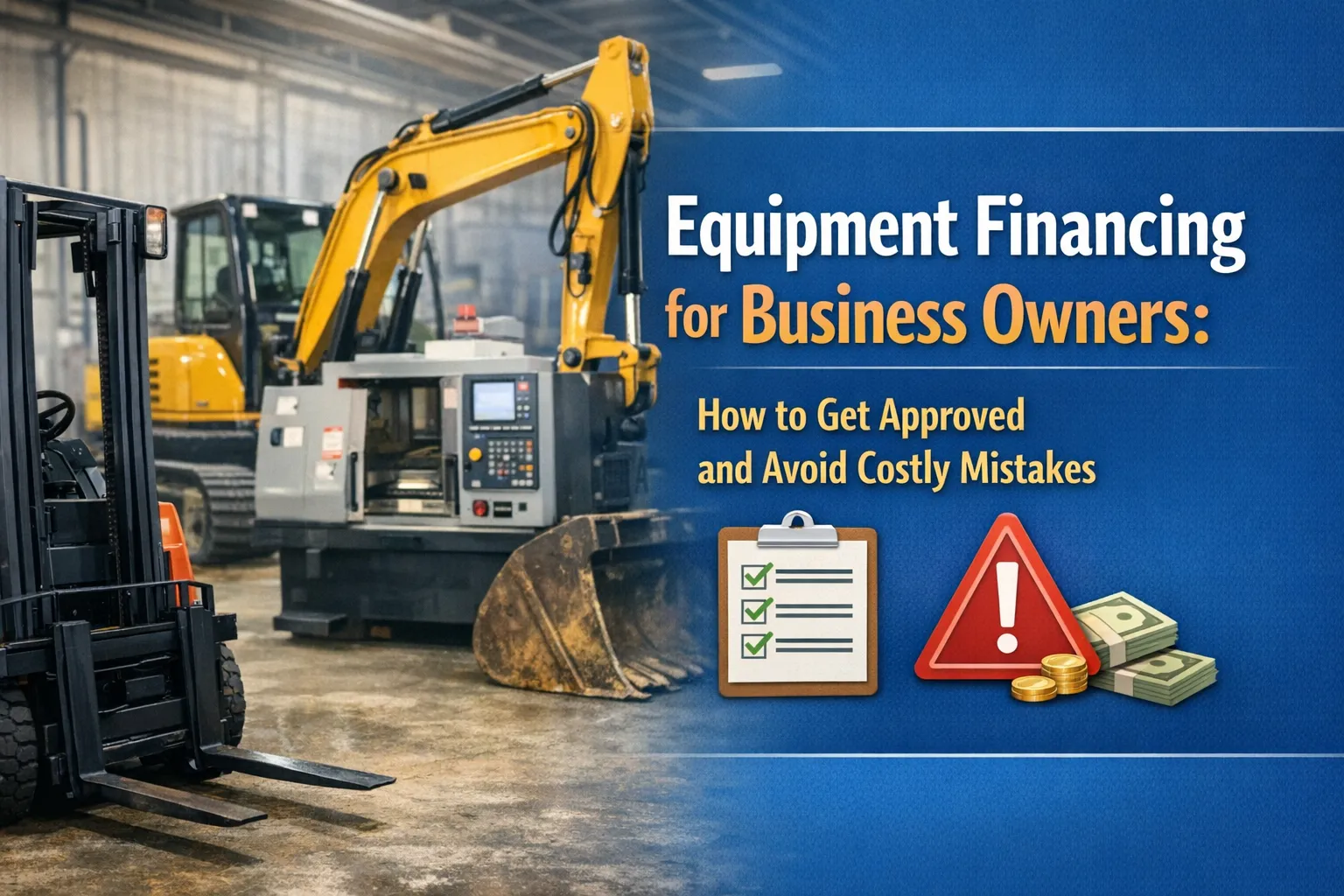
Equipment Financing for Business Owners: How to Get Approved and Avoid Costly Mistakes
Introduction
Acquiring the right equipment can transform your business operations, boost productivity, and open new revenue opportunities. However, paying cash for major equipment purchases can drain working capital and leave your business vulnerable during cash flow fluctuations. Equipment financing offers a strategic alternative that preserves liquidity while putting essential tools in your hands immediately.
The equipment financing industry has reached unprecedented momentum in 2026. New business volumes hit their highest monthly dollar amount ever recorded in January, with credit approvals holding near historic highs around 78%. Businesses now finance more than three-quarters of their equipment and software purchases rather than buying outright, recognizing that smart capital management often means using other people’s money to acquire revenue-generating assets.
Yet despite favorable market conditions, many business owners struggle to secure equipment financing or end up with unfavorable terms because they make avoidable mistakes during the application process. Understanding what lenders look for, preparing properly, and knowing which pitfalls to avoid can mean the difference between quick approval with competitive rates and rejection or expensive financing that strains your cash flow.
This guide provides practical strategies for securing equipment financing approval while steering clear of the costly errors that derail applications and drain profits.
Understanding How Equipment Financing Works
Equipment financing allows businesses to acquire machinery, vehicles, technology, and other essential assets by spreading the cost over time rather than paying everything upfront. The equipment itself typically serves as collateral for the financing, which makes this type of funding more accessible than unsecured business loans.
The basic structure involves a lender providing funds to purchase equipment while the business makes regular payments over a predetermined term. Once all payments are complete, the business owns the equipment outright. This self-collateralizing nature means lenders face lower risk, which translates to easier approvals and more competitive rates compared to unsecured financing options.
Equipment financing amounts range from as little as $5,000 for smaller purchases to $1 million or more for heavy machinery and specialized systems. Most lenders will finance up to 100% of the equipment purchase price, though offering a down payment can improve your approval odds and reduce total costs.
The right equipment can increase capacity, improve efficiency, and generate new revenue streams. Equipment financing lets businesses make those investments immediately without depleting cash reserves, with payments that spread the cost over the equipment’s productive life.
What Lenders Evaluate for Equipment Financing Approval
Understanding lender evaluation criteria helps you prepare stronger applications and address potential concerns before they become rejection reasons.
Credit Score Requirements
Equipment financing has some of the most accessible qualification requirements in business lending because the equipment secures the loan. Many lenders work with credit scores as low as 550 to 580, and some specialized equipment lenders have no minimum credit score requirement at all.
Your credit score affects your rate more than your approval chances. Lower credit typically means higher interest rates, but approval remains achievable for most applicants. Business owners with scores above 700 generally qualify for the most competitive rates and terms.
Review your credit report before applying and address any errors or outstanding collections. Paying down credit card balances and ensuring all accounts are current can improve your score and position you for better financing terms.
Time in Business
Most lenders require at least 6 to 12 months of operating history, though some work with businesses as young as 3 months old. Startups may find equipment financing more accessible than other loan types because the equipment provides built-in collateral that reduces lender risk.
Business owners with industry experience or strong personal finances may qualify even with limited operating history. Lenders recognize that the equipment itself provides security, making them more willing to work with newer businesses compared to unsecured lending options.
Revenue and Cash Flow
A minimum of $10,000 to $15,000 in monthly revenue is typical, though some lenders have lower thresholds for smaller equipment purchases. Your revenue demonstrates your ability to make monthly payments without straining operations.
Cash flow consistency matters as much as total revenue. Lenders want to see that your business generates reliable income to support the additional payment obligations. Seasonal fluctuations are acceptable, but dramatic swings or declining trends raise concerns.
Equipment Value and Type
Lenders evaluate the equipment being financed as their primary security. New equipment from established manufacturers typically qualifies for the most favorable terms. Used equipment can be financed, but age matters. Financing a 2024 model is straightforward, while financing a 2015 model proves harder and more expensive.
Equipment with established secondary markets and predictable depreciation curves supports higher advance rates than specialized equipment with limited resale potential. The more marketable the equipment, the more comfortable lenders feel providing financing.
Common Equipment Financing Mistakes to Avoid
The wrong terms, payment structure, or lending partner can lock you into agreements that cost far more than necessary. Most financing mistakes fall into predictable categories that become avoidable once you recognize them.
Chasing the Lowest Monthly Payment
A rock-bottom payment looks friendly on paper but often hides a higher total cost. Stretching out a term just to minimize monthly payments usually means more interest and fees over the loan’s life. That excavator, press, or scanner can end up costing far more than it should when you extend payments beyond the equipment’s useful life.
Calculate total payback amounts when comparing options, not just monthly payments. A slightly higher monthly payment over a shorter term often results in substantial savings compared to minimal payments stretched over many years.
Choosing the Wrong Financing Structure
Different assets require different financial structures. Understanding your options helps you select the instrument that solves your specific problem rather than accepting whatever a lender offers first.
Equipment Finance Agreements provide straightforward amortization and ownership from day one. They work best for long-lived assets unlikely to need replacement soon.
Dollar buyout leases function like loans, leading to ownership at the end of the term. They offer predictable balance sheet treatment and fixed payments throughout the term.
Fair market value leases have lower payments and offer flexibility to buy, renew, or return equipment at term end. These fit well for medical, telecom, and IT equipment that evolves quickly.
Lines of credit or progress funding help when you need staged purchases, build-outs, or multiple deliveries over time.
Ignoring Hidden Costs
The base price of equipment represents just the beginning. Installation fees, extended warranties, specialized insurance, and training expenses can add 25 to 30 percent to the initial cost. These soft costs impact your bottom line even though they do not contribute to the equipment’s long-term value.
Financing agreements often include various fees that add up quickly. Origination fees, documentation fees, and processing charges increase your effective borrowing cost. Ask for complete cost breakdowns before signing and factor all expenses into your comparison shopping.
Overlooking Contract Fine Print
Automatic renewal clauses trap many business owners. These provisions state that if you fail to notify the lender within a specific window before term expiration, the lease automatically renews for another 12 months. Missing a notification deadline can cost thousands in unnecessary payments.
Early payoff terms vary significantly between lenders. Some contracts use calculations that front-load interest, so paying early saves little money. Ask explicitly whether early payoff saves all remaining interest before signing any agreement.
Blanket liens deserve careful attention. Some lenders file liens covering all business assets, which constrains future borrowing power. Others secure only the financed equipment, preserving your flexibility for additional financing later.
Failing to Shop Around
Many business owners default to their local bank without exploring alternatives. While familiarity feels comfortable, your bank may not offer the best equipment financing terms. Business lending is competitive, and shopping around reveals differences in down payments, term lengths, fees, interest rates, and flexibility.
Online lenders often process applications faster and may offer more competitive terms than traditional banks. Specialized equipment financing companies understand specific industries and can structure deals that general lenders cannot match. Compare multiple offers before committing.
Rushing the Application Process
Despite good intentions, the same equipment financing mistakes repeat because business owners rush applications, chase rates without full comparison, and prepare inadequately. Smart equipment financing is about planning early and positioning your business for approval before equipment becomes urgently needed.
Businesses that move quickly and close deals successfully typically review personal and business credit early, align equipment purchases with cash flow cycles, decide whether leasing or financing best supports their goals, and explore soft-pull prequalification options before committing to hard inquiries.
Strategies for Getting the Best Equipment Financing Terms
Positioning your business effectively before applying can significantly improve both approval odds and the terms you receive.
Prepare Documentation in Advance
Well-organized documentation packages expedite approval processes and demonstrate organizational competence that lenders value. Gather these materials before starting applications:
Business and personal tax returns from the past two to three years provide lenders with verified income information. Current financial statements including profit and loss statements and balance sheets show your current financial position. Recent bank statements demonstrate cash flow patterns and account management. Equipment quotes or invoices specify exactly what you plan to purchase and the associated costs.
Having documents ready before applying can compress funding timelines from weeks to days with many lenders.
Consider Your Down Payment Options
Many lenders offer zero down payment options, but providing some down payment can improve your approval chances and reduce total financing costs. A down payment demonstrates commitment and reduces the lender’s risk exposure.
Even if a down payment is not required, putting money down typically qualifies you for lower interest rates and reduces the amount financed. Calculate whether the interest savings justify tying up cash versus preserving liquidity for other business needs.
Match Loan Terms to Equipment Life
If you anticipate equipment lasting about four years, selecting a four-year term generally makes more sense than a six-year term where you continue paying interest after the equipment becomes obsolete. Conversely, choosing the shortest term just to finish payments quickly can burden cash flows with payments higher than necessary.
The ideal term balances monthly payment affordability with total cost efficiency. Align your financing term with the equipment’s expected productive life and your cash flow capacity.
Explore Prequalification Options
Many lenders offer soft-pull prequalification that allows you to review potential terms without impacting your credit score. This approach lets you compare multiple offers and understand your options before committing to formal applications that trigger hard credit inquiries.
Prequalification provides valuable information about likely approval, estimated rates, and available terms. Use this intelligence to focus full applications on lenders most likely to provide favorable financing.
Time Your Application Strategically
January and early in the year represent strategic times to plan equipment financing. Cash flow stabilizes after year-end expenses, lenders evaluate new pipelines, and you have time to improve positioning before urgent equipment needs arise.
Planning ahead rather than reacting to equipment emergencies allows better comparison shopping, stronger documentation preparation, and more negotiating leverage. Urgency favors lenders, while preparation favors borrowers.
Maximizing Tax Benefits from Equipment Financing
Equipment financing offers substantial tax advantages that can significantly reduce the effective cost of acquiring business assets.
Section 179 Deduction
The Section 179 tax code allows businesses to write off the entire purchase price of qualifying equipment in the current tax year rather than depreciating it slowly over five to seven years. This creates scenarios where the government effectively subsidizes your equipment purchase.
Both purchased and financed equipment can qualify for Section 179 deductions. You can deduct the full equipment cost even though you have not yet paid the full amount, creating powerful tax advantages for businesses that finance rather than pay cash.
Common Section 179 mistakes include waiting too long to place equipment in service, assuming all purchases qualify, and maintaining inadequate documentation. The equipment must be placed in service during the tax year you claim the deduction, which requires completion of installation and actual business use rather than just purchase.
Interest Deductions
The interest you pay on equipment loans is generally tax-deductible as a business expense, further reducing your effective borrowing cost. This deduction applies throughout the loan term, providing ongoing tax benefits.
Lease Payment Deductions
Equipment lease payments are typically fully deductible as operating expenses, providing immediate tax benefits. This can result in higher deductions in early years compared to depreciation schedules for purchased equipment.
Consult with a qualified tax professional to understand how these deductions apply to your specific situation. Tax benefits can make equipment financing significantly cheaper than the purchase price suggests.
When Equipment Financing Makes the Most Sense
Equipment financing proves particularly valuable in specific business situations where preserving cash flow and maintaining flexibility outweigh the cost of financing.
Preserving Working Capital
Cash represents the oxygen of your business. It covers payroll, buys materials for upcoming projects, and handles unexpected repairs. Burying significant capital into equipment purchases traps that money in iron that cannot easily convert back to cash during slow months.
Using financing to acquire revenue-generating assets lets the equipment pay for itself through its monthly production while you preserve cash for operational costs that cannot be financed.
Rapid Technology Changes
Industries where technology evolves quickly benefit from financing structures that provide upgrade flexibility. Medical practices, technology companies, and manufacturers dealing with rapid advancement often find leasing attractive because it allows equipment updates without the complications of selling outdated owned assets.
Seasonal Business Operations
Businesses with predictable seasonal variations benefit from financing structures offering seasonal payment schedules. Construction companies, agricultural operations, tourism businesses, and retailers can structure payments that align with revenue patterns, reducing obligations during slow periods and increasing payments during peak months.
Growth and Expansion
When growth opportunities require equipment investment, financing allows you to act quickly without waiting to accumulate sufficient cash. The ability to seize opportunities when they arise often justifies financing costs that enable faster action than cash purchases would allow.
Frequently Asked Questions
What credit score do I need for equipment financing?
Many equipment lenders work with credit scores as low as 550 to 580, and some have no minimum requirement. The equipment serving as collateral makes approval more achievable than unsecured loans. Higher scores qualify for better rates, but approval remains possible across a wide credit range.
How quickly can I get equipment financing approved?
Many lenders provide approval decisions within 24 hours and funding within one to two business days. Online lenders often process faster than traditional banks, with some offering same-day approval and funding. Having documentation prepared accelerates the process significantly.
Can startups qualify for equipment financing?
Yes, equipment financing is often more accessible to startups than other business loans because the equipment provides collateral. Some lenders work with businesses as young as three months old, particularly when owners have industry experience or strong personal finances.
Should I lease or buy equipment?
Leasing makes sense when you need flexibility to upgrade frequently, want lower upfront costs, or work with equipment that becomes obsolete quickly. Buying makes sense when equipment has long useful life, you want to build equity, or you need to customize the asset. Consider cash flow impact, tax implications, and long-term plans when deciding.
What types of equipment can be financed?
Nearly any business equipment can be financed, including vehicles, machinery, technology, medical equipment, restaurant appliances, office furniture, construction equipment, and manufacturing systems. The specific equipment affects available terms based on its value, useful life, and resale marketability.
What are the most common equipment financing mistakes?
The most frequent errors include chasing the lowest monthly payment without calculating total costs, failing to shop around for competing offers, ignoring contract fine print like automatic renewal clauses, choosing financing structures that do not match your business needs, and rushing applications without proper preparation.
Conclusion
Equipment financing has become an essential tool for businesses seeking to acquire essential assets while maintaining financial flexibility. The industry’s strong performance in 2026, with record business volumes and near-historic approval rates, demonstrates the critical role this funding approach plays in modern business growth.
Success with equipment financing requires understanding what lenders evaluate, preparing thoroughly before applying, and avoiding the common mistakes that cost business owners unnecessary money. The difference between favorable financing that supports growth and expensive terms that strain cash flow often comes down to preparation and knowledge.
By matching financing structures to your specific equipment needs, shopping among multiple lenders, reviewing contract terms carefully, and timing applications strategically, you position your business to secure the best available terms. The tax benefits available through Section 179 and interest deductions can further reduce the effective cost of equipment acquisition.
Whether you need manufacturing machinery, commercial vehicles, technology infrastructure, or specialized industry equipment, equipment financing provides a path to acquisition that preserves working capital and aligns costs with revenue generation. Business owners who approach equipment financing strategically gain competitive advantages through faster access to productivity-enhancing assets and smarter capital management.
The smartest approach is not rushing toward the first approval you receive but selecting the financing structure that truly aligns with your business model, cash flow patterns, and long-term objectives. With proper preparation and informed decision-making, equipment financing becomes a powerful growth accelerator rather than a financial burden.


No comment