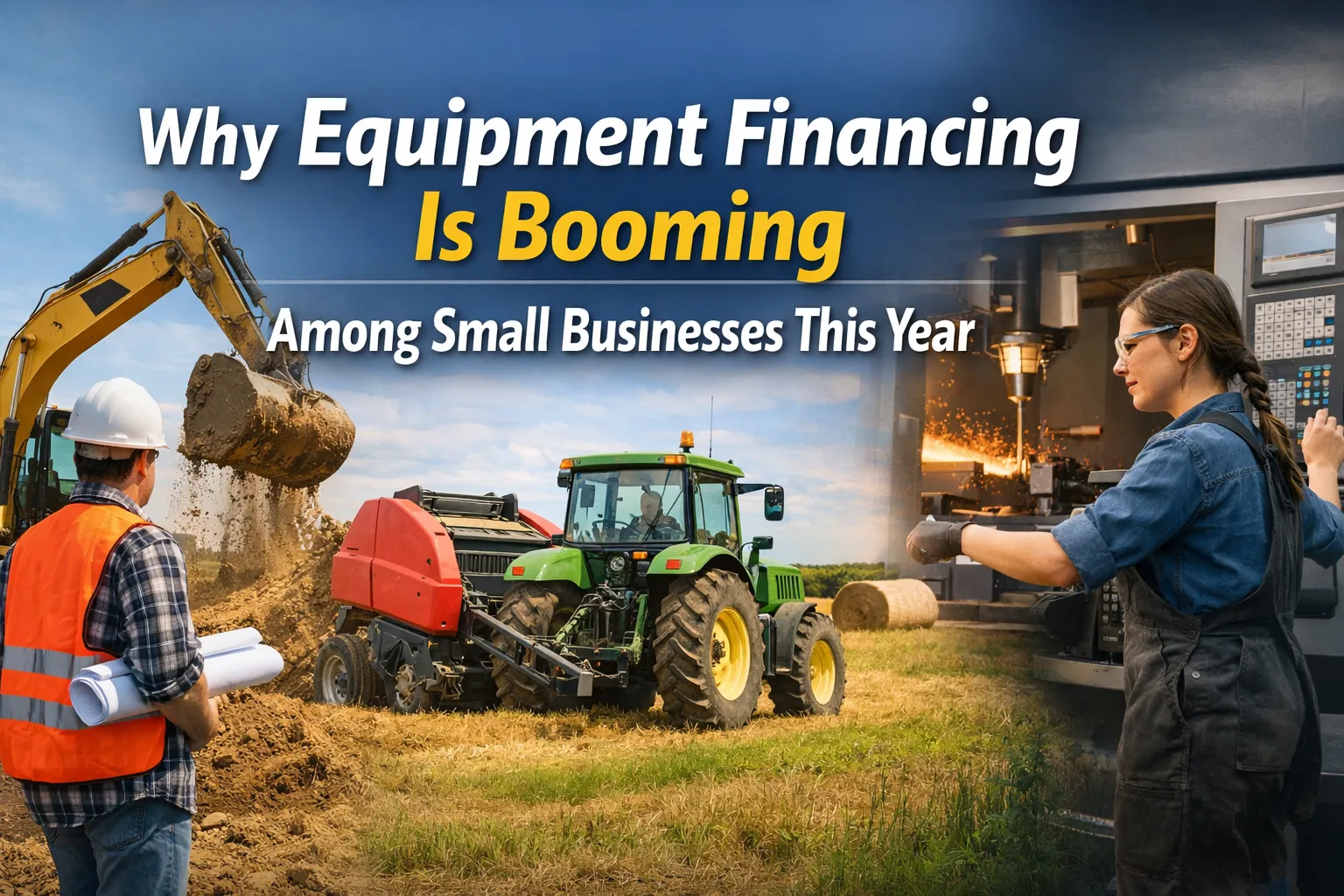
Why Equipment Financing Is Booming Among Small Businesses This Year
Small businesses across America are experiencing a financing revolution, and equipment financing sits at the heart of this transformation. In 2025, more entrepreneurs than ever are discovering that acquiring essential equipment doesn’t require draining their bank accounts or waiting years to accumulate capital. Instead, they’re leveraging equipment financing to grow faster, compete more effectively, and preserve their working capital for critical operational needs.
The numbers tell a compelling story. Equipment financing has surged dramatically this year, with small businesses recognizing that this funding approach offers flexibility, tax advantages, and the ability to acquire cutting-edge technology without crippling upfront costs. Whether you’re a restaurant owner eyeing new kitchen equipment, a contractor needing heavy machinery, or a medical practice requiring diagnostic tools, equipment financing has become the strategic choice for business growth.
Understanding the Equipment Financing Boom
Equipment financing represents a specialized form of business lending where the equipment itself serves as collateral for the loan. This arrangement creates a win-win scenario for both lenders and borrowers, making approval easier and interest rates more favorable than traditional unsecured business loans.
The explosion in equipment financing popularity stems from several converging factors. Economic uncertainty has made business owners more conservative with cash reserves, yet technological advancement continues accelerating, forcing companies to upgrade equipment more frequently to remain competitive. Equipment financing bridges this gap perfectly, allowing businesses to acquire necessary tools while maintaining financial flexibility.
How Equipment Financing Works
Small businesses particularly benefit from this financing model because it democratizes access to expensive equipment that might otherwise remain out of reach. A startup manufacturing company can acquire production machinery worth hundreds of thousands of dollars without depleting their entire capital reserve, while an established business can upgrade their equipment fleet without disrupting cash flow.
The process typically begins with identifying the equipment needed, selecting a financing partner, submitting an application with basic business information, and receiving approval often within days. Once approved, the lender purchases the equipment and the business makes regular payments according to the agreed terms.
The Financial Advantages Driving Adoption
Cash Flow Preservation Benefits
Cash flow preservation stands as the primary driver behind equipment financing adoption. Small businesses operate on tight margins where every dollar matters. Traditional equipment purchases can devastate cash reserves, leaving companies vulnerable to unexpected expenses or unable to capitalize on growth opportunities. Equipment financing transforms large capital expenditures into manageable monthly payments, keeping working capital available for inventory, payroll, marketing, and other operational necessities.
Tax Advantages That Make a Difference
Tax benefits provide another powerful incentive. Section 179 of the IRS tax code allows businesses to deduct the full purchase price of qualifying equipment financed during the tax year, up to specific limits. This deduction can significantly reduce tax liability, effectively lowering the true cost of equipment acquisition. Additionally, businesses may qualify for bonus depreciation, further enhancing the tax advantages of equipment financing.
Lower Interest Rates Compared to Alternative Financing
Interest rates for equipment financing typically run lower than other business financing options because the equipment serves as collateral. Lenders face reduced risk since they can repossess and resell the equipment if borrowers default. This security translates into more favorable terms for small businesses, making equipment financing one of the most cost-effective financing solutions available.
Faster Approval Process
The speed and simplicity of approval represent additional advantages. Unlike traditional bank loans requiring extensive documentation, lengthy review processes, and strict qualification criteria, equipment financing applications often receive approval within days. Many lenders specialize in specific industries, understanding equipment values and business models thoroughly, which streamlines the approval process considerably.
Technology Advancement Fueling Demand
Rapid technological evolution has compressed equipment lifecycles across industries. What once remained current for a decade now becomes outdated in three to five years. This acceleration creates constant pressure on businesses to upgrade, and equipment financing provides the mechanism to keep pace without prohibitive costs.
Manufacturing and Industrial Equipment
Manufacturing businesses face particular pressure to adopt advanced machinery incorporating automation, artificial intelligence, and Internet of Things connectivity. These sophisticated systems dramatically improve productivity and quality but carry substantial price tags. Equipment financing makes these transformative technologies accessible to small manufacturers who would otherwise struggle to compete against larger, better-capitalized competitors.
Medical and Healthcare Technology
Medical and dental practices experience similar pressures. Diagnostic equipment, imaging technology, and treatment devices evolve rapidly, with newer models offering better patient outcomes, faster procedures, and enhanced safety. Healthcare providers must stay current to deliver quality care and meet patient expectations, making equipment financing essential for practice sustainability and growth.
Cross-Industry Equipment Needs
Even service-based businesses benefit from this trend. Professional services firms acquire computers, software, telecommunications equipment, and office technology through financing arrangements. Restaurants and hospitality businesses finance kitchen equipment, point-of-sale systems, and guest amenities. Construction companies finance vehicles, power tools, and heavy machinery. Virtually every industry relies on equipment financing to maintain technological competitiveness.
Flexible Financing Structures Meeting Diverse Needs
Equipment financing has boomed partly because lenders have developed diverse products meeting specific business situations. Understanding the different structures available helps businesses choose the option best aligned with their needs and goals.
Traditional Equipment Loans
Traditional equipment loans provide fixed monthly payments over predetermined terms, offering predictability and straightforward ownership at term completion. This structure appeals to businesses seeking simplicity and eventual equipment ownership.
Equipment Leasing Options
Equipment leasing presents an alternative approach where businesses use equipment without owning it, making payments for usage rights. Operating leases keep equipment off balance sheets, potentially offering accounting advantages, while capital leases function more like loans with ownership transferring at lease end. Leasing particularly benefits businesses using equipment with short useful lives or rapid obsolescence rates.
Creative Financing Solutions
Sale-leaseback arrangements allow businesses already owning equipment to convert it into working capital. Companies sell equipment to financing companies then immediately lease it back, continuing usage while accessing the equipment’s value in cash. This creative financing approach helps businesses unlock capital trapped in existing assets without disrupting operations.
Customized Payment Schedules
Flexible payment structures accommodate seasonal businesses and those with variable cash flows. Some lenders offer skip-payment options during slow periods, step-up payments increasing over time as businesses grow, or seasonal payment schedules aligning with revenue patterns. This flexibility makes equipment financing accessible to businesses that might struggle with rigid traditional loan structures.
Choosing the Right Equipment Financing Partner
Evaluating Lender Experience and Reputation
Selecting an appropriate financing partner significantly impacts the equipment acquisition experience and overall cost. Businesses should evaluate multiple factors beyond interest rates when comparing financing options. Reputation and industry experience matter tremendously since specialized lenders understand specific equipment types, residual values, and industry dynamics better than generalist lenders.
Understanding Terms and Transparency
Transparency in terms and fees distinguishes quality lenders from predatory ones. Reputable financing companies clearly disclose all costs, including interest rates, origination fees, documentation fees, and any prepayment penalties. Hidden fees can substantially increase financing costs, so businesses must review all documentation carefully before signing agreements.
Customer Service Considerations
Customer service quality becomes particularly important when problems arise. Equipment breakdowns, financial difficulties, or business changes may require working with lenders to modify agreements or resolve issues. Lenders known for responsive, helpful customer service provide peace of mind worth considering in financing decisions.
Application Process Efficiency
Application and approval processes should be reasonably straightforward without excessive documentation requirements or unrealistic qualification standards. While lenders rightfully assess creditworthiness and business viability, the best equipment financing partners balance due diligence with efficiency, recognizing that small businesses need quick decisions to capitalize on opportunities.
The Future of Equipment Financing
Equipment financing shows no signs of slowing, with several trends suggesting continued growth. Technology advancement continues accelerating, ensuring businesses face ongoing pressure to upgrade equipment regularly. Economic volatility encourages conservative cash management, making financing more attractive than large cash outlays. These fundamental drivers should sustain equipment financing demand for years to come.
Digital Transformation in Lending
Digital transformation in lending itself makes equipment financing more accessible. Online applications, automated underwriting, and electronic documentation have dramatically reduced friction in the financing process. Some fintech companies now offer instant equipment financing decisions and same-day funding, further lowering barriers to equipment acquisition.
Sustainability and Green Equipment Financing
Sustainability considerations increasingly influence equipment financing decisions. Businesses recognize that newer equipment typically operates more efficiently, reducing energy consumption and environmental impact. Some lenders now offer preferential terms for environmentally friendly equipment, while businesses use equipment financing to support sustainability goals without prohibitive upfront investments.
Taking Action on Equipment Financing
Small businesses considering equipment financing should begin by assessing their equipment needs and determining which assets would most significantly impact operations or growth. Prioritizing high-impact equipment ensures financing delivers maximum return on investment. Next, businesses should evaluate their creditworthiness, financial statements, and documentation to understand what lenders will review during the application process.
Comparing multiple financing offers remains essential despite the time investment required. Interest rates, fees, terms, and conditions vary substantially between lenders, and taking time to shop around can save thousands of dollars over the financing period. Businesses should request quotes from traditional banks, equipment manufacturers offering captive financing, independent equipment financing companies, and online lenders to ensure comprehensive market coverage.
Working with financial advisors or accountants helps businesses understand the tax implications of different financing structures and choose options maximizing tax benefits. Professional guidance ensures businesses make informed decisions considering both immediate cash flow impacts and long-term financial consequences.
Equipment financing has become a powerful tool enabling small business growth, competitiveness, and success in today’s fast-paced business environment. By understanding the advantages, options, and selection criteria for equipment financing, businesses can leverage this boom to acquire the tools they need while preserving financial flexibility for future opportunities.
Frequently Asked Questions
What types of equipment qualify for equipment financing?
Most types of business equipment qualify for financing, including manufacturing machinery, medical and dental equipment, restaurant and commercial kitchen equipment, construction equipment, vehicles and transportation assets, office technology and computers, telecommunications equipment, and agricultural machinery. Generally, any tangible business asset with a useful life expectancy can be financed. Lenders typically require equipment to maintain value over the loan term and serve legitimate business purposes.
What credit score do I need to qualify for equipment financing?
Equipment financing credit requirements vary by lender and loan amount. Many lenders approve applications with credit scores as low as 600, though better rates typically require scores above 680. Because the equipment itself serves as collateral, credit requirements tend to be more flexible than unsecured business loans. Lenders also consider factors beyond credit scores, including time in business, revenue, cash flow, and industry experience when making approval decisions.
How much down payment is required for equipment financing?
Down payment requirements vary widely depending on the lender, equipment type, credit profile, and loan amount. Many equipment financing arrangements require no down payment, allowing businesses to acquire equipment with zero upfront costs. Other lenders may require 10-20% down payments, particularly for higher-risk situations or expensive equipment. Generally, stronger credit profiles and established businesses qualify for lower down payment requirements or zero-down financing options.
What is the difference between equipment financing and equipment leasing?
Equipment financing typically refers to loans where businesses borrow money to purchase equipment, make regular payments, and own the equipment at the end of the loan term. Equipment leasing involves renting equipment for a specified period, making regular payments for usage rights without owning the asset. At lease end, businesses may return equipment, purchase it for fair market value or a predetermined amount, or renew the lease. Financing builds equity in assets while leasing offers flexibility and potential tax advantages without ownership responsibilities.
How long does equipment financing approval take?
Approval timelines vary by lender but generally range from 24 hours to one week. Online lenders and specialized equipment financing companies often provide decisions within one to three business days, with some offering same-day approvals for straightforward applications. Traditional banks typically take longer, sometimes requiring one to two weeks for approval. Factors affecting approval speed include application completeness, credit complexity, equipment type, and loan amount. Having organized financial documentation ready accelerates the process significantly.
Can startups qualify for equipment financing?
Yes, startups can qualify for equipment financing, though requirements may be more stringent than for established businesses. Many lenders work with startups that have been operating for at least six months to one year. Startups typically need stronger credit scores, may face higher interest rates, and might require personal guarantees from business owners. Some lenders specialize in startup financing and understand the unique challenges new businesses face. Having a solid business plan, industry experience, and sufficient cash flow improves startup approval chances considerably.
What are the typical interest rates for equipment financing?
Equipment financing interest rates typically range from 5% to 30% depending on multiple factors including creditworthiness, time in business, equipment type, loan amount, and term length. Businesses with excellent credit and strong financials may qualify for rates in the 5-10% range, while newer businesses or those with credit challenges might see rates of 15-25% or higher. Because equipment serves as collateral, rates generally run lower than unsecured business loans. Shopping multiple lenders helps businesses secure the most competitive rates available for their situation.
Is equipment financing tax deductible?
Yes, equipment financing offers significant tax benefits. Monthly payment interest is typically tax-deductible as a business expense. Additionally, Section 179 of the IRS tax code allows businesses to deduct the full purchase price of qualifying financed equipment in the year placed in service, up to annual limits set by the IRS. Bonus depreciation may provide additional first-year deductions. Tax treatment varies between loans and leases, with operating leases allowing full payment deductions and capital leases treated similarly to purchases. Consult with tax professionals to maximize available deductions for your specific situation.

No comment