
What’s New in VoIP Support Services for 2026
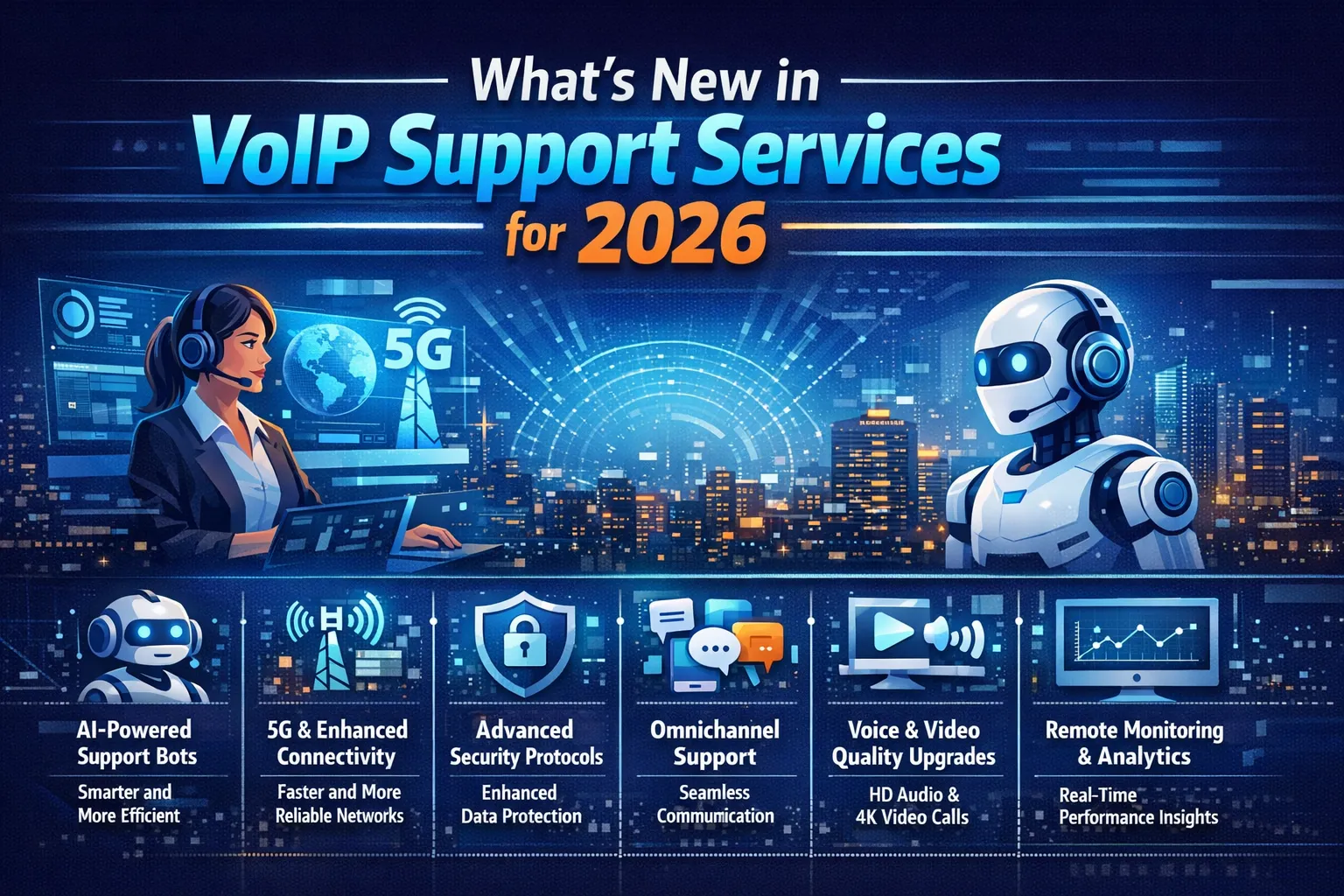
The landscape of business communication continues to evolve at breakneck speed, and VoIP (Voice over Internet Protocol) support services are no exception. As we move through 2026, organizations are witnessing a fundamental transformation in how VoIP systems are maintained, secured, and optimized. From AI-powered troubleshooting to quantum-resistant security protocols, the latest developments in VoIP support are reshaping what businesses can expect from their communication infrastructure.
AI-Driven Predictive Maintenance Takes Center Stage
One of the most significant advancements in VoIP support for 2026 is the widespread adoption of AI-driven predictive maintenance. Rather than waiting for communication issues to disrupt business operations, modern VoIP support services now leverage machine learning algorithms to identify potential problems before they occur.
These intelligent systems continuously monitor call quality metrics, network performance indicators, and system health parameters. When patterns emerge that suggest an impending issue—such as gradual bandwidth degradation or unusual latency spikes—the support system automatically alerts administrators and, in many cases, implements corrective measures without human intervention.
The impact on business continuity has been remarkable. Organizations using AI-powered VoIP support report up to 60% fewer communication disruptions compared to traditional reactive support models. The technology analyzes historical data from thousands of deployments to recognize early warning signs that human administrators might miss.
Enhanced Security Protocols Address Emerging Threats
Cybersecurity has become paramount in VoIP support services, especially as communication systems face increasingly sophisticated attack vectors. In 2026, VoIP support providers have implemented multi-layered security approaches that go far beyond basic encryption.
Modern VoIP support now includes real-time threat detection that identifies suspicious calling patterns, unauthorized access attempts, and potential toll fraud within milliseconds. Advanced behavioral analysis monitors user activity to establish baseline patterns, immediately flagging any deviations that could indicate compromised accounts.
Post-quantum cryptography is also making its way into enterprise VoIP systems. As quantum computing advances, traditional encryption methods face potential vulnerabilities. Forward-thinking support providers are already implementing quantum-resistant encryption protocols to future-proof their clients’ communication infrastructure.
Zero-trust architecture has become the standard for VoIP security frameworks. Every connection request is verified regardless of source, eliminating the outdated assumption that internal network traffic is inherently trustworthy. This approach significantly reduces the attack surface and prevents lateral movement if a breach occurs.
Cloud-Native Support Infrastructure Delivers Unprecedented Flexibility
The shift to cloud-native VoIP support infrastructure represents another major development for 2026. Unlike hybrid systems that bridge on-premises and cloud components, fully cloud-native support platforms are built from the ground up to leverage distributed computing resources.
This architecture enables support teams to scale resources dynamically based on real-time demand. During peak business hours or unexpected usage spikes, the system automatically allocates additional processing power and bandwidth to maintain optimal performance. When demand decreases, resources scale down to minimize costs.
Geographic redundancy has reached new heights with cloud-native support. Modern systems deploy across multiple regions simultaneously, ensuring that service disruptions in one location have zero impact on communication availability. Automatic failover occurs so seamlessly that users typically remain unaware when systems switch to backup infrastructure.
Integration Capabilities Expand Across Business Ecosystems
VoIP support services in 2026 have evolved far beyond simple phone system maintenance. Today’s platforms integrate deeply with the entire business technology stack, creating unified communication ecosystems that were previously impossible.
Support services now offer seamless integration with CRM platforms, allowing call data to automatically populate customer records and trigger workflow automations. When a customer calls, representatives instantly see complete interaction histories, previous issues, and relevant account information—all pulled from integrated systems.
Collaboration tool integration has matured significantly. VoIP systems now work natively with platforms like Microsoft Teams, Slack, and other workplace communication tools. This means users can initiate VoIP calls directly from chat interfaces, share call recordings with team channels, and access voicemail transcriptions within their preferred collaboration environment.
Advanced APIs enable custom integrations tailored to specific industry requirements. Healthcare organizations connect VoIP systems with electronic health records, financial institutions integrate with compliance monitoring tools, and manufacturers link communication systems with production management platforms.
Real-Time Analytics Transform Decision-Making
The analytical capabilities embedded in modern VoIP support services provide unprecedented visibility into communication patterns and system performance. Dashboards display real-time metrics that help organizations optimize their communication infrastructure and improve customer service delivery.
Quality of Service (QoS) monitoring has become incredibly granular. Support systems track metrics like jitter, packet loss, and latency on a per-call basis, identifying exactly when and where quality degradation occurs. This precision enables targeted troubleshooting rather than broad network-wide investigations.
Call analytics now incorporate sentiment analysis and conversation intelligence. Advanced natural language processing evaluates customer interactions to identify satisfaction levels, detect emerging issues, and highlight training opportunities for staff. These insights help organizations continuously refine their communication strategies.
Capacity planning has evolved from reactive to predictive. Analytics platforms forecast future bandwidth and infrastructure requirements based on growth patterns, seasonal variations, and business expansion plans. Organizations can proactively upgrade systems before capacity constraints impact performance.
Mobile-First Support Approaches Meet Remote Work Demands
As remote and hybrid work models become permanent fixtures of the business landscape, VoIP support services have adapted with mobile-first approaches that prioritize smartphone and tablet experiences.
Modern support platforms offer full-featured mobile applications that provide the same capabilities as desktop systems. Employees can access advanced call features, join conference calls, review voicemail transcriptions, and manage call routing rules from any location using mobile devices.
Adaptive quality management automatically adjusts call parameters based on network conditions. When users connect via cellular data or public Wi-Fi, the system optimizes codec selection and bandwidth allocation to maintain the best possible call quality given available resources.
Mobile device management integration ensures that VoIP applications comply with corporate security policies even on personal devices. Support systems can enforce encryption standards, manage application access, and remotely disable VoIP functionality if devices are lost or stolen.
Automation Reduces Administrative Burden
Automation has transformed how organizations manage their VoIP infrastructure, reducing the administrative burden that previously required dedicated IT staff. Support services in 2026 incorporate intelligent automation that handles routine tasks and enables IT teams to focus on strategic initiatives.
Automated provisioning allows new users to be added to the phone system within minutes rather than hours. When employees join the organization, their VoIP extensions, permissions, and device configurations are automatically created based on role templates and department assignments.
Self-healing systems detect and resolve common issues without human intervention. When phones lose registration, experience configuration drift, or encounter connectivity problems, automated remediation processes restore normal operation. Only complex or novel issues escalate to human support staff.
Scheduled maintenance tasks run automatically during off-peak hours. System updates, security patches, and configuration backups occur without disrupting business operations or requiring administrator oversight.
Environmental Sustainability Becomes a Priority
An emerging trend in VoIP support services is the emphasis on environmental sustainability. Providers are implementing green practices that reduce the carbon footprint of communication infrastructure while maintaining performance standards.
Energy-efficient infrastructure reduces power consumption across data centers and network equipment. Modern VoIP systems use advanced power management that scales resource usage based on demand, significantly lowering energy costs and environmental impact.
Virtual phone systems eliminate the need for physical hardware at customer sites, reducing electronic waste and the resources required for manufacturing, shipping, and disposing of equipment. Cloud-based systems centralize resources in optimized data centers that operate more efficiently than distributed deployments.
The Future of VoIP Support Services
The developments in VoIP support services for 2026 represent more than incremental improvements—they constitute a fundamental reimagining of how business communication systems are maintained and optimized. Organizations that embrace these advancements gain significant competitive advantages through improved reliability, enhanced security, and deeper insights into their communication infrastructure.
As technology continues advancing, VoIP support services will undoubtedly evolve further. The foundation being established today—with AI-driven automation, cloud-native architecture, and comprehensive integration capabilities—positions businesses to adapt quickly to whatever innovations emerge next.
Frequently Asked Questions
What is predictive maintenance in VoIP support?
Predictive maintenance uses AI and machine learning to identify potential VoIP system issues before they cause disruptions. It monitors performance metrics continuously and alerts administrators to problems in advance, enabling proactive resolution.
How does AI improve VoIP support services?
AI enhances VoIP support through automated troubleshooting, predictive maintenance, intelligent call routing, sentiment analysis, and pattern recognition that identifies security threats and performance issues faster than traditional methods.
What security features should modern VoIP support include?
Essential security features include real-time threat detection, behavioral analysis, zero-trust architecture, encryption (including quantum-resistant protocols), toll fraud prevention, and continuous monitoring for suspicious activity.
Can VoIP support services integrate with existing business tools?
Yes, modern VoIP support offers extensive integration capabilities with CRM platforms, collaboration tools, help desk systems, and industry-specific applications through APIs and native connectors.
What are the benefits of cloud-native VoIP support?
Cloud-native VoIP support provides automatic scaling, geographic redundancy, reduced hardware costs, simplified management, faster deployment, and continuous updates without service interruptions.
How does mobile-first VoIP support benefit remote workers?
Mobile-first support ensures remote workers have full VoIP functionality on smartphones and tablets, with adaptive quality management, secure mobile device integration, and seamless transitions between networks.
What role does automation play in VoIP support?
Automation handles routine tasks like user provisioning, system updates, backup management, and self-healing processes, reducing administrative burden and minimizing human error.
Are VoIP support services becoming more environmentally sustainable?
Yes, providers are implementing energy-efficient infrastructure, virtualizing hardware to reduce electronic waste, and optimizing data center operations to minimize environmental impact.






No comment