The Modern Communication Revolution: Understanding VoIP Services
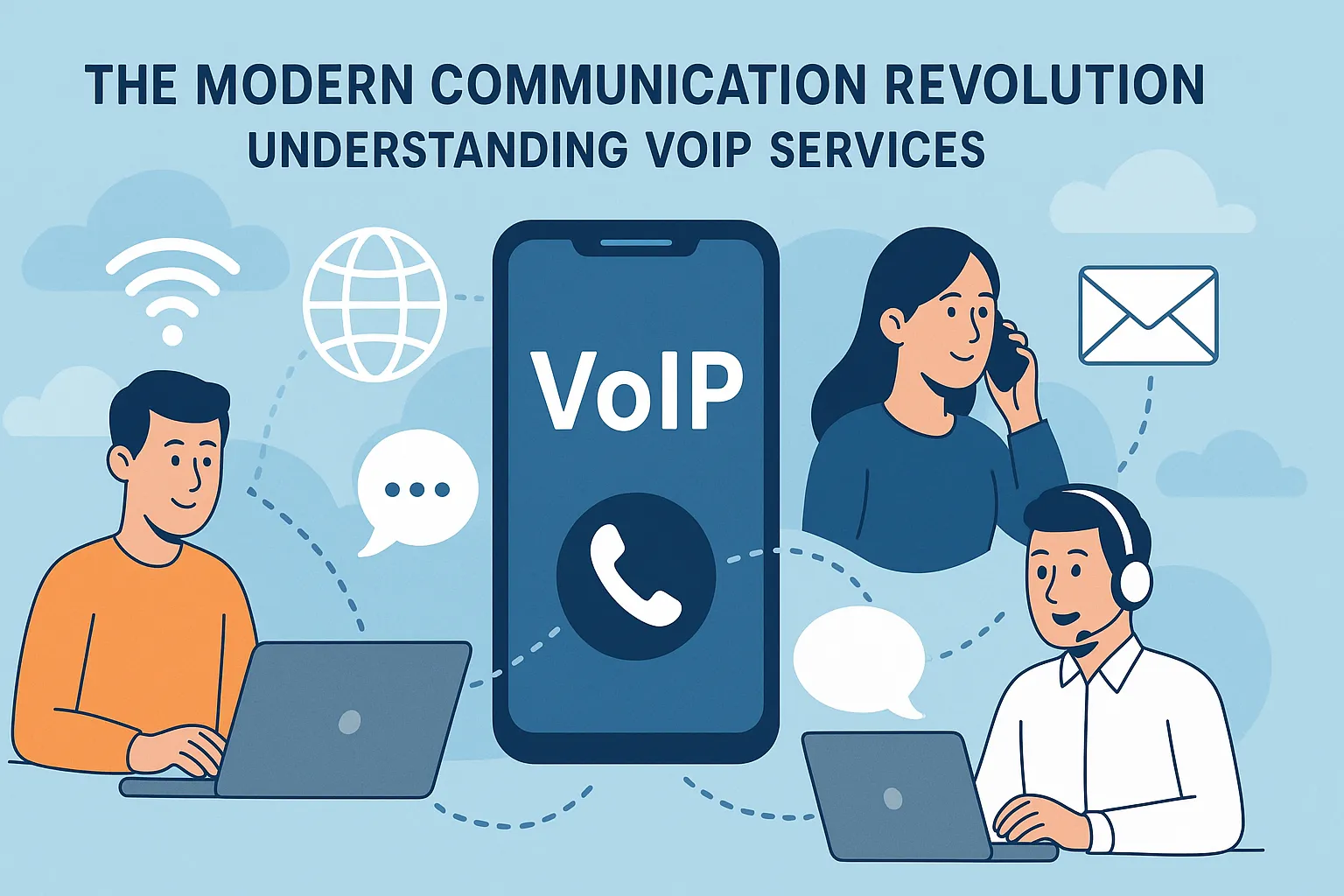
Remember when making a long-distance call meant watching the clock nervously as charges piled up by the minute? Or when businesses needed entire server rooms filled with bulky phone equipment? Those days feel like ancient history now, thanks to a technology that’s fundamentally transformed how we communicate: Voice over Internet Protocol, or VoIP.
What Makes VoIP Different?
At its core, VoIP represents a complete reimagining of telephone communication. Instead of sending your voice through dedicated copper telephone lines maintained by traditional phone companies, VoIP converts your voice into digital data packets and sends them across the internet—the same network you use to stream videos, send emails, and browse websites.
This shift might sound technical, but the implications are profound. Traditional phone systems required physical infrastructure connecting every caller to every receiver through a vast web of wires and switches. VoIP, by contrast, treats voice like any other type of internet data. Your words become ones and zeros, traveling through fiber optic cables, wireless networks, and undersea connections to reach their destination, where they’re reassembled into sound.
The Journey from Concept to Mainstream
The first VoIP call happened in 1995, but it was hardly impressive by today’s standards. Early adopters dealt with choppy audio, frustrating delays, and frequent disconnections. The technology required patience and a tolerance for imperfection that most users simply didn’t have.
Fast forward to today, and VoIP has matured dramatically. Improvements in internet speed, compression algorithms, and network infrastructure have eliminated most early problems. Many people now use VoIP daily without even realizing it—video calls, messaging apps with voice features, and even many modern office phone systems all run on VoIP technology.
Why Businesses Are Making the Switch
The business world has embraced VoIP with particular enthusiasm, and the reasons extend far beyond cost savings, though those savings can be substantial. A small business might cut phone expenses by 60% or more after switching from traditional lines to VoIP. Large enterprises with international operations can save millions annually on long-distance and international calling fees.
But the real transformation comes from capabilities that simply weren’t possible with old phone systems. Modern VoIP platforms integrate seamlessly with other business tools. Customer relationship management systems can automatically pull up client information when they call. Team collaboration platforms merge voice, video, messaging, and file sharing into unified workspaces. Sales teams can make calls directly from their web browsers, with conversations automatically logged and recorded.
Remote work, which accelerated dramatically in recent years, would be far more challenging without VoIP. Employees can take their business phone number anywhere—home offices, coffee shops, or airports halfway around the world. Calls ring simultaneously on desk phones, computers, and smartphones, ensuring people stay reachable without being chained to a physical location.
The Technical Magic Behind Clear Calls
Making VoIP work well requires solving several technical challenges. When you speak into a VoIP-enabled device, sophisticated software samples your voice thousands of times per second, converting sound waves into digital information. Compression algorithms then shrink this data to a manageable size without sacrificing too much quality.
These data packets traverse the internet just like any other information, but voice communication demands special treatment. Unlike downloading a file or loading a webpage, where small delays don’t matter, voice calls need consistently low latency—the time it takes for data to travel from sender to receiver. If latency exceeds about 150 milliseconds, conversations start feeling awkward and unnatural.
Quality of Service protocols help by prioritizing voice data over less time-sensitive internet traffic. When your network gets congested, these systems ensure voice packets get through first, maintaining call quality even when someone else on your network is downloading large files or streaming high-definition video.
Choosing the Right VoIP Solution
The VoIP marketplace offers overwhelming variety, from simple residential services replacing home phone lines to sophisticated enterprise platforms managing thousands of employees. Selecting the right solution requires understanding your specific needs.
Residential VoIP services focus on simplicity and cost-effectiveness. They typically include standard features like caller ID, voicemail, and call forwarding at prices significantly below traditional phone companies. Many providers bundle these services with internet access, creating convenient package deals.
Small business solutions add features like auto-attendants (the automated menus that greet callers), conference calling, and basic analytics. These systems often run entirely in the cloud, eliminating the need for on-site equipment beyond the phones themselves—or even those, since many employees simply use computer software.
Enterprise platforms take things further with advanced call routing, detailed analytics, integration with business software, and sophisticated administrative controls. These systems might support multiple office locations, allow supervisors to monitor call center performance in real-time, and provide disaster recovery features ensuring business continuity even if one location loses internet connectivity.
Security Considerations in the Digital Age
Moving phone conversations onto the internet creates new security considerations. VoIP calls can potentially be intercepted, recorded, or disrupted by malicious actors, making protection essential.
Encryption provides the primary defense, scrambling voice data so only intended recipients can understand it. The strongest VoIP systems use end-to-end encryption, meaning conversations stay protected throughout their entire journey across the internet.
Network security matters too. Firewalls need proper configuration to allow VoIP traffic while blocking threats. Regular software updates patch vulnerabilities before attackers can exploit them. Strong authentication prevents unauthorized access to phone systems, protecting against fraud and abuse.
Some businesses separate voice and data traffic onto different networks, creating an additional security layer. While this adds complexity, it ensures that problems affecting data networks won’t compromise phone communications.
The Evolution Continues
VoIP technology continues evolving rapidly. Artificial intelligence now powers features that seemed like science fiction just years ago. Real-time transcription converts conversations to text automatically. Translation services enable conversations between people speaking different languages. Voice analytics assess customer sentiment, helping businesses improve service quality.
Video integration has become seamless, with many systems treating voice and video calls as interchangeable options. Screen sharing, virtual backgrounds, and collaborative whiteboards transform phone calls into multimedia experiences.
The line between traditional phone calls and internet communication continues blurring. Messaging platforms add voice capabilities. Email systems include calling features. The distinction between “making a phone call” and “connecting online” grows increasingly meaningless.
Making the Transition
Switching to VoIP doesn’t have to be disruptive. Most providers offer number portability, allowing businesses and individuals to keep existing phone numbers. Installation typically takes hours rather than days, and cloud-based systems can be operational almost immediately.
Training requirements are minimal since modern VoIP interfaces are intuitive. Most people comfortable with smartphones adapt to VoIP systems within minutes. Advanced features can be learned gradually as needs evolve.
Internet connection quality is the main consideration. VoIP requires reliable bandwidth—typically at least 100 kilobits per second per concurrent call. Businesses with many simultaneous calls need correspondingly more capacity. Connection quality matters more than raw speed; a slower but stable connection outperforms a fast but unreliable one.
Looking Ahead
Traditional phone systems are actively being phased out. Many telecommunications companies have announced plans to retire copper telephone networks entirely within the next few years. This shift isn’t just about technology companies pushing new products—it reflects the economic reality that maintaining two separate networks (telephone and internet) makes decreasing sense when one can handle both functions.
The future of communication is clearly internet-based, with VoIP serving as the foundation. As 5G networks expand and internet infrastructure continues improving globally, VoIP quality and capabilities will only improve. Features we consider advanced today will become standard expectations tomorrow.
For businesses and individuals still using traditional phone service, the question isn’t whether to switch to VoIP, but when. The technology has matured beyond the experimental phase into the mainstream, offering compelling advantages with minimal drawbacks. As the infrastructure supporting traditional telephony continues its inevitable decline, early adopters of VoIP technology will be better positioned to take advantage of innovations still emerging.
The revolution in how we communicate isn’t coming—it’s already here. VoIP isn’t the future of telephone service; it’s the present, transforming communication in ways that are only beginning to be fully realized.
Frequently Asked Questions
Q: Will VoIP work during a power outage?
A: Unlike traditional landlines that receive power through telephone lines, VoIP systems require electricity for your modem, router, and phone equipment. During power outages, VoIP won’t work unless you have backup power like an uninterruptible power supply (UPS) or generator. However, most VoIP services can forward calls to mobile phones during outages, maintaining some connectivity.
Q: How much internet bandwidth do I need for VoIP?
A: A single VoIP call typically requires about 100 kilobits per second (Kbps) in both upload and download directions. For households or small offices, a connection of 1-2 Mbps should handle several simultaneous calls comfortably. Businesses should calculate bandwidth needs based on expected concurrent calls and add extra capacity for other internet activities.
Q: Can I keep my existing phone number when switching to VoIP?
A: Yes, in most cases. This process, called number porting, is federally mandated in many countries. Your VoIP provider handles the transfer, which typically takes 1-3 weeks. During the transition, your old service continues working until the port completes, ensuring you don’t miss calls.
Q: What’s the difference between VoIP and UCaaS?
A: VoIP specifically refers to voice calling over the internet. UCaaS (Unified Communications as a Service) encompasses VoIP plus additional communication tools like video conferencing, instant messaging, file sharing, and business software integration, all delivered through cloud-based platforms. Think of VoIP as one component within the broader UCaaS ecosystem.
Q: Is VoIP call quality really as good as traditional phone service?
A: With adequate internet bandwidth and quality, VoIP call quality often exceeds traditional phone service. VoIP can support HD audio with superior clarity compared to old telephone networks. However, poor internet connections can cause problems like dropped calls, choppy audio, or delays. Quality depends primarily on your internet service reliability.
Q: Do I need special phones for VoIP?
A: Not necessarily. You have several options: dedicated IP phones that connect directly to your network, traditional phones with VoIP adapters, software-based phones (softphones) running on computers or smartphones, or mobile apps. Many businesses mix these approaches, giving employees flexibility in how they make and receive calls.
Q: How secure are VoIP calls from eavesdropping?
A: Security varies by provider and configuration. Quality VoIP services use encryption protocols (like SRTP and TLS) to protect calls from interception. Business-grade services typically offer stronger security features than residential options. Always verify that your provider uses encryption, keep software updated, and use strong passwords to maximize security.
Q: What happens if my internet goes down?
A: If your internet connection fails, VoIP service stops working. However, most business VoIP systems include failover options. Calls can automatically forward to mobile phones or backup internet connections. Some businesses maintain a secondary internet connection specifically for redundancy. Cloud-based systems typically continue working if your local connection fails but the provider’s infrastructure remains operational.
Q: Are there any hidden costs with VoIP services?
A: Costs vary by provider but may include equipment purchases or rentals, setup fees, international calling charges beyond included minutes, premium features, and potential internet bandwidth upgrades. Carefully review service agreements and ask about all potential charges. Despite these considerations, total costs typically remain well below traditional phone service, especially for businesses making numerous long-distance calls.
Q: Can VoIP work with fax machines and alarm systems?
A: Traditional fax machines and alarm systems can be problematic with VoIP due to how they encode signals. Some VoIP services support these through special adapters or protocols (like T.38 for faxing), but compatibility isn’t guaranteed. If you depend on fax or alarm systems, discuss requirements specifically with your VoIP provider before switching. Many businesses now use internet-based fax services instead of physical machines.






No comment