Equipment Financing: A Complete Guide for Business Owners
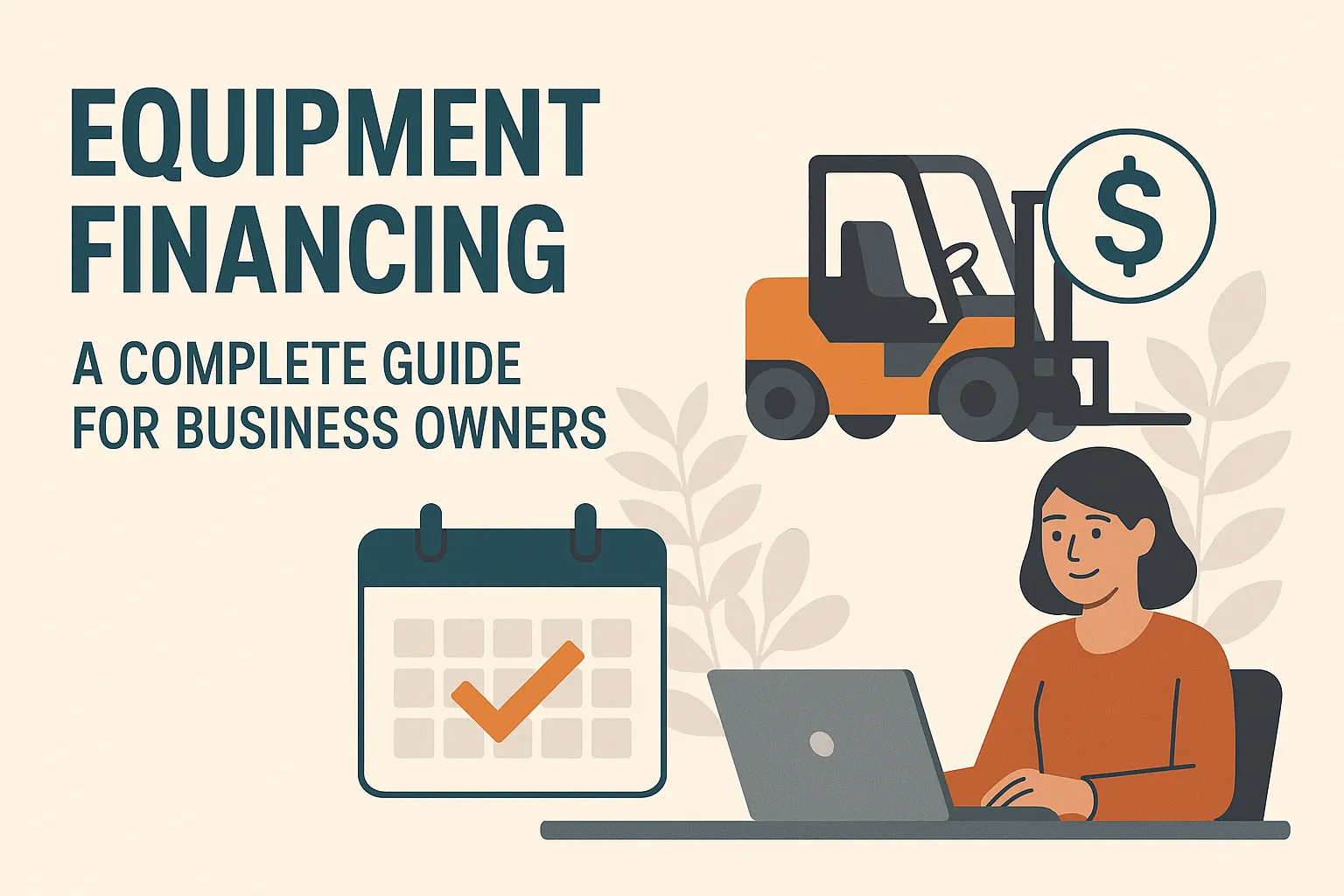
Running a successful business often requires significant investment in equipment, machinery, and technology. Whether you’re launching a new venture or expanding an existing operation, the cost of purchasing essential equipment can present a substantial financial challenge. Equipment financing offers a practical solution that allows businesses to acquire the tools they need without depleting their capital reserves or disrupting cash flow.
Understanding Equipment Financing
Equipment financing is a specialized lending solution designed to help businesses purchase or lease the machinery, vehicles, technology, and tools necessary for their operations. Rather than paying the full purchase price upfront, businesses can spread the cost over time through manageable monthly payments. This financing method treats the equipment itself as collateral, which often makes it easier to secure approval compared to traditional unsecured loans.
The beauty of equipment financing lies in its flexibility and accessibility. From construction companies needing heavy machinery to restaurants requiring commercial kitchen appliances, businesses across virtually every industry can benefit from this financing approach. The equipment purchased through these arrangements typically retains value over time, making it an attractive option for lenders and borrowers alike.
How Equipment Financing Works
The process begins when a business identifies equipment necessary for operations. After selecting the specific machinery or technology needed, the business approaches a lender or financing company to discuss funding options. The lender evaluates the business’s financial health, creditworthiness, and the value of the equipment being financed.
Once approved, the lender provides funds to purchase the equipment, either directly to the vendor or to the business. The business then repays the loan through scheduled installments over an agreed period, typically ranging from one to seven years. During this time, the business uses the equipment to generate revenue while gradually building equity in the asset.
The equipment itself serves as security for the loan, meaning if the business defaults on payments, the lender has the right to repossess the equipment. This arrangement reduces risk for lenders, often resulting in more favorable terms and higher approval rates than unsecured financing options.
Types of Equipment Financing
Several equipment financing structures exist to accommodate different business needs and preferences. Equipment loans function similarly to traditional term loans, where the business borrows a specific amount to purchase equipment and repays it with interest over time. Upon completion of all payments, the business owns the equipment outright.
Equipment leasing offers an alternative where businesses essentially rent equipment for a specified period. At the lease term’s conclusion, businesses typically have options to purchase the equipment at fair market value, return it, or upgrade to newer models. This approach works particularly well for technology and equipment that becomes outdated quickly.
Sale-leaseback arrangements allow businesses that already own equipment to sell it to a financing company and immediately lease it back. This strategy unlocks capital tied up in existing assets while maintaining access to necessary equipment for operations.
Lines of credit specifically designated for equipment purchases provide ongoing access to funds as equipment needs arise. This revolving credit structure offers flexibility for businesses with continuous or unpredictable equipment requirements.
Benefits of Equipment Financing
Preserving working capital stands as one of the most significant advantages of equipment financing. Rather than draining cash reserves with large upfront purchases, businesses maintain liquidity for daily operations, unexpected expenses, and growth opportunities. This financial cushion can prove critical during economic uncertainties or seasonal fluctuations.
Equipment financing also offers potential tax benefits. Businesses may deduct interest payments and depreciation on financed equipment, reducing overall tax liability. Section 179 of the tax code even allows businesses to deduct the full purchase price of qualifying equipment in the year it’s placed into service, subject to certain limitations.
Access to better equipment represents another compelling benefit. Instead of settling for used or inferior machinery due to budget constraints, businesses can acquire state-of-the-art equipment that enhances productivity, efficiency, and competitive positioning. Modern equipment often operates more efficiently, reduces maintenance costs, and produces higher quality outputs.
The predictable payment structure inherent in equipment financing simplifies budgeting and financial planning. Fixed monthly payments allow businesses to accurately forecast expenses and manage cash flow with confidence. This predictability contrasts sharply with the uncertainty of unexpected equipment repairs or emergency replacements.
Equipment financing can also help businesses build credit history and strengthen relationships with lenders. Consistent, timely payments demonstrate financial responsibility and reliability, potentially improving terms on future financing needs.
Who Should Consider Equipment Financing
Equipment financing serves businesses at various stages and across diverse industries. Startups and new businesses often lack substantial capital reserves but need essential equipment to begin operations. Financing makes it possible to launch without massive upfront investments or investor dilution.
Established businesses pursuing growth or expansion can leverage equipment financing to scale operations without jeopardizing financial stability. Adding production lines, opening new locations, or upgrading technology becomes feasible without exhausting accumulated profits.
Businesses experiencing seasonal revenue patterns benefit from spreading equipment costs throughout the year rather than absorbing large purchases during slower periods. The steady payment structure aligns better with fluctuating income streams.
Companies in industries with rapidly evolving technology, such as healthcare, information technology, or manufacturing, find equipment leasing particularly valuable. The ability to upgrade equipment regularly ensures they remain competitive without being burdened by outdated assets.
Qualifying for Equipment Financing
Lenders typically evaluate several factors when considering equipment financing applications. Credit history remains important, though many lenders show flexibility since the equipment serves as collateral. Businesses with credit scores above 650 generally find more favorable terms, though options exist for those with lower scores.
Time in business influences approval decisions, with most lenders preferring businesses operating for at least one year. However, startups with strong business plans and down payments may still secure financing. Annual revenue requirements vary by lender but often start around $100,000 to $250,000 for established businesses.
The equipment’s value and useful life significantly impact approval and terms. Lenders prefer equipment that retains value and has clear resale markets. Specialized or custom equipment may face more scrutiny or require larger down payments.
Down payment requirements typically range from zero to thirty percent of the equipment’s value, depending on creditworthiness, equipment type, and lender policies. Larger down payments generally result in better interest rates and terms.
Choosing the Right Equipment Financing Solution
Selecting appropriate equipment financing requires careful consideration of your business’s specific circumstances and goals. Evaluate whether ownership or flexibility matters more for your situation. If you prefer owning assets outright and plan to use equipment long-term, loans make sense. If you value upgrading regularly or preserving flexibility, leasing may prove superior.
Compare total costs beyond just monthly payments. Consider interest rates, fees, down payment requirements, and the overall amount paid over the financing term. Sometimes lower monthly payments translate to higher total costs due to extended terms or higher interest rates.
Understand all terms and conditions thoroughly before committing. Clarify early termination penalties, maintenance responsibilities, insurance requirements, and end-of-term options. Hidden fees or restrictive clauses can significantly impact the true cost and utility of financing arrangements.
Consider your equipment’s expected useful life and obsolescence risk. Financing terms should align with how long you’ll productively use the equipment. Avoid being locked into payments for equipment that becomes obsolete or inadequate for your needs.
Common Mistakes to Avoid
Many businesses underestimate the total cost of equipment ownership beyond the purchase price. Factor in installation, training, maintenance, insurance, and operating costs when determining affordability. A financed purchase might seem manageable until these additional expenses strain budgets.
Failing to shop around for competitive rates and terms costs businesses significantly. Different lenders offer varying rates, terms, and requirements. Obtaining multiple quotes ensures you secure the most favorable arrangement available.
Overlooking the fine print creates problems when unexpected clauses or restrictions emerge. Read all documentation carefully and ask questions about anything unclear. Understanding your obligations and rights prevents costly surprises later.
Financing unnecessary or excessive equipment strains finances without providing proportional benefits. Ensure equipment purchases directly support revenue generation or essential operations. Avoid the temptation to acquire equipment simply because financing is available.
Frequently Asked Questions
What types of equipment can be financed?
Nearly any business equipment can be financed, including vehicles, construction machinery, manufacturing equipment, medical devices, restaurant equipment, technology hardware, computers, office furniture, and agricultural equipment. The key requirement is that the equipment has value that can serve as collateral and a reasonable useful life. Soft assets like software subscriptions typically don’t qualify, but hardware and tangible business assets generally do.
How long does the equipment financing approval process take?
Approval timelines vary based on the lender, loan amount, and application complexity. Online lenders and specialized equipment financing companies often provide decisions within 24 to 48 hours for straightforward applications. Traditional banks may take one to two weeks. Once approved, funding typically occurs within a few business days to two weeks. Having complete documentation ready accelerates the process significantly.
Can businesses with bad credit obtain equipment financing?
Yes, businesses with challenged credit can still access equipment financing, though terms may be less favorable. Because the equipment serves as collateral, lenders face reduced risk and show more flexibility than with unsecured loans. Options include subprime lenders specializing in higher-risk borrowers, larger down payments to offset risk, shorter terms with higher payments, or alternative financing arrangements. Credit scores above 500 typically have some options available, while scores above 650 access more competitive terms.
What’s the difference between equipment financing and equipment leasing?
Equipment financing typically refers to loans where you borrow money to purchase equipment and own it from the start, building equity with each payment until you own it outright. Equipment leasing means you rent the equipment for a specified period without building ownership unless you exercise a purchase option at the lease’s end. Financing generally costs more upfront but results in ownership, while leasing offers lower payments and upgrade flexibility but never builds equity unless you buy out the lease.
Are there tax benefits to equipment financing?
Yes, equipment financing offers several potential tax advantages. Interest paid on equipment loans is typically tax-deductible as a business expense. Equipment depreciation can be deducted over the asset’s useful life. Section 179 of the tax code allows businesses to deduct the full purchase price of qualifying equipment, up to $1,160,000 for 2023, in the year it’s placed into service rather than depreciating it over time. Bonus depreciation may also apply to eligible equipment. Lease payments are generally fully deductible as operating expenses. Consult with a tax professional to understand specific benefits for your situation.
What happens if my business can’t make equipment financing payments?
Missing payments triggers late fees and negative impacts to your business credit score. Continued default gives the lender the right to repossess the equipment since it serves as collateral for the loan. Repossession damages your credit significantly and leaves you without the equipment while still potentially owing remaining balance if the equipment’s resale value doesn’t cover the debt. If facing payment difficulties, contact your lender immediately to discuss options like payment deferrals, restructuring, or refinancing. Proactive communication often results in workable solutions that avoid repossession.
Can I pay off equipment financing early?
Many equipment financing agreements allow early payoff, but some include prepayment penalties that charge fees for paying off the loan before the scheduled term ends. These penalties compensate lenders for lost interest income. Before signing any agreement, clarify whether prepayment penalties exist and calculate whether early payoff makes financial sense given any penalties. Some agreements have declining penalties that decrease over time, while others have no penalties at all. If early payoff is important to you, negotiate terms that allow it without significant penalties.
How much down payment is required for equipment financing?
Down payment requirements vary widely based on credit strength, equipment type, lender policies, and loan amount. Businesses with excellent credit may secure financing with zero down payment. Those with average credit typically need 10 to 20 percent down. Businesses with challenged credit or financing specialized equipment may need 20 to 30 percent down. Larger down payments generally result in better interest rates, lower monthly payments, and easier approval. The down payment reduces the lender’s risk and demonstrates your commitment to the investment.

No comment