
Server Support Services: The Foundation for Business Resilience and Digital Growth in 2026
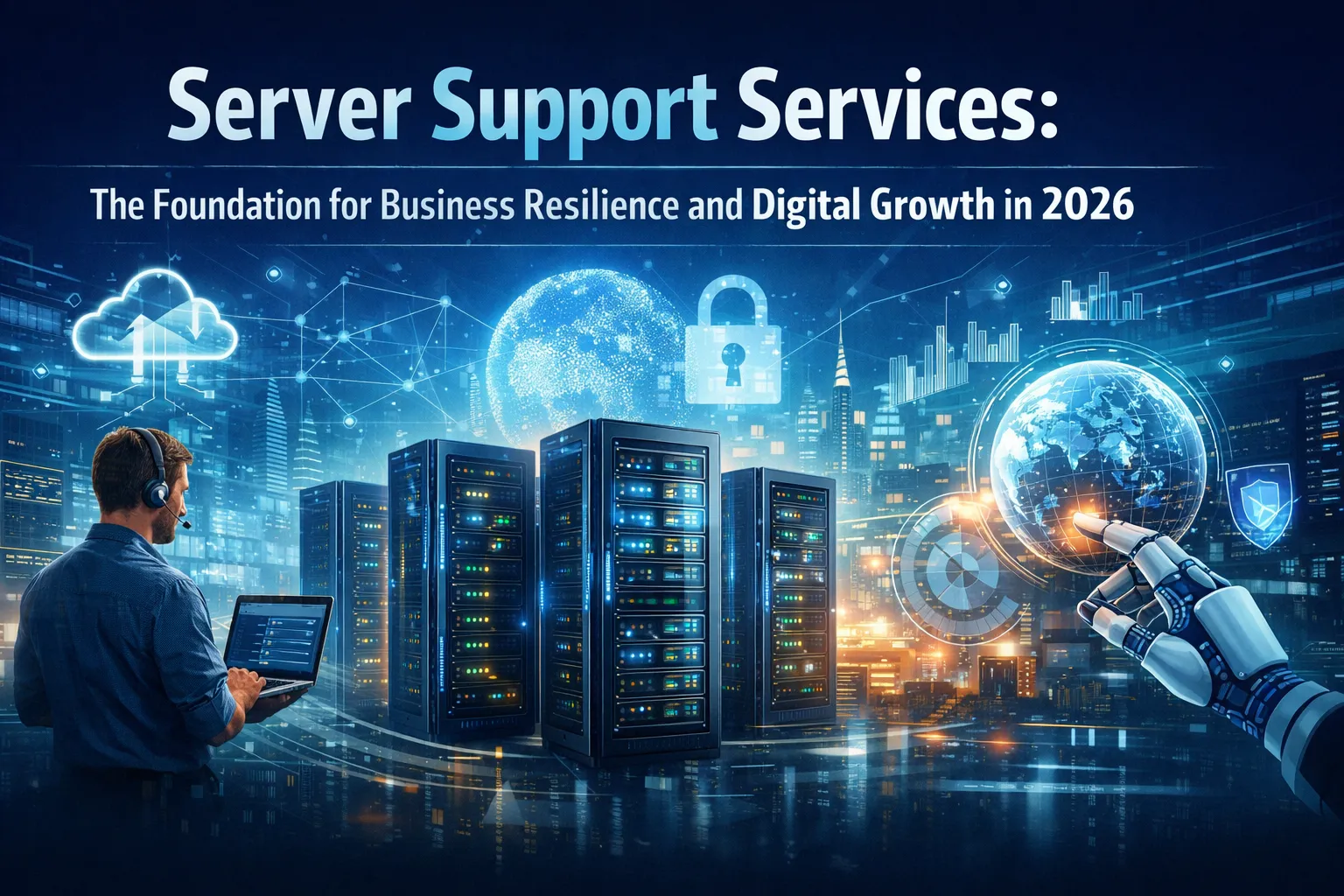
Behind every successful digital initiative stands reliable server infrastructure. The applications your customers depend on, the data driving your decisions, and the systems enabling your workforce all trace back to servers operating around the clock. When that foundation weakens, everything built upon it becomes unstable.
The global server market has expanded to $117.87 billion in 2026, demonstrating how central server infrastructure has become to business operations worldwide. Yet owning powerful servers accomplishes little without the expertise, monitoring, and maintenance required to keep them performing optimally. Server support services have transformed from occasional repair arrangements into strategic partnerships that directly enable business growth, security, and resilience.
Organizations entering 2026 face a landscape where IT infrastructure no longer functions as a back-office concern. It operates as the foundation of business growth, security, and digital transformation. Companies operating in environments shaped by cloud adoption, artificial intelligence, and increasing cyber threats recognize that server support quality directly determines their competitive position.
This guide examines how professional server support services create the foundation for business resilience and digital growth, exploring why organizations of every size benefit from expert server management in 2026.
Why Server Infrastructure Matters More Than Ever
Understanding the elevated importance of server infrastructure in modern business explains why support services have become strategically essential rather than merely operationally convenient.
The Digital Dependency Reality
Modern businesses depend on digital systems for virtually every function. Customer interactions flow through web servers and application platforms. Financial transactions process through database servers. Team collaboration happens across communication servers. Inventory, logistics, human resources, and countless other functions rely on server-based applications operating continuously.
This digital dependency creates vulnerability that previous business generations never experienced. A manufacturing company thirty years ago could continue operations if their computer system went down for an afternoon. Today, that same company might halt production entirely because their inventory management, quality control systems, and logistics coordination all require functioning servers.
The scope of server-dependent operations continues expanding. Over 50% of small and medium-sized businesses now plan to allocate more than half of their technology budgets to cloud services, representing a significant shift toward server-based computing models. This migration amplifies the importance of reliable server support since more critical functions now depend on server infrastructure performing flawlessly.
Complexity Has Multiplied
Server environments have grown enormously complex compared to even five years ago. In 2026, most organizations no longer run simple on-premises setups with a few servers in a closet. They manage hybrid environments blending physical servers, private clouds, public cloud workloads, and edge computing nodes spread across multiple locations.
This complexity demands specialized knowledge that few internal teams can maintain across all required domains. The technical expertise needed to optimize performance across AWS, Azure, on-premises servers, and edge deployments simultaneously exceeds what most business can realistically develop or retain internally.
Professional server support providers maintain teams of specialists who stay current on evolving technologies, security threats, and best practices across diverse server environments. This expertise proves particularly valuable when implementing new systems, addressing complex technical challenges, or responding to security incidents that span multiple platforms.
Stakes Have Increased
The consequences of server problems have intensified as digital dependency has grown. Research indicates that IT downtime costs organizations an average of $5,600 per minute, with some industries experiencing losses exceeding $300,000 per hour during outages. These figures reflect not just direct revenue loss but cascading impacts on customer relationships, employee productivity, and business reputation.
Beyond financial impact, server failures now carry regulatory and compliance consequences. Organizations handling sensitive data face penalties for breaches enabled by inadequate infrastructure protection. Healthcare organizations, financial services firms, and companies handling personal information must maintain server security standards that require ongoing expertise to achieve.
The cost of data breaches for small businesses often reaches between $120,000 and $1.24 million depending on severity. These figures make professional server support not merely convenient but financially prudent compared to the alternative of inadequate protection.
Building Business Resilience Through Server Support
Resilient businesses can absorb shocks, adapt to changing conditions, and recover quickly from disruptions. Professional server support services contribute directly to each dimension of organizational resilience.
Preventing Disruptions Before They Occur
The most valuable aspect of modern server support lies in preventing problems rather than just responding to them. Continuous monitoring identifies anomalies and performance degradation before they cause actual failures. This proactive approach transforms server support from emergency response into business protection.
Most businesses see a 70 to 80 percent reduction in IT issues within the first 90 days of implementing proper managed IT services. Given that the average small business experiences two to three significant outages annually, professional support prevents most of the incidents that would otherwise disrupt operations.
Predictive capabilities have advanced significantly through artificial intelligence and machine learning. Modern support platforms analyze performance patterns across thousands of server environments, identifying warning signs that precede failures. Rising CPU temperatures, unusual memory spikes, disk read/write errors, and irregular network traffic all signal potential problems before they cause actual outages.
Accelerating Recovery When Problems Occur
Despite the best prevention efforts, some incidents will occur. Hardware eventually fails. External factors like power outages or network disruptions happen. Security incidents, while preventable in many cases, still occur across even well-protected environments.
Professional server support dramatically reduces recovery time when problems do occur. Support teams with experience across many environments have seen most problem patterns before and know the fastest paths to resolution. They maintain documented procedures, pre-positioned replacement parts, and relationships with hardware vendors that accelerate recovery compared to organizations handling issues independently.
Service Level Agreements create accountability for recovery performance. Many providers guarantee specific uptime percentages, often 99.9% or higher, with financial consequences for missing these commitments. This accountability aligns provider incentives with client interests in ways that internal teams rarely achieve.
Enabling Adaptation and Growth
Resilient organizations do not merely survive disruptions; they adapt and grow despite changing conditions. Server support services enable this adaptation by providing scalable expertise that expands with business needs.
When businesses grow rapidly, server infrastructure must scale correspondingly. Adding employees, opening new locations, and launching new applications all create additional infrastructure demands. Professional support provides this scalability without requiring organizations to hire and train additional internal staff for each growth phase.
Similarly, when strategic direction shifts, server infrastructure must adapt. Migrating to new platforms, integrating acquired companies, or launching digital transformation initiatives all require server expertise that would be impractical to build internally for single projects. Support providers bring this expertise when needed without the overhead of permanent staff additions.
Server Support and Digital Transformation
Digital transformation initiatives depend fundamentally on server infrastructure that performs reliably, secures data effectively, and scales flexibly. Understanding this connection explains why server support has become strategically important rather than merely operational.
Infrastructure as Transformation Foundation
Digital transformation encompasses more than implementing new software. It represents broader transformation of processes, systems, collaboration models, and customer engagement strategies. Every element of this transformation depends on underlying infrastructure that must perform reliably under new demands.
Organizations attempting digital transformation on inadequate infrastructure face consistent challenges. New applications perform poorly because underlying servers lack capacity. Integration projects fail because existing systems cannot handle additional data flows. Customer-facing initiatives disappoint because infrastructure cannot deliver the responsive experiences customers expect.
Server support services ensure infrastructure keeps pace with transformation ambitions. Support providers assess infrastructure readiness for planned initiatives, identify gaps requiring attention, and implement improvements that enable rather than constrain transformation efforts.
Enabling Cloud and Hybrid Strategies
Cloud adoption remains central to IT strategy, with businesses migrating workloads for scalability, resilience, and cost optimization. Yet cloud adoption introduces complexity that requires ongoing expertise to manage effectively.
Hybrid environments that combine on-premises servers with public cloud resources require coordination that spans traditional boundaries. Data must flow securely between environments. Applications must function consistently regardless of where they run. Security policies must apply uniformly across platforms that different vendors control.
Server support providers with cloud expertise help businesses design strategies balancing flexibility, performance, and security. They implement governance layers, unified monitoring, and policy enforcement across disparate platforms. This expertise proves particularly valuable since multi-cloud complexity otherwise overwhelms many internal teams.
Supporting Automation and AI Initiatives
Artificial intelligence and automation have moved from experimental technologies to essential business capabilities. From customer service chatbots to predictive maintenance systems to automated financial processes, AI-powered capabilities increasingly differentiate competitive businesses.
These capabilities depend on server infrastructure capable of handling AI workloads. Processing requirements for machine learning far exceed traditional applications. Data storage needs expand dramatically as AI systems consume training data. Network bandwidth must accommodate increased data movement between systems.
Server support ensures infrastructure supports AI ambitions rather than constraining them. Support providers help organizations evaluate infrastructure requirements for planned AI initiatives, implement necessary upgrades, and optimize performance as AI workloads scale.
Security as a Server Support Imperative
Cybersecurity concerns have elevated server support from operational convenience to strategic necessity. The connection between server management and security protection has become inseparable.
Servers as Attack Targets
Servers represent primary targets for cyberattacks because they contain valuable data and provide access to broader networks. Unpatched servers remain among the top entry points attackers exploit. Misconfigured servers expose vulnerabilities that attackers actively scan for. Compromised servers enable lateral movement through networks that extends attack impact.
The average cost of a data breach now exceeds $4.88 million globally, with costs continuing to rise annually. Many breaches trace back to server vulnerabilities that proper maintenance would have prevented. Organizations cannot afford to treat server security as optional or secondary.
Server support services integrate security into ongoing maintenance rather than treating it as a separate concern. Regular patching closes vulnerabilities before attackers can exploit them. Configuration reviews identify exposures requiring correction. Monitoring detects suspicious activity that might indicate compromise attempts.
Zero Trust Implementation
Zero Trust security principles have become standard cybersecurity strategy for server environments. This approach assumes no user or device is inherently trustworthy, requiring continuous verification before granting access to resources.
Implementing Zero Trust across server infrastructure requires expertise most organizations lack internally. The approach demands identity-centric controls, network microsegmentation, continuous monitoring, and integration across diverse systems. Each element requires specialized knowledge to implement effectively.
Server support providers bring Zero Trust expertise developed across multiple implementations. They understand how to apply these principles practically across hybrid environments combining different server platforms, cloud resources, and network configurations.
Ransomware and Recovery Readiness
Ransomware attacks have increased in sophistication and frequency, targeting organizations of every size. These attacks encrypt server data and demand payment for decryption keys, creating devastating business impact when successful.
Defense against ransomware requires layered protection that server support services provide. Prevention measures reduce successful attack likelihood. Detection capabilities identify attacks in progress before encryption completes. Recovery preparation ensures rapid restoration from backups when attacks succeed despite prevention efforts.
Modern server support includes immutable backup strategies that ransomware cannot compromise. Backups stored in ways attackers cannot modify enable recovery without paying ransoms. This capability has become essential as ransomware attackers increasingly target backup systems specifically to prevent recovery options.
Selecting the Right Server Support Partner
Choosing an appropriate server support provider significantly impacts the benefits organizations realize. Understanding key evaluation criteria helps organizations make informed selections.
Technical Capability Assessment
Server environments vary significantly across organizations. Support providers must demonstrate capability relevant to specific technical requirements rather than generic expertise claims.
Evaluate providers against your actual environment. If you run hybrid configurations combining on-premises servers with cloud workloads, ensure providers have demonstrated expertise in both environments and their integration. If you operate specialized applications or compliance-regulated systems, verify providers understand these specific requirements.
Request references from organizations with similar environments. Speaking with existing clients reveals how providers actually perform rather than how they claim to perform. Ask about response times, resolution quality, and communication effectiveness during both routine support and crisis situations.
Service Level Alignment
Service Level Agreements should align with business requirements rather than accepting provider standard terms. Consider what uptime level your business actually requires. Calculate the business impact of downtime to determine appropriate response time commitments.
Evaluate SLA enforcement mechanisms. How does the provider demonstrate compliance with commitments? What remedies exist when commitments are missed? Providers confident in their capabilities willingly accept meaningful accountability. Those offering vague commitments or limited remedies may not deliver consistently.
Consider coverage hours relative to your business operations. Organizations operating globally or providing customer-facing services around the clock need support available beyond traditional business hours. Verify that extended coverage means actual qualified staff rather than after-hours message services.
Strategic Partnership Potential
The best server support relationships extend beyond transactional break-fix arrangements into strategic partnerships. Providers who understand your business context provide more valuable guidance than those focused purely on technical metrics.
Assess whether providers offer strategic consulting alongside technical support. Can they help evaluate technology investments? Do they provide roadmapping assistance that aligns infrastructure with business direction? Are they willing to recommend against unnecessary purchases that would benefit their revenue but not your business?
Consider the provider’s own trajectory. Organizations investing in developing capabilities, training staff, and staying current with technology trends will continue providing value as your needs evolve. Providers merely maintaining existing capabilities may fall behind as technology advances.
Server Support for Different Business Contexts
Server support needs vary based on organizational size, industry requirements, and technical complexity. Understanding these variations helps organizations find appropriate solutions.
Small and Medium Business Considerations
Small and medium-sized businesses often feel downtime more acutely because they have fewer resources to absorb financial and operational shocks. Professional server support services in 2026 are scalable and affordable, making enterprise-quality support accessible to organizations of every size.
SMBs represent the fastest-growing segment of managed service customers. Research indicates that 72% of small and medium businesses plan to increase managed IT spending, recognizing that outsourcing provides access to enterprise-grade capabilities at predictable costs without maintaining large internal IT teams.
For smaller organizations, server support often represents the entire IT department rather than supplementing internal staff. Providers serving this market should offer comprehensive services including help desk support for employees, not just server maintenance.
Enterprise Requirements
Larger organizations benefit from server support through standardized operations, round-the-clock coverage across multiple time zones, and access to specialized expertise that would be expensive to maintain internally. Enterprise environments typically require dedicated account teams, customized SLAs, and integration with existing IT operations.
Enterprise server support often complements rather than replaces internal IT staff. Internal teams maintain business context and user relationships while external support provides deep technical expertise and extended coverage capacity. This hybrid model leverages the strengths of both internal and external resources.
Compliance requirements frequently drive enterprise server support decisions. Organizations in regulated industries need providers demonstrating compliance capabilities, audit experience, and documentation practices that satisfy regulatory requirements.
Industry-Specific Needs
Certain industries face unique server support requirements based on regulatory environment, data sensitivity, or operational patterns.
Healthcare organizations must maintain HIPAA compliance across all systems handling protected health information. Server support providers serving healthcare must understand compliance requirements and implement appropriate controls.
Financial services firms face regulatory scrutiny requiring documented security practices, audit trails, and data protection measures. Server support for these organizations must satisfy both operational needs and regulatory requirements.
Manufacturing and logistics operations often require integration between server systems and operational technology. Support providers must understand these integrations and maintain them alongside traditional IT systems.
The Future of Server Support Services
Server support continues evolving as technology advances and business requirements shift. Understanding emerging trends helps organizations prepare for future requirements.
AI-Enhanced Support Operations
Artificial intelligence is transforming server support itself, not just the workloads servers handle. AI-powered monitoring identifies issues faster than human observation. Automated remediation handles routine problems without human intervention. Predictive analytics anticipate failures before they occur.
By 2026, 87% of managed service providers plan to increase AI investments. Service desk automation is expected to reduce ticket volume by 40 to 60 percent as AI handles routine matters automatically. Forward-thinking providers deploy AI capabilities that deliver faster resolution while allowing human specialists to focus on complex issues requiring judgment.
Organizations should evaluate provider AI capabilities when selecting server support partners. Providers investing in AI deliver superior outcomes compared to those relying solely on traditional support models.
Edge Computing Integration
Edge computing processes data closer to where it is generated, reducing latency and improving real-time performance. This trend extends server infrastructure beyond traditional data centers into distributed locations closer to operations.
Server support must expand to encompass edge deployments alongside traditional centralized infrastructure. Providers must monitor and maintain systems distributed across multiple locations, often in environments without dedicated IT presence.
Organizations implementing IoT, real-time analytics, or other edge-dependent capabilities should verify that server support providers can extend coverage to distributed edge infrastructure.
Sustainability Considerations
Environmental sustainability has become a business consideration affecting technology decisions. Energy-efficient server operations, optimized resource utilization, and sustainable lifecycle practices increasingly influence infrastructure planning.
Server support providers can contribute to sustainability goals through optimization that reduces energy consumption, virtualization that improves resource utilization, and lifecycle management that maximizes equipment useful life.
Organizations prioritizing sustainability should evaluate how server support practices align with environmental objectives. Providers offering sustainability-focused services help achieve both operational and environmental goals.
FAQs About Server Support Services
What is the difference between server support and managed IT services?
Server support focuses specifically on maintaining server infrastructure including monitoring, maintenance, security patching, and troubleshooting. Managed IT services typically encompass broader technology support including end-user devices, network infrastructure, and application support alongside server management. Many organizations use server support as a component within comprehensive managed IT services.
How much do server support services cost for small businesses?
Costs vary based on infrastructure complexity, required service levels, and coverage hours. Small businesses might invest $500 to $2,000 monthly for basic support covering a few servers, while organizations with more complex environments could spend $5,000 to $10,000 monthly. Most businesses find these costs significantly lower than maintaining equivalent in-house expertise.
Can server support providers manage cloud infrastructure?
Yes, most modern server support providers specialize in cloud infrastructure alongside traditional on-premises servers. They can manage cloud servers across platforms like AWS, Azure, and Google Cloud, handle hybrid environments combining on-premises and cloud resources, optimize cloud resource usage and costs, and manage migrations between different environments.
How does server support improve cybersecurity?
Server support integrates security into ongoing infrastructure management. This includes regular security patch deployment, firewall configuration and monitoring, intrusion detection and prevention, malware protection, vulnerability scanning and remediation, security audit support, and incident response capabilities. Unpatched servers represent top attack vectors, making regular maintenance essential for security.
Should we replace our internal IT team with server support services?
This depends on business size and needs. Many organizations maintain small in-house teams for day-to-day user support and business-specific needs while outsourcing specialized server management. Server support services complement in-house teams by providing depth of expertise, extended coverage hours, and specialized knowledge that would be impractical to maintain internally.
How quickly can server support providers respond to emergencies?
Response times depend on service level agreements and typically range from 15 minutes to four hours for critical issues. Many providers offer different response tiers based on issue severity. When evaluating providers, verify that response commitments apply during hours relevant to your business operations and that response means actual qualified technicians, not just acknowledgment messages.
Conclusion
Server infrastructure has become the foundation upon which modern business operations depend. Every customer transaction, employee collaboration, and business decision flows through server systems operating continuously behind the scenes. When this foundation performs reliably, businesses can focus on growth, innovation, and customer service. When it falters, everything built upon it becomes unstable.
Professional server support services provide the expertise, monitoring, and maintenance required to keep this critical foundation performing optimally. They prevent the majority of issues that would otherwise cause disruptions. They accelerate recovery when problems do occur. They enable the adaptation and scaling that growing businesses require.
In 2026, server support has become strategically essential rather than merely operationally convenient. The complexity of hybrid environments, the sophistication of cyber threats, and the business dependency on digital systems all demand expertise that most organizations cannot practically develop or maintain internally.
Organizations that invest in quality server support build resilience that enables them to weather disruptions, pursue digital transformation confidently, and focus their attention on business growth rather than technology firefighting. Those that neglect server support accept unnecessary risk that threatens business continuity and competitive position.
The question is not whether your organization can afford professional server support services. The question is whether you can afford the alternative of inadequate support for the infrastructure your entire business depends upon.






No comment