2026 Equipment Financing Strategies for Small Business Success
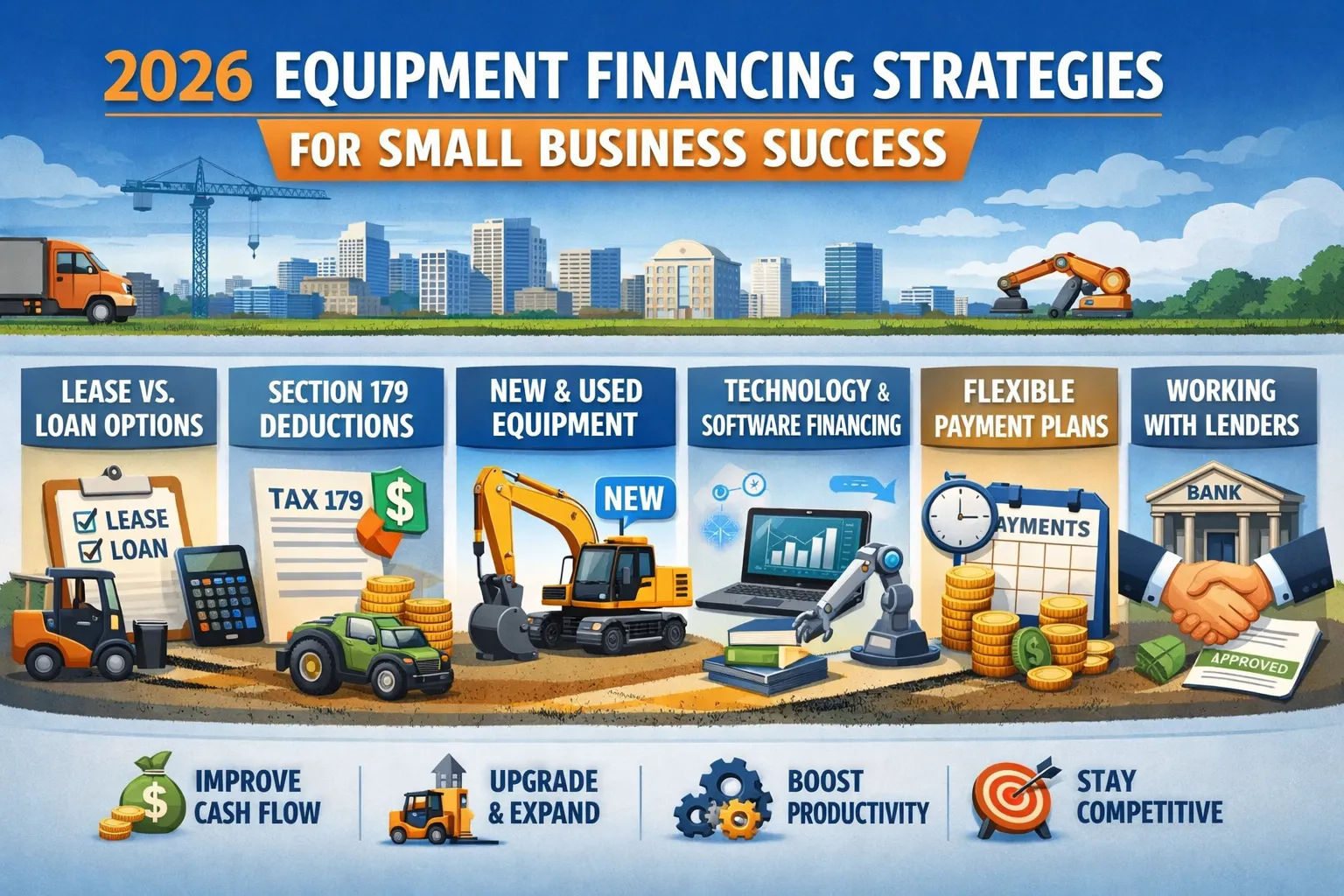
Starting and running a small business comes with a variety of challenges, not least of which is acquiring the necessary equipment to function efficiently. Whether it’s purchasing new machinery, upgrading technology, or expanding your fleet, the cost of equipment can be a significant financial burden for many small business owners. However, the good news is that there are numerous ways to finance these assets without draining your business’s cash reserves. Equipment financing offers a solution that can help small businesses acquire the tools they need to grow and succeed in 2026.
In this blog, we’ll explore some of the best equipment financing strategies for small businesses in 2026, from leasing and loans to vendor financing and tax incentives. Plus, we’ll answer some frequently asked questions about equipment financing to ensure you’re well-equipped to make the right decisions for your business.
1. Leasing vs. Buying: What’s the Right Choice?
When considering equipment financing, the first major decision that business owners need to make is whether to lease or buy the equipment.
Leasing Equipment: The Benefits
Leasing allows small businesses to use equipment without having to purchase it outright. Typically, leases last for a set term, after which the business can either return the equipment, purchase it at a residual value, or renew the lease.
Pros of Leasing:
-
Lower Upfront Costs: Leasing typically requires less capital upfront compared to purchasing, which can be a huge advantage if your business needs to conserve cash flow.
-
Access to Newer Technology: If your business requires cutting-edge or high-tech equipment, leasing allows you to upgrade more frequently without bearing the cost of full ownership.
-
Tax Benefits: Lease payments can often be deducted as business expenses, helping to reduce your tax burden.
Cons of Leasing:
-
No Equity: At the end of the lease term, you won’t own the equipment unless you opt to purchase it.
-
Long-Term Cost: Over the long run, leasing can be more expensive than purchasing the equipment outright.
Buying Equipment: The Benefits
Buying equipment allows small businesses to own their assets outright. Once the equipment is paid for, the business can use it indefinitely without having to make additional payments.
Pros of Buying:
-
Ownership: You own the equipment and can sell it, trade it in, or use it for as long as needed.
-
Long-Term Savings: While buying requires a larger upfront payment, it can save money in the long run if the equipment has a long lifespan.
-
Tax Deductions: Equipment purchased for business use can qualify for tax deductions, including depreciation.
Cons of Buying:
-
High Upfront Costs: The initial cost of purchasing equipment is typically much higher than leasing, which can put a strain on your cash flow.
-
Maintenance and Repairs: As the owner, your business will be responsible for maintaining and repairing the equipment.
2. Equipment Financing Loans
If your business wants to purchase equipment but doesn’t have the cash to pay for it upfront, an equipment financing loan is a great option. With an equipment loan, the lender provides the funds needed to buy the equipment, and your business repays the loan over time, typically with interest.
How It Works:
-
Secured Loan: The equipment itself acts as collateral for the loan, meaning that if your business defaults, the lender can seize the equipment.
-
Flexible Terms: Equipment financing loans often come with flexible repayment terms ranging from one to five years, making it easier for businesses to align repayments with their cash flow.
Pros:
-
Ownership: Unlike leasing, buying equipment with a loan allows your business to own the equipment outright.
-
Equity Building: Once the loan is paid off, your business owns the asset, which can help build equity.
-
Potential Tax Deductions: Depending on the loan terms and equipment type, you may be able to deduct interest payments as business expenses.
Cons:
-
Higher Payments: Loan repayments can be larger than lease payments, which could strain your business’s cash flow.
-
Loan Approval Process: Securing an equipment financing loan may require a good credit score and financial documentation, which can be difficult for some small businesses to meet.
3. SBA 7(a) Loans for Equipment Financing
The U.S. Small Business Administration (SBA) offers a unique loan program known as the 7(a) loan, which can be used for equipment financing. The SBA guarantees a portion of the loan, making it less risky for lenders and, in turn, more accessible for small businesses.
How It Works:
-
SBA 7(a) loans provide long-term financing with relatively low-interest rates for small businesses.
-
The loan can be used for a wide range of business needs, including equipment purchases.
-
The approval process can take longer than with traditional loans, and borrowers must meet eligibility criteria, including a strong credit history and a solid business plan.
Pros:
-
Lower Interest Rates: SBA loans typically offer lower interest rates than traditional loans, making them more affordable.
-
Longer Repayment Terms: SBA loans often come with longer repayment terms, allowing small businesses to spread out payments.
Cons:
-
Lengthy Approval Process: The application process can be time-consuming, with detailed documentation and approval requirements.
-
Eligibility Requirements: Businesses must meet certain criteria to qualify for SBA loans, including credit scores and years in operation.
4. Vendor Financing
Vendor financing is when the supplier or manufacturer of the equipment provides financing to the business. This can be an attractive option if you’re purchasing equipment directly from a supplier and need financial assistance.
How It Works:
-
The vendor provides the equipment upfront, and the business agrees to pay the cost over a set period.
-
Some vendor financing options may allow deferred payments or include low-interest rates, making it easier for small businesses to manage cash flow.
Pros:
-
No Third-Party Lenders: With vendor financing, you’re dealing directly with the supplier, which can make the process simpler and faster.
-
Flexible Terms: Many vendors offer flexible payment options, such as deferred payments or low-interest financing.
Cons:
-
Limited Equipment Choices: You may only be able to purchase equipment from that particular vendor, limiting your options.
-
Higher Prices: Some vendors may charge higher prices for equipment in exchange for offering financing.
5. Online Lenders and Alternative Financing
In recent years, online lenders have become a popular option for small businesses seeking equipment financing. These lenders often offer faster approval processes and more flexible terms than traditional banks.
How It Works:
-
Businesses can apply for financing through online lenders, who will provide funding for equipment purchases.
-
Online lenders often have less stringent requirements than traditional banks, making it easier for small businesses with less-than-perfect credit to secure financing.
Pros:
-
Quick Approvals: Online lenders can offer quick approvals, sometimes within hours, which is ideal for businesses that need equipment fast.
-
Flexibility: There are many options available for repayment terms, and businesses can often choose the most suitable plan.
Cons:
-
Higher Interest Rates: Online lenders may charge higher interest rates than traditional financial institutions, which can increase the overall cost of the loan.
-
Shorter Repayment Terms: Many online lenders offer shorter repayment terms, which could result in higher monthly payments.
6. Tax Incentives and Depreciation
One of the major advantages of purchasing or financing equipment is the potential for tax savings. In the U.S., businesses can benefit from Section 179 of the tax code, which allows for an immediate tax deduction of up to $1,080,000 in equipment purchases (in 2026).
How It Works:
-
If you purchase equipment outright or finance it, you can write off the entire cost of the equipment in the same tax year, which can significantly reduce your tax liability.
Pros:
-
Immediate Tax Benefits: The Section 179 deduction allows you to offset your purchase costs in the same year.
-
Improved Cash Flow: By reducing your tax burden, you can free up cash for other business needs.
Cons:
-
Limits on Deduction: The Section 179 deduction has annual limits, which may not cover large purchases.
-
Eligibility: The equipment must be used for business purposes to qualify for the deduction.
Frequently Asked Questions (FAQs)
1. Can I finance used equipment?
Yes, many equipment financing options, including loans and leases, allow you to finance used equipment. However, used equipment may come with a lower financing rate compared to new equipment, depending on the lender and the condition of the equipment.
2. How does equipment financing affect my credit?
Equipment financing can impact your credit score, especially if you’re using a loan. On-time payments can improve your credit, while late payments can hurt it. If you choose a lease, it may not affect your credit as much, but this can vary depending on the leasing company’s reporting practices.
3. How do I qualify for equipment financing?
Qualification requirements for equipment financing depend on the type of financing you choose. Typically, lenders look at your credit score, business history, revenue, and the type of equipment you’re purchasing. Some options, like vendor financing or online lenders, may have more flexible criteria.
4. What happens if I default on an equipment loan?
If you default on an equipment loan, the lender has the right to repossess the equipment, as it serves as collateral. This could negatively affect your credit and make it harder to secure financing in the future.
5. Can I finance all types of equipment?
Most types of equipment can be financed, including machinery, computers, vehicles, and office equipment. However, the specific equipment you can finance may vary based on the lender and their financing policies.
Conclusion
In 2026, equipment financing is a vital tool for small businesses looking to grow without straining their finances. Whether you decide to lease, purchase, or finance through loans, the right strategy can help your business acquire the equipment it needs to succeed. By understanding your options, evaluating the total cost of ownership, and leveraging available tax incentives, you can make informed decisions that support your business’s long-term growth and success.

No comment