
How VoIP Support Services Are Evolving in 2026
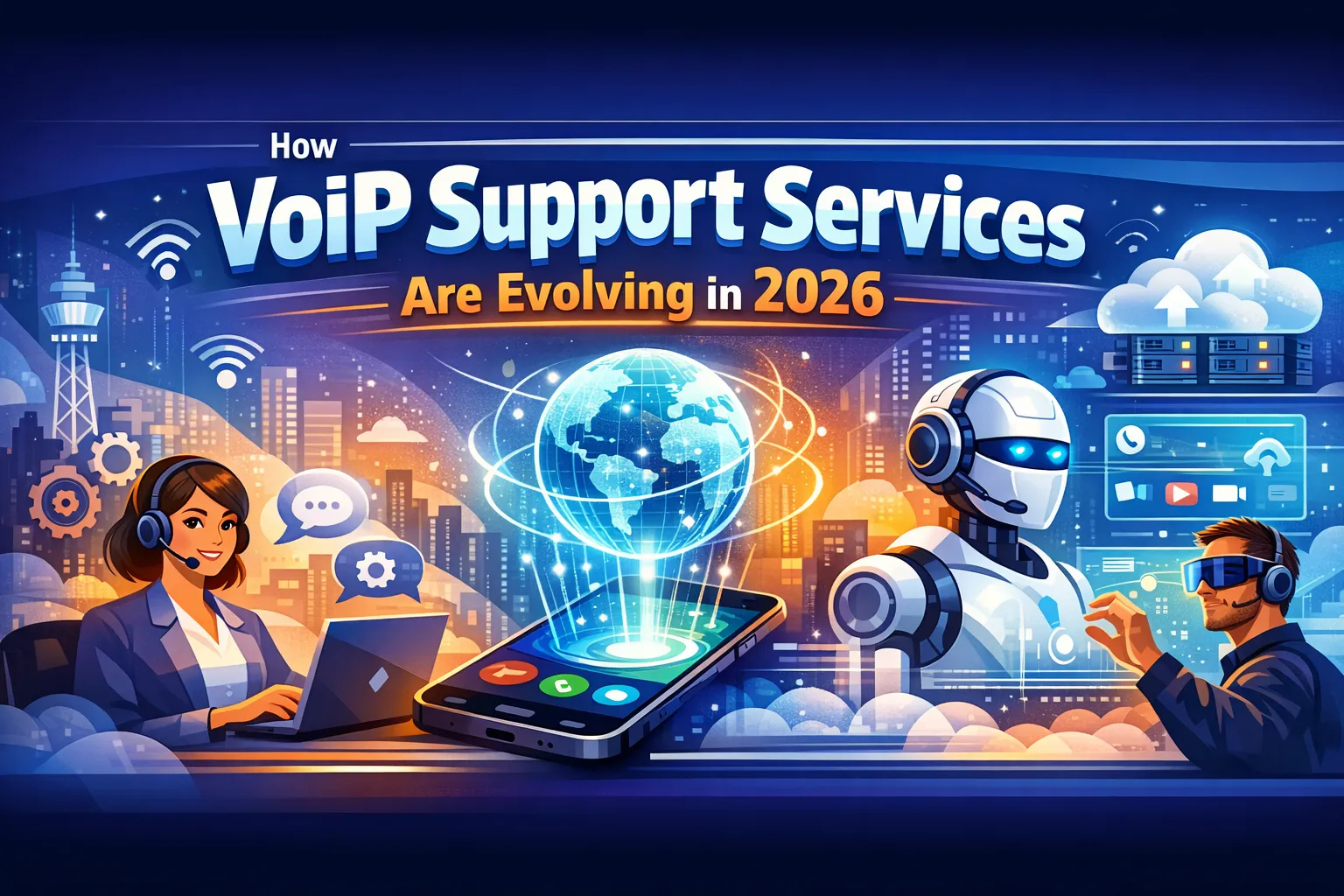
The landscape of business communications has undergone a dramatic transformation over the past decade, with Voice over Internet Protocol (VoIP) technology becoming the backbone of modern enterprise connectivity. As we navigate through 2026, VoIP support services are experiencing unprecedented evolution, driven by artificial intelligence, enhanced security protocols, and the growing demands of hybrid work environments. Organizations that once viewed VoIP as a simple phone system replacement now recognize it as a critical infrastructure component requiring sophisticated support strategies.
This comprehensive guide explores the cutting-edge developments reshaping VoIP support services in 2026, offering insights into how businesses can leverage these advancements to maintain competitive communication infrastructures.
The AI-Powered Support Revolution
Artificial intelligence has fundamentally altered the VoIP support landscape in 2026. Modern support services now deploy advanced AI systems capable of predicting network failures before they impact users, analyzing call quality patterns in real-time, and automatically resolving common technical issues without human intervention.
Machine learning algorithms continuously monitor VoIP traffic, identifying anomalies that might indicate configuration problems, bandwidth constraints, or security threats. These predictive capabilities enable support teams to address potential issues during off-peak hours, minimizing disruption to business operations. AI-driven chatbots now handle approximately 60% of tier-one support requests, providing instant troubleshooting guidance and freeing human technicians to focus on complex challenges requiring critical thinking and strategic planning.
Natural language processing has advanced to the point where automated systems can understand context-specific technical questions, providing accurate solutions tailored to individual business environments. This intelligent automation doesn’t replace human expertise but rather augments it, creating a hybrid support model that delivers faster response times and higher resolution rates than traditional approaches.
Cloud-Native Architecture and Multi-Platform Integration
VoIP support services in 2026 have fully embraced cloud-native architectures, enabling unprecedented flexibility and scalability. Support providers now manage communications infrastructure across multiple cloud platforms simultaneously, ensuring redundancy and optimal performance regardless of geographic location or sudden demand spikes.
This cloud-centric approach facilitates seamless integration with collaboration tools, customer relationship management systems, and business intelligence platforms. Modern VoIP support teams must possess expertise not only in telecommunications but also in API management, middleware configuration, and cross-platform data synchronization.
The shift to containerized VoIP applications has revolutionized deployment and maintenance processes. Support teams can now update individual communication components without disrupting entire systems, roll back problematic changes instantly, and deploy customized configurations across thousands of endpoints in minutes rather than hours.
Advanced Security and Compliance Management
Cybersecurity concerns have elevated VoIP support services to strategic importance within organizational IT frameworks. Support providers in 2026 implement multi-layered security protocols including zero-trust network architectures, end-to-end encryption for all voice and video communications, and continuous vulnerability assessments.
Sophisticated threat detection systems monitor VoIP traffic for signs of toll fraud, denial-of-service attacks, and unauthorized access attempts. These systems utilize behavioral analysis to identify suspicious patterns that traditional signature-based security tools might miss. When threats are detected, automated response protocols can isolate affected systems, alert security teams, and implement countermeasures within milliseconds.
Regulatory compliance has become increasingly complex, with data privacy regulations varying significantly across jurisdictions. Modern VoIP support services provide comprehensive compliance management, ensuring that call recordings, metadata, and user information meet requirements such as GDPR, CCPA, HIPAA, and industry-specific standards. Support teams now include compliance specialists who understand both technical implementation and legal requirements, bridging the gap between IT operations and regulatory obligations.
Proactive Network Optimization and Quality Assurance
Quality of service has evolved from a reactive troubleshooting concern to a proactive optimization discipline. VoIP support services in 2026 employ sophisticated monitoring tools that measure dozens of performance metrics simultaneously, including jitter, latency, packet loss, Mean Opinion Score (MOS), and codec efficiency.
Advanced analytics platforms aggregate this data to identify optimization opportunities that might not be apparent through traditional monitoring approaches. Support teams can pinpoint specific network segments requiring bandwidth upgrades, identify applications competing for network resources, and optimize quality of service (QoS) policies to prioritize business-critical communications.
Network simulation capabilities allow support teams to model the impact of infrastructure changes before implementation, reducing the risk of configuration errors that could degrade communication quality. This predictive approach to network management has dramatically reduced the frequency and duration of quality-related support tickets.
Remote and Hybrid Work Enablement
The permanent shift to hybrid work models has redefined VoIP support service requirements. Support teams must now ensure consistent communication quality across diverse environments including home offices, coworking spaces, mobile devices, and traditional office settings.
Modern VoIP support services provide comprehensive endpoint management, ensuring that employees receive optimal communication experiences regardless of location or device. This includes remote provisioning of VoIP equipment, automated troubleshooting of home network issues, and guidance on optimizing personal internet connections for business communications.
Support providers have developed specialized tools for diagnosing remote connectivity problems, including bandwidth testing applications, network configuration utilities, and step-by-step troubleshooting wizards designed for non-technical users. These tools empower employees to resolve common issues independently while providing support teams with detailed diagnostic information when professional assistance is required.
Unified Communications as a Service (UCaaS) Integration
VoIP has become inseparable from broader unified communications platforms, and support services have evolved to address this convergence. Modern support teams possess expertise across voice, video conferencing, instant messaging, file sharing, and presence management systems.
This holistic approach requires support personnel to understand complex interdependencies between communication modalities. A problem affecting video conferencing quality might originate from VoIP bandwidth allocation, network QoS configuration, or cloud platform performance issues. Support services in 2026 employ cross-functional teams capable of diagnosing and resolving issues across the entire unified communications ecosystem.
Integration with business process automation tools has created new support requirements around workflow optimization, custom application development, and API troubleshooting. Support providers now offer consultation services helping businesses maximize the value of their communications investments through intelligent automation and system integration.
Real-Time Analytics and Business Intelligence
VoIP support services have evolved beyond technical troubleshooting to become strategic business partners providing actionable intelligence. Advanced analytics platforms process millions of call records, identifying trends in communication patterns, customer interaction quality, and employee collaboration effectiveness.
Support teams now provide regular business intelligence reports highlighting opportunities for operational improvement. These insights might reveal optimal times for customer outreach, identify training needs based on call handling patterns, or demonstrate the ROI of communications infrastructure investments.
Real-time dashboards give business leaders immediate visibility into communication system performance, usage patterns, and cost metrics. This transparency enables data-driven decision-making around capacity planning, feature adoption, and budget allocation.
Sustainability and Environmental Considerations
Environmental responsibility has become a significant factor in VoIP support service delivery. Providers are optimizing data center operations to reduce energy consumption, implementing carbon-neutral cloud infrastructure, and helping businesses minimize the environmental impact of their communications systems.
Support services now include sustainability assessments that measure the carbon footprint of VoIP infrastructure and recommend optimization strategies. This might include consolidating servers, implementing more efficient codecs, or migrating to environmentally responsible cloud providers.
The shift away from traditional PBX hardware to cloud-based VoIP systems has inherent environmental benefits, and support providers actively communicate these advantages to businesses seeking to meet sustainability goals.
The Future of VoIP Support Services
As we look beyond 2026, VoIP support services will continue evolving in response to emerging technologies and changing business needs. Quantum computing may revolutionize encryption and security protocols, while advances in edge computing could fundamentally alter network architecture and performance optimization strategies.
The integration of extended reality (XR) communications will create new support requirements around spatial audio, holographic presence, and immersive collaboration environments. Support teams are already preparing for these developments through continuous training and technology partnerships.
Businesses that invest in advanced VoIP support services position themselves to leverage communication technologies as competitive advantages rather than merely operational necessities. The organizations that thrive in this evolving landscape will be those that recognize VoIP support as a strategic function deserving of ongoing investment and attention.
Frequently Asked Questions
What is the average response time for VoIP support services in 2026?
Modern AI-enhanced support services typically provide initial responses within 2-3 minutes for critical issues, with many common problems resolved automatically in under 60 seconds through intelligent automation systems.
How much do professional VoIP support services cost?
Pricing varies based on business size and complexity, but most organizations pay between $15-50 per user monthly for comprehensive managed VoIP support, with enterprise-level services ranging higher depending on customization requirements.
Can VoIP support services help with migration from legacy phone systems?
Yes, contemporary VoIP support providers offer complete migration services including planning, implementation, testing, and post-migration optimization, typically completing transitions with minimal business disruption.
What qualifications should VoIP support technicians have in 2026?
Modern technicians typically hold certifications in cloud platforms (AWS, Azure, Google Cloud), VoIP-specific credentials (such as Cisco CCNA Collaboration), and increasingly require knowledge of AI systems and security protocols.
How do VoIP support services handle multi-location businesses?
Advanced monitoring and management platforms enable centralized support across unlimited locations, with geo-distributed infrastructure ensuring optimal performance and redundancy regardless of physical business locations.
Are VoIP support services available 24/7?
Most professional providers offer round-the-clock monitoring and support, with tiered response protocols ensuring critical issues receive immediate attention regardless of time zone or business hours.
How has AI changed VoIP support services?
AI enables predictive maintenance, automated troubleshooting, intelligent call routing for support tickets, and real-time quality optimization, reducing resolution times by approximately 40-60% compared to traditional support models.
What’s the difference between break-fix and managed VoIP support?
Break-fix addresses issues reactively as they occur, while managed support provides proactive monitoring, regular optimization, security management, and strategic planning to prevent problems before they impact operations.
Competitive service checklist
Before choosing a voip support option, compare scope, response ownership, security duties, recovery testing, reporting, implementation effort, and exit terms. Ask what evidence the provider will return each month and which decisions remain with the customer. Changing a phone system without testing routing, failover, and support ownership.
Measure the outcome
Set a baseline for the problem in this article, choose an owner, and review a small set of measures such as response time, repeat incidents, coverage, recovery tests, or time lost to workarounds. Review exceptions rather than assuming that a new tool fixed the operating cause.
How ECASYS can help
ECASYS can help small and midsize businesses review voip support. See voip support services from ECASYS or request an ECASYS consultation.
Frequently Asked Questions
What should small and midsize businesses review first for voip support?
Start with the business activity affected, current evidence, dependencies, ownership, and the recovery or follow-up step. Tie the decision to the operating problem described in How VoIP Support Services Are Evolving in 2026 rather than selecting a tool first.
How should a team compare voip support providers?
Compare scope, response and escalation, security responsibilities, reporting, implementation ownership, exit terms, and the evidence each provider will supply. A lower price is not useful if important operating work remains unassigned.
How can success be checked after a voip support change?
Record a baseline, choose a small set of measurable outcomes, review exceptions, and test the recovery path. Check user impact, security, documentation, and unresolved dependencies before calling the work complete.







No comment