
Why Equipment Financing Is Replacing Traditional Business Loans in 2026
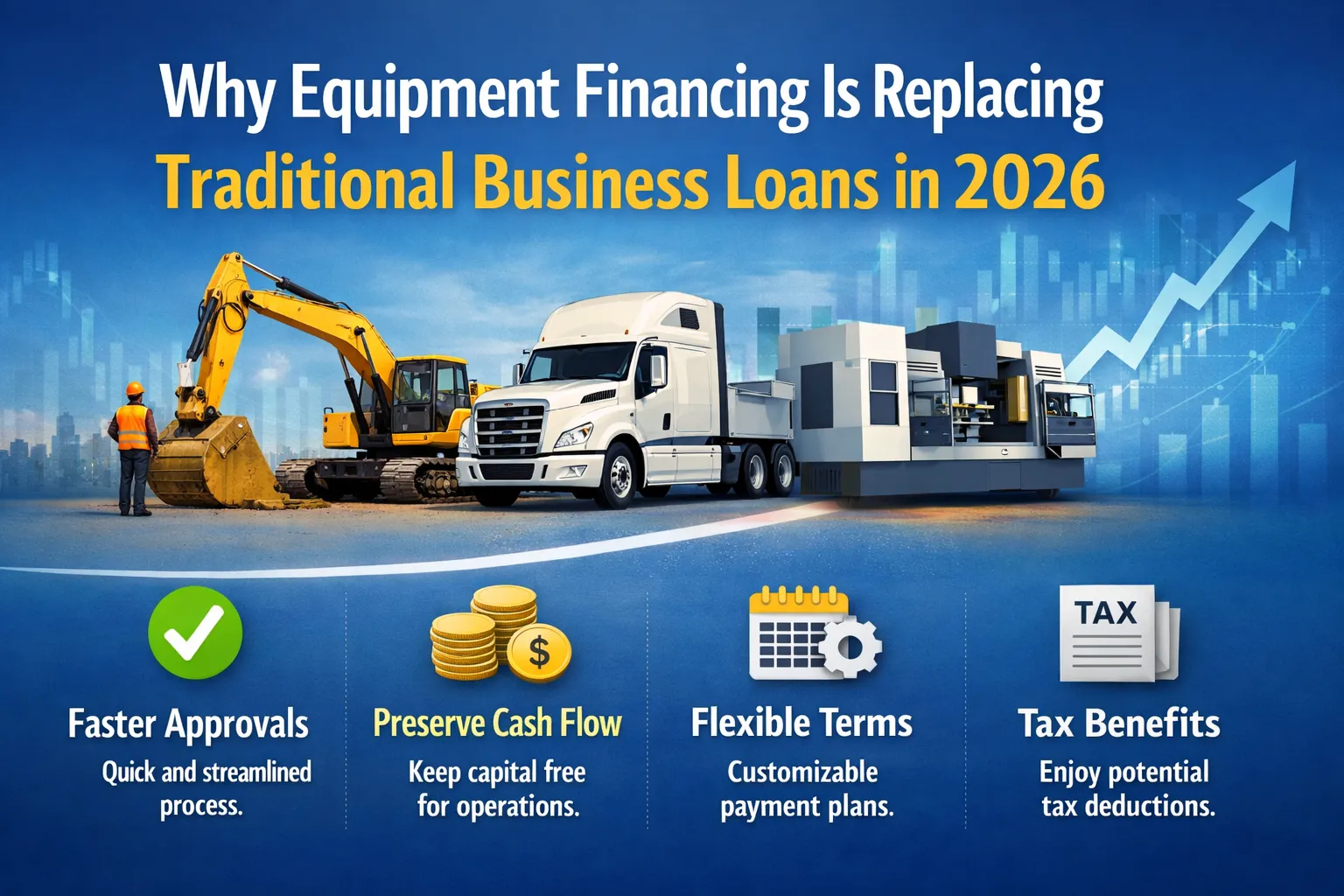
The business financing landscape has undergone a dramatic transformation in recent years, with equipment financing emerging as the preferred funding solution for companies across industries. In 2026, more businesses are choosing equipment financing over traditional business loans, and the reasons behind this shift reveal fundamental changes in how modern enterprises approach capital allocation and growth strategy.
The Evolution of Business Financing
Traditional business loans have long been the go-to solution for companies seeking capital. However, the rigid structure, lengthy approval processes, and collateral requirements of conventional loans are increasingly misaligned with the needs of today’s agile businesses. Equipment financing represents a more flexible, strategic approach that addresses these pain points while offering distinct advantages for companies investing in growth.
The shift toward equipment financing reflects broader changes in business operations. Companies now recognize that tying up credit lines with depreciating assets makes little financial sense when specialized financing options exist. This realization has accelerated dramatically in 2026, as businesses prioritize financial agility and strategic resource allocation.
Understanding Equipment Financing
Equipment financing is a specialized funding method where the equipment itself serves as collateral for the loan. This self-securing nature fundamentally differentiates it from traditional business loans that typically require additional collateral or personal guarantees. Whether you’re acquiring manufacturing machinery, medical devices, restaurant equipment, construction vehicles, or technology infrastructure, equipment financing provides a direct path to ownership without depleting working capital.
The structure is straightforward: lenders provide funds specifically for equipment purchases, with repayment terms aligned to the useful life of the asset. This creates a natural harmony between revenue generation from the equipment and the payment schedule, making cash flow management significantly more predictable.
Why Traditional Business Loans Are Falling Behind
Restrictive Approval Criteria
Traditional business loans demand extensive documentation, strong credit histories, and often require two or more years of financial statements. In 2026’s fast-paced business environment, these requirements create barriers that prevent companies from seizing time-sensitive opportunities. Equipment financing, by contrast, focuses primarily on the equipment’s value and the borrower’s ability to generate revenue from that asset.
Inflexible Terms and Structures
Conventional loans typically come with fixed terms that don’t account for seasonal variations in business revenue or the specific revenue-generating timeline of purchased assets. Equipment financing offers customizable payment structures, including seasonal payment options, deferred payment arrangements, and step-up or step-down payment schedules that align with anticipated cash flows.
Collateral Complications
Securing a traditional business loan often means pledging multiple assets, personal guarantees, or real estate. This concentrates risk and limits future borrowing capacity. Equipment financing eliminates this complication—the equipment itself is the collateral, preserving other assets for different strategic purposes.
Slower Processing Times
In 2026, speed matters more than ever. Traditional bank loans can take weeks or months for approval and funding. Equipment financing applications are typically processed within days, with some lenders offering same-day approvals for qualified applicants. This acceleration enables businesses to capitalize on opportunities, seasonal demands, or competitive advantages without delay.
The Strategic Advantages of Equipment Financing
Preservation of Working Capital
Working capital is the lifeblood of business operations. Equipment financing allows companies to acquire essential assets without draining cash reserves. This preserved liquidity can be deployed for inventory, marketing, hiring, or emergency reserves—areas that directly impact day-to-day operations and growth initiatives.
Tax Benefits and Deductions
Equipment financing offers significant tax advantages that traditional loans cannot match. Section 179 of the IRS tax code allows businesses to deduct the full purchase price of qualifying equipment financed during the tax year, up to substantial limits. Additionally, bonus depreciation provisions enable immediate expensing of a large percentage of equipment costs. These deductions can substantially reduce tax liability while improving cash flow.
Technology Refresh and Upgrade Paths
In industries where technology evolves rapidly, equipment financing provides flexibility for upgrades and replacements. Many equipment financing agreements include end-of-term options such as equipment trade-ins, lease buyouts, or technology refresh programs. This built-in flexibility ensures businesses remain competitive without being locked into outdated equipment.
Improved Cash Flow Management
Monthly equipment financing payments are predictable and fixed, making budgeting and cash flow forecasting more accurate. Unlike traditional loans that might have balloon payments or variable interest rates, equipment financing creates consistency in financial planning. This predictability is invaluable for businesses managing multiple revenue streams and operational expenses.
Building Business Credit
Successfully managing equipment financing agreements builds business credit profiles, creating pathways to better financing terms in the future. Because payments are reported to commercial credit bureaus, responsible repayment demonstrates creditworthiness to future lenders and suppliers.
Industries Leading the Equipment Financing Shift
Healthcare and Medical Practices
Medical practices are among the heaviest users of equipment financing in 2026. Diagnostic imaging equipment, surgical instruments, and practice management technology require substantial capital investments. Equipment financing enables healthcare providers to acquire state-of-the-art technology without compromising patient care budgets or operational reserves.
Construction and Contracting
Construction companies face unique financing challenges due to project-based revenue cycles and expensive equipment requirements. Equipment financing for excavators, cranes, trucks, and specialized tools aligns payment schedules with project timelines, creating natural cash flow harmony.
Manufacturing Operations
Manufacturers require precision equipment with high upfront costs but long useful lives. Equipment financing enables production capacity expansion without the balance sheet impact of traditional debt, preserving financial ratios that matter to investors and stakeholders.
Food Service and Hospitality
Restaurants and hotels utilize equipment financing for commercial kitchens, HVAC systems, point-of-sale technology, and furniture. The industry’s tight margins make working capital preservation essential, making equipment financing particularly attractive.
Transportation and Logistics
Fleet vehicles, delivery trucks, and logistics technology represent major capital expenditures. Equipment financing provides the flexibility to scale operations in response to demand fluctuations while maintaining service quality.
The 2026 Equipment Financing Landscape
The equipment financing industry has matured significantly, with lenders offering increasingly sophisticated products tailored to specific industries and business stages. Digital platforms have streamlined applications, often requiring minimal documentation and providing rapid decisions through automated underwriting systems.
Alternative lenders have entered the market alongside traditional banks, creating competitive pressure that benefits borrowers through better rates, terms, and customer service. This expanded marketplace gives businesses more options and negotiating power.
Furthermore, environmental and sustainability considerations have entered equipment financing discussions. Green equipment financing programs offer favorable terms for energy-efficient or environmentally friendly equipment, aligning financial incentives with sustainability goals.
Making the Right Financing Choice
While equipment financing offers compelling advantages, the right choice depends on specific business circumstances. Companies should evaluate total cost of ownership, comparing interest rates, fees, and tax implications across financing options. Understanding the equipment’s expected useful life, technological obsolescence risk, and revenue-generating potential helps determine whether ownership through financing or alternative arrangements makes sense.
Businesses should also consider their growth trajectory. Rapidly expanding companies may benefit from equipment financing’s flexibility, while established businesses with strong cash positions might evaluate different approaches. The key is matching financing strategy to business objectives rather than defaulting to traditional assumptions about business loans.
Frequently Asked Questions
What is the main difference between equipment financing and a traditional business loan?
Equipment financing uses the purchased equipment as collateral, while traditional business loans typically require additional collateral or personal guarantees. Equipment financing is also specifically tied to the equipment purchase, whereas business loans provide general-purpose capital.
How quickly can I get approved for equipment financing?
Most equipment financing applications are approved within 24-72 hours, with funding often available within a week. This is significantly faster than traditional business loans, which can take several weeks or months.
Can startups qualify for equipment financing?
Yes, startups can often qualify for equipment financing more easily than traditional loans because the equipment serves as collateral. Lenders focus on the equipment’s value and revenue-generating potential rather than extensive business history.
What types of equipment can be financed?
Nearly any business equipment can be financed, including machinery, vehicles, technology, medical devices, restaurant equipment, office furniture, and specialized tools. If it’s essential to business operations, it can typically be financed.
Are there tax advantages to equipment financing?
Yes, Section 179 allows businesses to deduct the full purchase price of financed equipment in the tax year of purchase, subject to limits. Bonus depreciation may also apply, providing significant tax benefits.
How does equipment financing affect my balance sheet?
Equipment financing can be structured as either a loan (capital lease) or an operating lease, each with different balance sheet implications. Consult with your accountant to determine the best structure for your financial reporting needs.
What happens at the end of the financing term?
Depending on your agreement, you typically have options to purchase the equipment for a nominal fee, return it, upgrade to newer equipment, or refinance. Terms vary by lender and equipment type.
Can I finance used equipment?
Yes, many lenders offer financing for quality used equipment, though terms may differ from new equipment financing. The equipment’s age, condition, and market value affect approval and rates.



No comment